Vocabulary is one of the most important building blocks of language and literacy development. Students need to understand words to follow classroom instructions, express their ideas, comprehend reading materials, and communicate effectively with others. Yet learning vocabulary involves much more than memorizing definitions or copying words into a notebook.
Children develop word knowledge when they hear meaningful conversations, encounter unfamiliar terms in books, ask questions, and use new expressions in everyday situations. Teachers and parents can support this process by creating opportunities for students to explore words in context and apply them in real-life communication.
Effective vocabulary development strategies for students combine explicit instruction with natural language experiences. By explaining word meanings, providing examples, asking thoughtful questions, and revisiting new words in different situations, adults can help students develop a deeper and more lasting understanding of language.
This guide explores practical strategies for teaching vocabulary through context and everyday conversations, with examples that teachers and parents can use at school and at home.
What Is Vocabulary Development?
Vocabulary development is the process of learning new words, understanding their meanings, recognizing how they are used, and applying them appropriately in communication.
Students build vocabulary through speaking, listening, reading, writing, observation, and direct instruction. Their knowledge grows as they encounter familiar words in new situations and learn unfamiliar words connected to subjects, experiences, and ideas.
Vocabulary knowledge generally includes two important dimensions.
Receptive Vocabulary
Receptive vocabulary consists of words students understand when they hear or read them. For example, a child might understand the word enormous when a teacher says, “That is an enormous building,” even if the child does not use the word independently.
Expressive Vocabulary
Expressive vocabulary includes words students can use when speaking or writing. A student who describes a building as “enormous” is actively using that word to communicate an idea.
Both dimensions matter. Students may recognize a word before they can use it confidently, so teachers should provide opportunities to hear, understand, practice, and produce new vocabulary.
Why Is Vocabulary Development Important for Students?
A strong vocabulary supports learning across subjects and helps students communicate with greater precision. As children encounter more words, they gain additional ways to describe experiences, understand information, and explain their thinking.
1. Improves Reading Comprehension
Understanding word meanings helps students follow stories, interpret informational texts, and recognize relationships between ideas.
For example, a student who understands the word evaporate will have an easier time following a science explanation about how water changes into vapor.
When unfamiliar words are essential to a passage, teaching those words before reading can help students understand the text more effectively.
2. Strengthens Speaking and Listening
Vocabulary gives students the language they need to ask questions, explain opinions, participate in discussions, and understand others.
Instead of saying, “The experiment was good,” a student with a broader vocabulary might explain, “The experiment was successful because the results supported our prediction.”
This greater precision makes classroom communication more meaningful.
3. Supports Writing Development
Students use vocabulary to describe characters, explain processes, compare ideas, and organize information. Learning words in context helps them understand which expressions fit particular situations.
For instance, students may learn that observed, noticed, and examined have related meanings but are not always interchangeable.
4. Builds Academic Language
Every subject introduces words that students need to understand. Mathematics includes terms such as estimate and equivalent, while science introduces words such as organism and habitat.
Teaching these words explicitly and using them during classroom discussions helps students understand subject-specific concepts.
5. Encourages Confidence and Independence
Students who understand more words can often participate more comfortably in discussions and approach unfamiliar reading materials with greater confidence.
They can also develop strategies for working out the meanings of new words independently, rather than relying on an adult to explain every unfamiliar term.
10 Effective Vocabulary Development Strategies for Students
Teachers and parents can combine direct teaching, conversation, reading, and practical experiences to help students build meaningful word knowledge.
1. Teach New Words Through Context Clues
Context clues are hints in a sentence or passage that help readers infer the meaning of an unfamiliar word. Teaching students to notice these clues can strengthen reading comprehension and independent word learning.
Consider this sentence:
“After walking for several hours in the hot sun, Maya felt exhausted and sat down to rest.”
Even if students do not know the word exhausted, the details about walking for hours and needing to rest suggest that Maya is extremely tired.
How to teach context clues:
- Select a short passage containing an unfamiliar but useful word.
- Ask students to read the surrounding sentence carefully.
- Identify details that may explain the word.
- Encourage students to suggest a possible meaning.
- Check the meaning using a clear explanation or dictionary.
- Ask students to use the word in a new sentence.
Explain that context clues provide evidence, not always a complete definition. Sometimes the surrounding text is insufficient, and students need additional information.
Useful context clues include definitions, examples, comparisons, contrasts, and descriptions of what happens in a situation.
2. Introduce New Words During Everyday Conversations
Everyday conversations provide natural opportunities to introduce vocabulary without turning every interaction into a formal lesson.
For example, during a walk in the park, a parent might say, “The ground is damp because it rained this morning.” The child can connect the unfamiliar word to something visible and familiar.
Teachers can use the same approach during classroom routines.
Instead of saying only, “Put your books away,” a teacher might explain, “Please organize your books by placing the reading books on one shelf and the notebooks on another.”
This connects a new word to an action students can observe.
Practical ways to build vocabulary through conversation:
- Describe what you are doing while completing everyday tasks.
- Introduce precise words when discussing familiar objects or events.
- Explain unfamiliar expressions in simple language.
- Ask students to describe what they notice.
- Repeat new words naturally in later conversations.
- Encourage students to ask questions about words they hear.
Use clear language without unnecessarily simplifying every sentence. Students can learn sophisticated vocabulary when adults explain unfamiliar terms and provide understandable examples.
3. Use Read-Alouds to Introduce Rich Vocabulary
Reading aloud exposes students to words and expressions they may not encounter frequently in ordinary conversation. Stories, biographies, poems, and informational books introduce language connected to emotions, places, events, and academic concepts.
Teachers can prepare for a read-aloud by selecting a small number of important words in advance.
A practical read-aloud routine:
- Choose a book that matches students’ interests and learning needs.
- Identify three to five useful words that are important to the story or topic.
- Explain each word briefly before reading, when appropriate.
- Pause during the story to clarify meanings or discuss examples.
- Invite students to explain the word in their own language.
- Revisit the words after reading through discussion, drawing, or writing.
For example, while reading a story about a storm, a teacher might introduce shelter, sudden, and tremble.
After reading, students could explain why a character sought shelter or describe a situation in which someone might tremble.
Avoid interrupting the story for every unfamiliar word. Focus on words that matter most for comprehension and future use.
4. Explain Word Meanings in Student-Friendly Language
Dictionary definitions can be accurate but difficult for younger students to understand. A student-friendly explanation uses familiar words while preserving the essential meaning.
For example:
- Fragile: Easily broken or damaged.
- Generous: Willing to give or share with others.
- Enormous: Extremely large.
- Predict: To say what you think will happen.
- Observe: To look at something carefully to learn about it.
After explaining a word, provide examples and non-examples to clarify its meaning.
For generous, a teacher might say, “Sharing your materials with a classmate who needs them can be generous.” The teacher can then explain that simply lending something because a person is forced to do so does not necessarily show generosity.
Ask students to explain the word in their own words and create an example. This helps reveal whether they understand the concept rather than merely remembering a definition.
5. Ask Open-Ended Questions That Encourage New Vocabulary
Questions encourage students to think carefully, explain their ideas, and practice using unfamiliar words.
Instead of asking only questions that require a yes-or-no answer, invite students to describe, compare, explain, predict, and justify.
For example, after observing a plant, a teacher might ask:
- “What changes have you noticed in the plant?”
- “Why do you think its leaves are wilting?”
- “How would you describe the soil?”
- “What do you predict will happen if the plant receives more water?”
- “What evidence supports your prediction?”
These questions encourage students to use words such as notice, wilt, moisture, predict, and evidence.
Give students enough time to think before answering. If they use a general word, model a more precise alternative naturally.
Student: “The plant looks bad.”
Teacher: “Yes, its leaves look wilted. They are drooping instead of standing upright.”
This response introduces a more precise word without discouraging the student.
6. Encourage Students to Use New Words in Different Situations
Students may recognize a word in a lesson but struggle to use it independently. To develop deeper knowledge, provide opportunities to encounter and use the same word in different contexts.
Suppose the target word is compare. Students might:
- Compare two characters in a story.
- Compare the shapes of two geometric figures.
- Compare the weather on two different days.
- Compare two solutions to a classroom problem.
These examples show that compare has a consistent core meaning across different subjects.
Try a word-of-the-week routine:
- Select one useful word.
- Explain its meaning with examples.
- Display the word in the classroom.
- Encourage students to use it during discussions.
- Ask students to write or draw an example.
- Review it later in a different context.
Repeated exposure should involve meaningful use rather than simply copying the same definition. Students benefit from thinking about how a word applies to new situations.
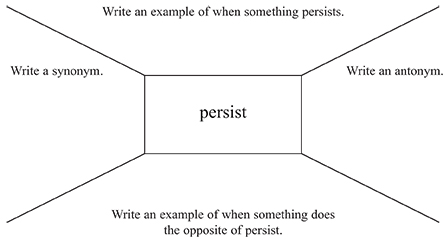
7. Use Word Maps to Build Connections
A word map helps students explore a word’s meaning, examples, related words, and possible uses.
For example, a word map for habitat could include:
- Meaning: The natural place where an organism lives.
- Examples: Forest, pond, desert.
- Related words: Environment, shelter, ecosystem.
- Sentence: A pond can be a habitat for frogs.
- Illustration: A drawing of an animal in its natural environment.
Word maps are particularly useful for academic vocabulary because they connect a definition with examples and background knowledge.
For older students, extend the activity by exploring synonyms, antonyms, word roots, prefixes, and suffixes.
For instance, students learning predict might also examine prediction and predictable. Discuss how the related forms are connected while explaining their different grammatical roles.
8. Develop Vocabulary Through Storytelling
Storytelling encourages students to use words in a meaningful sequence. It also provides opportunities to practice descriptive language, transitions, and expressions related to feelings and events.
Teachers can begin with a short picture prompt, a classroom event, or a familiar story.
How to organize a storytelling activity:
- Introduce a theme, such as an unexpected adventure.
- Select a few useful words, such as curious, discover, cautious, and astonished.
- Explain the words and model how they fit into sentences.
- Ask students to create a short story using the target words.
- Invite students to share their stories with a partner or group.
- Discuss whether the words were used appropriately.
For younger children, allow drawing, acting, or oral storytelling before expecting extended written responses.
Storytelling makes vocabulary practice creative and helps students understand how words work together to communicate ideas.
9. Play Vocabulary Games
Games create opportunities for students to retrieve word meanings, recognize relationships, and practice using language. They can also make vocabulary review more engaging.
Here are four simple classroom games.
Word detective: Students find a target word in a book, classroom display, or reading passage and explain how it is used.
Describe and guess: One student describes an object without naming it, while others guess the word. For example, “It is a tool with a handle that we use to tighten a screw” may lead to screwdriver.
Synonym challenge: Students suggest words with similar meanings. For happy, possible answers include pleased, cheerful, and delighted. Discuss differences in meaning and intensity.
Vocabulary charades: Students act out words such as stumble, whisper, or celebrate while classmates identify the word.
Choose games that reinforce the vocabulary being taught. Explain unfamiliar words before expecting students to use them successfully in a game.
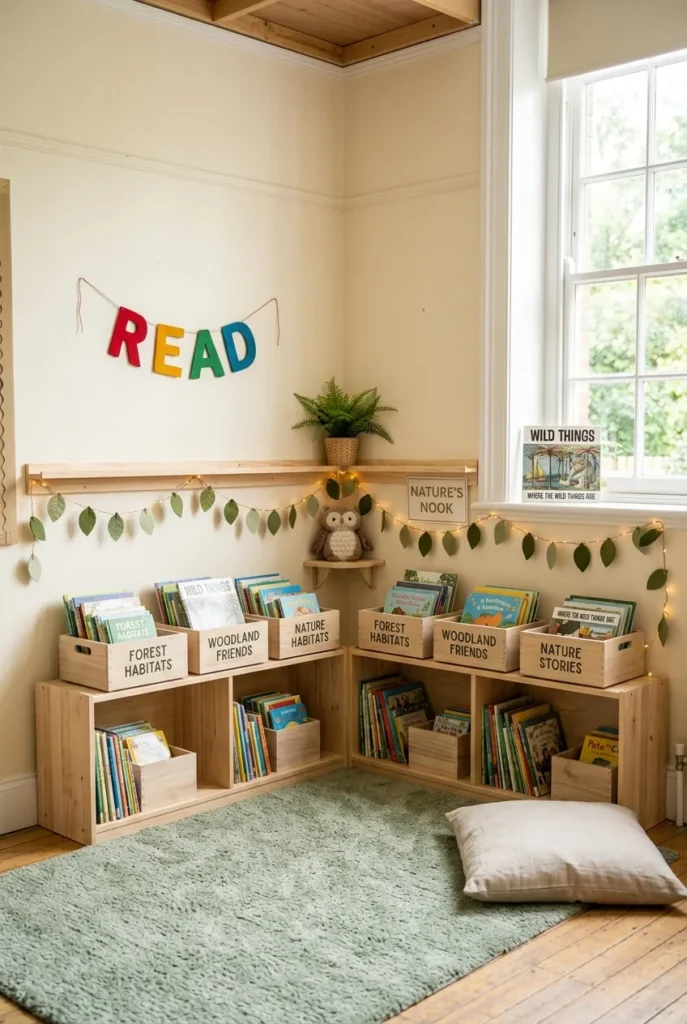
10. Create a Vocabulary-Rich Classroom Environment
Students learn from the language they encounter throughout the school day. A vocabulary-rich classroom makes useful words visible, encourages curiosity, and creates regular opportunities for discussion.
Teachers can support this environment by:
- Displaying a word wall with student-friendly explanations.
- Using precise vocabulary during instruction.
- Encouraging students to ask about unfamiliar words.
- Including subject-specific vocabulary in lessons.
- Providing books on a variety of topics.
- Highlighting interesting expressions during read-alouds.
- Encouraging students to use new words in writing and discussion.
A word wall is most effective when students actively use it. Instead of displaying dozens of words that are rarely discussed, select a manageable group and revisit their meanings throughout the week.
Invite students to contribute examples and identify situations in which each word might be useful.
How to Teach Vocabulary Through Everyday Activities at Home
Parents can support vocabulary development without needing formal teaching materials. Ordinary experiences provide opportunities to describe objects, explain actions, ask questions, and introduce useful expressions.
During Cooking
Cooking introduces words related to measurement, texture, sequence, and change.
Words such as stir, combine, measure, smooth, and thick can be explained while preparing a meal.
For example, a parent might say, “First, we measure the flour. Then we combine it with the other ingredients.”
Ask the child to explain the steps afterward using the new vocabulary.
During Shopping
Shopping provides opportunities to practice words related to quantity, comparison, and decision-making.
A parent might ask, “Which container is larger?” or “Can you compare the prices of these two items?”
Children can practice words such as quantity, similar, different, affordable, and select.
During Outdoor Activities
Walks and outdoor play introduce vocabulary related to nature, movement, weather, and observation.
Describe a rough surface, a narrow path, a scattered group of leaves, or a distant building. Ask children what they notice and encourage them to explain their observations.
Connecting words with visible experiences helps children understand their meanings more concretely.
During Family Reading
Discuss stories before, during, and after reading. Ask children to describe characters, predict events, explain unfamiliar words, and relate the story to their own experiences.
When a child encounters an unfamiliar word, explain it briefly and return to the story. Later, use the word in a new conversation to reinforce its meaning.
During Everyday Problem-Solving
Household routines can introduce words related to planning, responsibility, and reasoning.
For example, while organizing toys, a parent might say, “Let’s categorize these toys by type.” Then explain that categorize means grouping things according to shared features.
The child can practice by placing similar toys together and describing the groups.
Supporting Vocabulary Development for English Language Learners
Students learning English may understand an idea in their first language but need additional support learning the English words used to express it. Teachers can build on students’ existing knowledge while providing clear explanations and repeated opportunities to use new language.
Connect New Words to Familiar Experiences
Whenever possible, connect a new English word to something the student already knows. Objects, photographs, demonstrations, gestures, and familiar situations can help make the meaning clearer.
For example, when teaching transparent, show a clear object and compare it with an opaque object. Explain the difference and invite students to describe each item.
Use Visuals and Examples
Pictures and demonstrations help students connect words with concepts. They can be particularly useful when explaining abstract vocabulary or words that do not have an obvious equivalent in a student’s first language.
However, visuals should complement verbal explanations and opportunities for students to use the words themselves.
Encourage Discussion Without Excessive Pressure
Give students time to prepare their responses, rehearse with a partner, and use sentence frames when necessary.
For example:
- “I noticed that…”
- “The main difference is…”
- “I predict that…”
- “One example of this is…”
These structures provide support while allowing students to develop independent communication skills.
Build on Students’ Home Languages
When appropriate, invite students to connect English vocabulary with words they already know in another language. Related words across languages can help students recognize familiar concepts, although similar-looking words do not always have the same meaning.
Respecting students’ linguistic knowledge can make vocabulary instruction more inclusive and help them participate more confidently.
How to Assess Vocabulary Development
Assessment helps teachers determine whether students understand new words and can use them appropriately. A student may remember a definition but still struggle to apply the word in a conversation or passage.
Use several methods to monitor vocabulary growth.
Oral Explanation
Ask students to explain a word in their own language. Their response can reveal whether they understand the main idea behind the definition.
Sentence Creation
Invite students to create an original sentence using the word. Check whether the word fits the situation and communicates the intended meaning.
Contextual Understanding
Provide a short sentence or passage and ask students to explain how the target word is being used. This checks whether they can interpret meaning in context.
Sorting and Categorizing
Ask students to group related words, match words with examples, or distinguish between similar concepts.
For example, students might sort enormous, tiny, wide, and narrow according to meaning and explain their choices.
Short Writing Tasks
Ask students to write a paragraph using several recently taught words. This shows whether they can apply vocabulary in connected writing rather than isolated sentences.
Review Over Time
Revisit target words after several days and in different contexts. Record whether students can recognize, explain, and use each word with decreasing support.
Assessment should guide teaching rather than simply assign a score. If students repeatedly misunderstand a word, provide a clearer explanation, additional examples, and more opportunities to practice.
Common Vocabulary Teaching Mistakes to Avoid
Vocabulary instruction becomes more effective when teachers focus on meaningful learning rather than memorization alone.
Teaching too many words at once: Introducing a large list can overwhelm students. Prioritize a manageable number of important words and revisit them over time.
Relying only on dictionary definitions: Definitions provide useful information, but students also need examples, explanations, and opportunities to use words in meaningful contexts.
Assuming context clues always provide the answer: Some sentences do not contain enough information to determine an unfamiliar word’s meaning. Teach students to check their guesses and consult reliable references when needed.
Repeating words without active practice: Hearing a word repeatedly can help, but students should also explain it, connect it to examples, and use it in speech or writing.
Correcting students in discouraging ways: When a child uses a word incorrectly, respond with a clear model or explanation rather than embarrassing the student.
Ignoring differences in prior knowledge: Students enter the classroom with different experiences and language backgrounds. Connect vocabulary to familiar concepts and provide additional support when needed.
Separating vocabulary from subject learning: Words are easier to understand when students encounter them in meaningful lessons, reading materials, and discussions about real concepts.
A Simple Weekly Vocabulary Development Plan
Teachers can use the following routine to introduce, practice, and review important words.
| Day | Activity | Learning goal |
|---|---|---|
| Monday | Introduce three to five key words with clear definitions and examples | Build initial understanding |
| Tuesday | Read a short passage containing the target words | Explore words in context |
| Wednesday | Discuss the words and create original sentences | Practice expressive use |
| Thursday | Complete a word map, sorting task, or vocabulary game | Strengthen word relationships |
| Friday | Write a short paragraph or explain the words orally | Review and assess learning |
Adapt the routine to the students’ ages, reading levels, and subject matter. Some words may need more than a week of instruction before students can use them independently.
Frequently Asked Questions
What are the best vocabulary development strategies for students?
Effective strategies include teaching words through context clues, using everyday conversations, reading aloud, explaining meanings in student-friendly language, asking open-ended questions, practicing words in different situations, and using word maps and vocabulary games. Combining explicit instruction with repeated, meaningful exposure helps students develop deeper word knowledge.
How can teachers teach vocabulary without relying on memorization?
Teachers can introduce words through stories, discussions, demonstrations, and real-life examples. They should ask students to explain meanings, compare related words, create original sentences, and apply vocabulary in different contexts. These activities encourage understanding rather than memorization alone.
Why are everyday conversations important for vocabulary development?
Everyday conversations expose students to words in meaningful situations. When adults describe activities, answer questions, explain unfamiliar expressions, and encourage children to talk about experiences, students learn how words connect to objects, actions, and ideas.
How do context clues help students learn new words?
Context clues provide information surrounding an unfamiliar word that can help students infer its likely meaning. Descriptions, examples, contrasts, and explanations may offer useful hints. Students should verify their guesses when the context is unclear or insufficient.
How can parents improve their children’s vocabulary at home?
Parents can read with children, describe everyday activities, introduce precise words during conversations, ask open-ended questions, and encourage children to use new words in their own sentences. Cooking, shopping, outdoor exploration, and storytelling all provide opportunities for vocabulary practice.
How often should students practice new vocabulary?
Students benefit from encountering important words repeatedly over several days and in different contexts. A short daily activity can be a practical starting point, but the frequency and duration should reflect the complexity of the words and students’ learning needs.
How can vocabulary development improve academic performance?
Vocabulary supports reading comprehension, listening, writing, and communication across subjects. When students understand academic terms, they can follow explanations, interpret instructions, discuss concepts, and express their reasoning more precisely.
Conclusion
Vocabulary development is an ongoing process that grows through meaningful communication, reading, explicit instruction, and real-world experiences. Students need more than definitions to develop strong word knowledge. They need opportunities to hear words, explore their meanings, connect them with familiar ideas, and use them in new situations.
The most effective vocabulary development strategies for students combine context clues, everyday conversations, read-alouds, student-friendly explanations, open-ended questions, word maps, and regular review. Teachers and parents can make these approaches part of ordinary routines without making learning feel like a separate task.
By creating an environment where words are discussed, explored, and used naturally, adults can help students strengthen their communication skills, deepen reading comprehension, and become more confident learners. Consistent, meaningful vocabulary practice gives students tools they can use throughout their education and beyond.

Leave a Reply