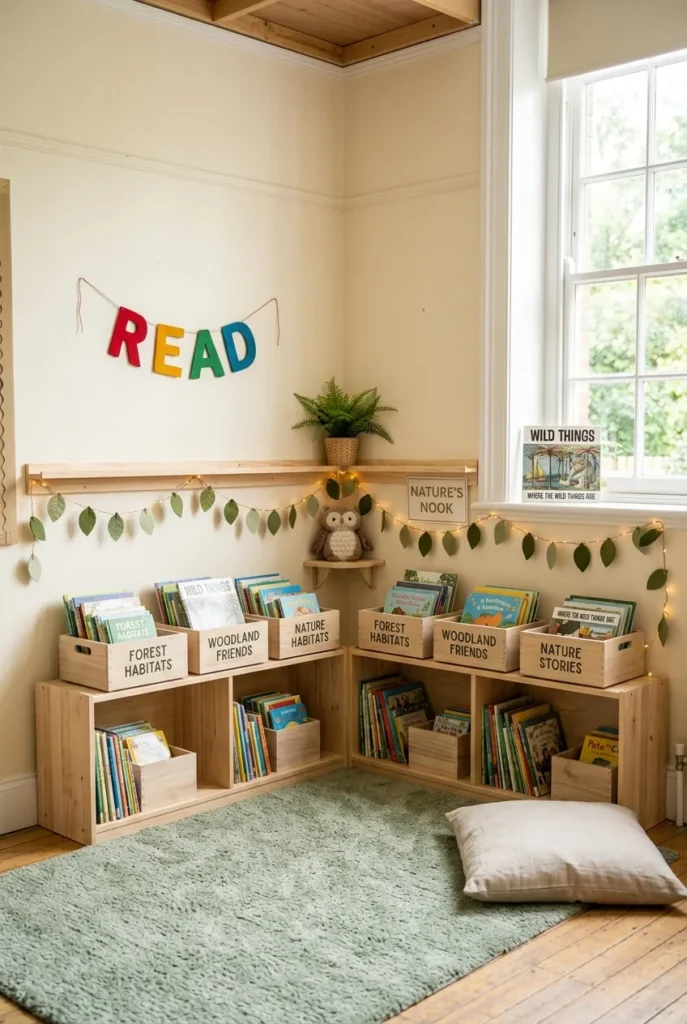
A well-designed classroom reading corner can turn an ordinary classroom into a welcoming place where students discover books, develop reading habits, and build confidence as independent learners. Whether you teach young children or older students, a dedicated reading space makes books easier to access and gives learners a comfortable place to explore stories, information, and new ideas.
The best classroom reading corner ideas focus on more than colorful decorations. An effective reading area combines an inviting atmosphere, age-appropriate books, comfortable seating, clear organization, and simple routines that encourage students to read regularly. It does not require a large budget or a separate room. Even a small corner can become a valuable part of the classroom when it is planned around students’ needs.
In this guide, you will learn how to choose the right location, organize books, create comfortable seating, encourage independent reading, and maintain a reading corner that supports everyday learning.
What Is a Classroom Reading Corner?
A classroom reading corner is a designated area where students can read independently, browse books, enjoy stories, or participate in quiet reading activities. It may include a small bookshelf, book baskets, a rug, cushions, a comfortable chair, and displays that make reading materials easy to find.
Unlike a traditional library, a classroom reading corner is integrated directly into the learning environment. Students can use it during independent reading time, literacy centers, quiet activities, or other appropriate parts of the school day.
A successful reading corner gives students opportunities to choose books based on their interests and reading abilities. It also helps teachers create a classroom culture in which reading is viewed as an enjoyable and meaningful part of learning.
Why Is a Classroom Reading Corner Important?
A thoughtfully arranged reading space can support literacy development and create positive reading experiences. Although the space alone cannot guarantee better reading outcomes, it can make books more accessible and encourage students to spend more time engaging with them.
1. Encourages a Love of Reading
Students are more likely to explore books when the classroom offers interesting choices in an inviting environment. A collection that includes fiction, nonfiction, picture books, comics, poetry, and informational texts can help learners discover subjects they genuinely enjoy.
When students associate reading with curiosity and enjoyment rather than only with assignments, they have more opportunities to develop lasting reading habits.
2. Builds Independent Learning Skills
A reading corner encourages students to make decisions about what they want to read, how long to explore a book, and when they are ready to try something different.
These small choices help learners practice independence, responsibility, and self-direction. Students can also learn to identify books that match their interests and recognize when they need help understanding a text.
3. Supports Vocabulary and Comprehension
Regular engagement with a variety of texts exposes students to new vocabulary, sentence structures, ideas, and perspectives. Reading fiction can help students follow events and understand characters, while nonfiction introduces subject-specific language and factual information.
Teachers can strengthen these benefits by encouraging students to discuss what they read, explain unfamiliar words, and connect ideas from books to their own experiences.
4. Provides a Calm Space for Learning
A quiet reading corner gives students an alternative to busy classroom activities. A clearly defined area with comfortable seating and limited distractions can help learners settle down and concentrate on a book.
The space should remain visible and appropriately supervised. It should also be flexible enough to accommodate different reading preferences without becoming a place where students miss important instruction.
5. Promotes Choice and Inclusion
Students have different interests, abilities, languages, and experiences. A diverse collection allows more learners to find books that reflect their lives or introduce them to unfamiliar cultures and perspectives.
Offering accessible formats, books at different reading levels, and materials featuring a wide range of characters can help students feel welcome and included.
12 Classroom Reading Corner Ideas Teachers Can Use
The following classroom reading corner ideas can be adapted to different grade levels, classroom sizes, and budgets.
1. Create a Cozy Reading Nook
Start with a clearly defined space where students can sit comfortably and focus on reading. A small rug, floor cushions, a low chair, or a classroom mat can make the area feel welcoming.
Avoid overcrowding the corner with furniture. Students should be able to enter and leave easily, reach books without difficulty, and sit without blocking classroom pathways.
For younger learners, colorful cushions or a simple reading tent may create an appealing atmosphere. Older students may prefer a more understated space with comfortable chairs and organized shelves.
2. Display Books With Covers Facing Outward
Book covers often help students decide what they want to read. Instead of placing every book spine-out on a shelf, display a selection with the front covers visible.
Use a low shelf, sturdy display stand, or small baskets to present featured titles. Change the selection regularly so students notice different books and have opportunities to discover something new.
You can also create a rotating display featuring student recommendations, popular authors, seasonal topics, or books connected to current classroom lessons.
3. Organize Books Into Clear Categories
An organized collection makes it easier for students to find books independently. Divide the collection into simple categories, such as:
- Picture books and early readers
- Adventure and mystery stories
- Animals and nature
- Science and technology
- History and geography
- Poetry and creative writing
- Comics and graphic novels
- Books about different cultures
Use picture labels for younger students and written labels for older learners. Keep the system simple enough that students can return books to the correct place without constant assistance.
4. Add Student-Friendly Reading Signs
Signs can give the reading corner a distinct identity and remind students that the area has a specific purpose.
Consider names such as “The Reading Nest,” “Book Explorer Corner,” “Story Space,” or “The Little Library.” Invite students to suggest names and vote for their favorite.
Display a few short reminders, including “Choose a book,” “Read quietly,” “Handle books carefully,” and “Return books to their place.” Keep signs readable and avoid covering every wall with posters.
5. Include a Student Book Recommendation Board
A recommendation board allows students to share books they have enjoyed. Each student can write a short review, draw a picture, or complete a simple prompt such as “I recommend this book because…”
For younger children, use book-cover drawings and a sentence dictated to the teacher. Older students can add a brief summary without revealing the ending.
This activity encourages students to reflect on their reading and helps classmates discover titles they might not otherwise choose.
6. Build a Rotating Theme Display
A themed display keeps the reading corner interesting throughout the school year. Choose themes that connect with student interests, classroom topics, or important learning events.
Possible themes include:
- Amazing animals
- Space and the solar system
- Friendship and kindness
- Inventors and discoveries
- Folktales from around the world
- Environmental awareness
- Poetry and storytelling
Rotate the display every few weeks, depending on the available books and students’ interests. Ask learners to help select titles so the collection remains relevant to them.
7. Provide Different Seating Options
Not every student finds the same seating arrangement comfortable. If space permits, include a few options such as a floor cushion, a low chair, a small bench, or a standard chair with a supportive back.
Keep the furniture stable, easy to clean, and appropriate for students’ ages. Make sure every child can access a suitable seat, including students who have mobility needs.
Comfort matters, but seating should still support safe movement, good visibility, and classroom supervision.
8. Create a Buddy Reading Area
A reading corner does not have to be used only for silent reading. A small buddy-reading area can give students opportunities to read aloud to a partner, discuss a story, or take turns explaining a nonfiction book.
Provide enough space for two students to sit together without disturbing other readers. Establish a few clear routines: take turns, listen respectfully, and help each other without making fun of mistakes.
Teachers can pair students thoughtfully and provide prompts such as “What was your favorite part?” or “What do you think will happen next?”
9. Include Books in Multiple Formats
Some students benefit from alternatives to conventional printed books. Depending on available resources, include large-print books, audiobooks, illustrated texts, bilingual books, or texts with accessible digital versions.
Picture-supported books can help developing readers understand meaning, while audio can provide another way to engage with stories and language. These formats should complement, rather than automatically replace, appropriate reading instruction.
The goal is to ensure that students with different needs have meaningful opportunities to participate in reading activities.
10. Add a Reading Response Station
A small response station can help students think about what they read. Place a notebook, pencils, paper, and simple response prompts nearby.
Students might draw a scene, record a new word, describe a character, write a question, or explain one fact they learned. Older learners can compare two characters, summarize an argument, or connect a book to a classroom topic.
Keep the activity optional or brief during independent reading periods so that writing tasks do not take over the reading experience.
11. Use Student-Created Decorations
Student-created decorations make the reading corner more personal and give learners a sense of ownership.
Invite students to create book-cover artwork, favorite-character drawings, reading quotes, shelf labels, or short book reviews. Display their work alongside selected books.
Update the displays regularly and leave enough clear space for students to focus. The purpose of decoration is to make reading inviting, not to create a visually overwhelming environment.
12. Make the Reading Corner Budget-Friendly
An effective reading corner does not require expensive furniture or professionally designed decorations. Teachers can begin with existing classroom materials and improve the area gradually.
Budget-friendly options include:
- Reusing sturdy boxes as book bins.
- Asking families for appropriate book donations.
- Exchanging books with other classrooms.
- Using a clean mat or existing classroom rug.
- Creating shelf labels with paper and markers.
- Inviting students to make displays and recommendation cards.
- Rotating books rather than buying a large collection at once.
Check donated materials for condition, age suitability, and classroom relevance. Any furniture or storage used by students should be stable and safe.
How to Set Up a Classroom Reading Corner Step by Step
Having creative ideas is useful, but a simple setup process makes implementation easier. Follow these steps to build a practical reading corner that fits your classroom.
Step 1: Choose the Right Location
Select a corner away from busy walkways, classroom doors, and distracting equipment. A quiet area near a wall often works well because it helps define the space without requiring additional partitions.
Make sure the corner remains visible to the teacher and does not obstruct exits, accessible routes, or essential classroom equipment.
Step 2: Assess Your Available Space
Measure the area and decide how many students should be able to use it at one time. A small classroom may only have room for one or two readers, while a larger space may accommodate a small group.
Prioritize easy movement, safe seating, and accessible books instead of trying to fit in every possible feature.
Step 3: Select and Organize the Books
Begin with a manageable collection that reflects students’ interests, reading abilities, and cultural backgrounds.
Include familiar favorites as well as new discoveries. Arrange books with simple labels and ensure that students can reach them independently. If the collection is limited, rotate selected titles to maintain variety.
Step 4: Add Comfortable and Safe Seating
Use the seating options already available before purchasing new items. Arrange chairs, cushions, or mats so students have enough room to sit and move safely.
Avoid unstable shelves, blocked walkways, loose cords, and materials that are difficult to clean. Keep the reading corner suitable for everyday classroom use.
Step 5: Establish Clear Reading Routines
Explain how students should choose books, use the area, share materials, and return items. Model the routines instead of relying only on written signs.
For example, teach students to select a book, find a comfortable seat, read quietly or follow the activity assigned, and return the book before choosing another.
Step 6: Introduce the Space to Students
Let students explore the reading corner and explain how it can be used. Ask what types of books they would like to see and invite suggestions for future displays.
Giving students a role in the design and upkeep of the area can encourage responsibility and make the space more meaningful.
Step 7: Review and Improve the Setup
Observe how students use the reading corner over the following weeks. Are they choosing books? Can they find and return materials? Is the area too noisy, crowded, or distracting?
Make small changes based on these observations. A successful reading corner evolves with the class rather than remaining fixed throughout the year.
How to Choose the Best Books for a Classroom Reading Corner
The quality and variety of books are more important than decorative features. A beautiful reading nook will not be very useful if students cannot find materials that interest them or suit their reading needs.
When selecting books, consider the following factors.
Reading level: Include books students can read independently, along with some that provide a manageable challenge. Students should not feel that every book must match a formal reading level.
Student interests: Ask learners about their favorite topics, authors, characters, hobbies, and questions. Their answers can guide book selection.
Genre variety: Offer stories, informational books, poetry, biographies, comics, and other suitable formats to broaden reading experiences.
Representation: Include books that reflect different cultures, family experiences, abilities, and perspectives. Choose materials thoughtfully and age-appropriately.
Physical condition: Make sure books are clean, readable, and in usable condition. Repair damaged books when possible.
Changing interests: Review the collection regularly and replace or rotate titles that no longer attract attention.
Teachers can also collaborate with school librarians to identify suitable books and maintain a varied collection without unnecessary spending.
How to Encourage Students to Use the Reading Corner
Creating the space is only the beginning. Students need regular opportunities and encouragement to use it.
Schedule Regular Reading Time
Include independent reading in the daily or weekly classroom routine. Even a short, consistent period can give students time to browse, read, and build familiarity with the space.
Choose a time that fits your teaching schedule and establish expectations for how the corner will be shared.
Let Students Choose Their Books
Choice is an important part of making reading personally meaningful. Offer guidance when needed, but allow students to explore different topics and formats.
If a student abandons a book because it is too difficult or uninteresting, help them find a better match rather than treating the change as a failure.
Use Reading Challenges Carefully
Optional challenges can encourage exploration. For example, invite students to read a book about nature, discover a new author, or try a different genre.
Avoid making every reading activity a competition or focusing exclusively on the number of books completed. The aim is to encourage engagement and growth, not to create pressure.
Model Positive Reading Habits
When appropriate, let students see teachers reading, discussing books, and sharing genuine recommendations. Read aloud occasionally and talk about what makes a story interesting or a nonfiction text useful.
Teacher enthusiasm can help show that reading is valuable beyond tests and assignments.
Celebrate Progress in Different Ways
Recognize effort, curiosity, thoughtful questions, and willingness to try new material. Students can share recommendations, create displays, or discuss favorite discoveries.
Avoid publicly comparing students’ reading speeds or achievements. Celebrate progress in ways that respect different abilities and learning needs.
Common Classroom Reading Corner Mistakes to Avoid
Some reading corners look attractive but are rarely used effectively. Avoid these common problems.
- Too many decorations: Excessive posters, bright displays, and decorative objects may distract students from books.
- Poor book organization: Unlabeled bins and overcrowded shelves make it difficult to locate and return materials.
- Limited book choices: A collection that does not reflect students’ interests may fail to attract regular readers.
- Uncomfortable or unsafe furniture: Unstable seating and blocked pathways make the area difficult to use.
- Unclear expectations: Without established routines, the corner may become noisy or disorganized.
- Infrequent maintenance: Damaged books, clutter, and outdated displays can make the space less inviting.
- Using reading as a punishment: Sending students to the corner only when they misbehave can create a negative association with the area.
- Ignoring student feedback: A space that never changes may stop meeting students’ needs.
Reviewing these issues regularly helps teachers maintain a reading corner that remains practical, welcoming, and focused on learning.
How to Adapt a Reading Corner for Different Grade Levels
The best design depends on students’ ages, reading abilities, and classroom routines.
Early Childhood and Kindergarten
Young children often benefit from picture books, sturdy board books, large illustrations, floor mats, and low shelves. Use picture labels and simple routines to help them choose and return books.
Short read-aloud sessions, storytelling props, and familiar stories can make the area engaging without overwhelming children with too many materials.
Elementary School
Elementary classrooms can offer a wider selection of fiction, nonfiction, poetry, graphic novels, and early chapter books. Student recommendation boards, themed displays, reading journals, and buddy reading can encourage greater independence.
Give students opportunities to organize materials and recommend titles to classmates.
Middle School
Older students may prefer a quieter, less decorative space with novels, graphic novels, biographies, current-interest nonfiction, and subject-specific reading. Include books that connect with hobbies and real-world questions.
Student reviews, independent book selection, and occasional peer discussions can make the reading corner feel relevant rather than childish.
High School
In high school, a reading corner might function as a compact reading and reflection area. Include contemporary literature, short stories, essays, nonfiction, poetry, and materials connected to academic interests.
Comfortable seating, clear organization, and an atmosphere that respects students’ independence may be more effective than elaborate decorations.
How to Maintain an Effective Classroom Reading Corner
A reading corner should remain useful throughout the school year, not just during its first week.
Set aside a short period each week to straighten shelves, check damaged books, return misplaced materials, and refresh the featured display. Students can help with these tasks through a rotating classroom responsibility system.
Review the collection periodically and ask students which books they enjoy, which topics they want to explore, and what would make the space more comfortable.
You can also monitor practical indicators such as how frequently students use the corner, whether books are being borrowed, which categories attract interest, and whether learners can manage the routines independently. These observations can guide improvements without turning every reading experience into a formal assessment.
Frequently Asked Questions
1. What should a classroom reading corner include?
A classroom reading corner should include accessible books, clear organization, comfortable and safe seating, adequate lighting, and simple expectations for use. Depending on the space and budget, teachers can add book displays, student recommendations, reading journals, or themed decorations.
2. How do you create a classroom reading corner on a budget?
Start with a small area, use existing chairs or mats, organize books in reusable boxes, and create labels from inexpensive classroom supplies. Book donations and exchanges with other teachers can help expand the collection over time.
3. How much space is needed for a reading corner?
There is no single required size. A small corner can work for one or two students, while a larger space may support buddy reading or small groups. Prioritize safe movement, access to books, comfortable seating, and visibility from the teaching area.
4. What books should be included in a classroom reading corner?
Include a mixture of fiction, nonfiction, picture books, poetry, comics, biographies, and books about subjects students enjoy. Select age-appropriate materials with different levels of difficulty, formats, and perspectives.
5. How can teachers encourage reluctant readers to use the reading corner?
Offer appealing choices, including illustrated books, comics, short texts, and nonfiction on students’ interests. Let students browse without pressure, model reading for enjoyment, and help them find books that are accessible and engaging.
6. How often should classroom reading corner books be changed?
There is no fixed schedule. Teachers can rotate featured books every few weeks or whenever students’ interests and classroom topics change. Keep popular favorites available while introducing new titles gradually.
7. Can a classroom reading corner support students with different learning needs?
Yes. Teachers can provide accessible seating, large-print books, audiobooks, bilingual texts, picture-supported materials, and other appropriate formats. The most important consideration is whether students can comfortably access and meaningfully engage with the reading materials.
8. How can teachers tell whether a reading corner is effective?
Observe whether students choose to use the area, explore different books, follow routines, and return materials appropriately. Student feedback and borrowing patterns can reveal what is working and what needs adjustment.
Conclusion
An effective classroom reading corner is more than a decorative space. It is a practical way to make books accessible, encourage student choice, support independent learning, and create positive reading routines.
The most successful classroom reading corner ideas combine a suitable location, organized book displays, comfortable seating, varied reading materials, and consistent opportunities to read. Teachers do not need expensive furniture or a large classroom to begin. A small, thoughtfully arranged space can make a meaningful contribution to the classroom reading culture.
Start with the resources you already have, involve students in the process, and improve the space as you learn what works for your class. With regular attention and a collection that reflects students’ needs, the reading corner can become a valued part of everyday learning.

Leave a Reply