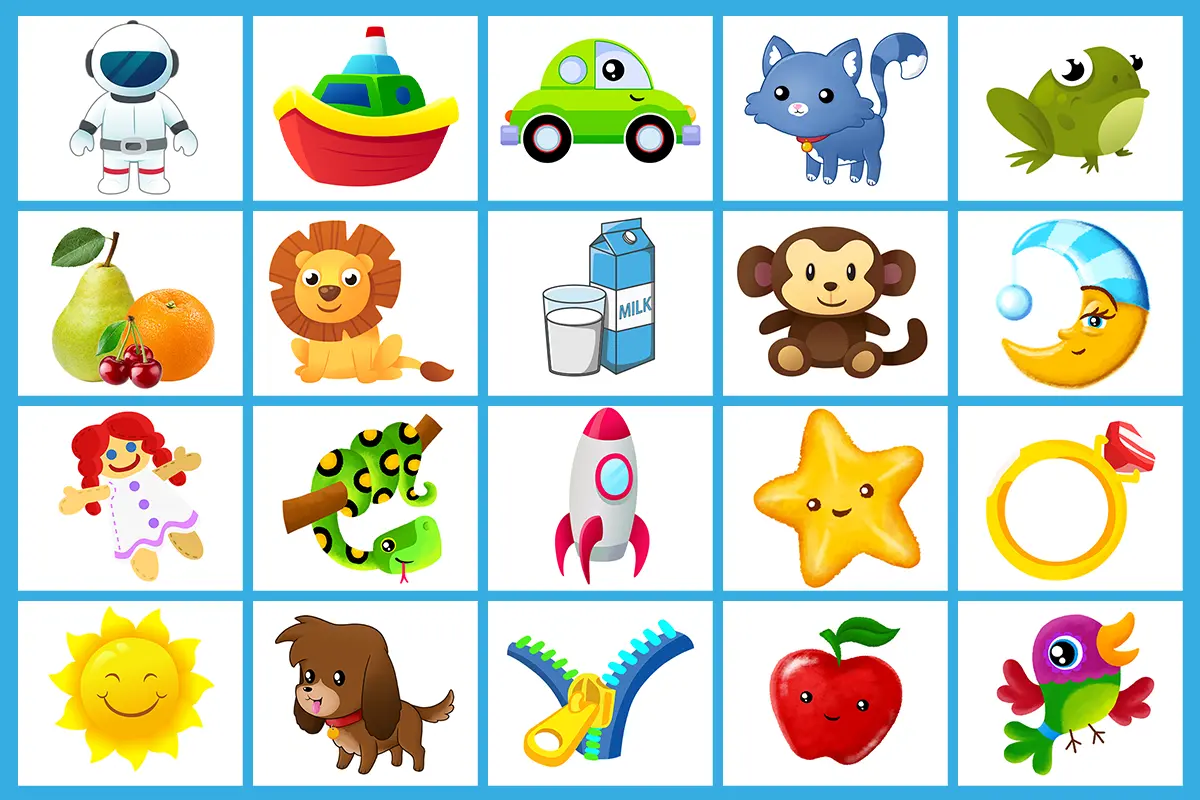
Learning to read begins long before children can read a complete sentence on their own. One important early literacy skill is understanding that spoken words are made up of individual sounds. Children develop this ability through listening, speaking, playing with words, and practicing simple sound-based activities.
Phonemic awareness activities for children can help beginning readers recognize, identify, blend, separate, and manipulate the sounds they hear in spoken language. Parents and teachers can introduce these skills through short, engaging games that require little or no special equipment.
This guide explains what phonemic awareness means, why it matters for reading development, and how to practice it with preschoolers, kindergarten students, and children who are beginning to read.
What Is Phonemic Awareness?
Phonemic awareness is the ability to hear, recognize, and work with the individual sounds in spoken words. These individual sounds are called phonemes.
For example, the spoken word cat contains three sounds:
- /k/
- /a/
- /t/
A child with developing phonemic awareness can recognize that these sounds combine to make the word cat. The child may also learn to separate the word into its sounds or change one sound to create a different word.
Phonemic awareness is part of the broader skill known as phonological awareness. Phonological awareness includes recognizing rhymes, syllables, and larger sound patterns, while phonemic awareness focuses specifically on individual speech sounds.
It is important to understand that phonemic awareness deals primarily with sounds rather than printed letters. When children learn to connect those sounds with letters, they begin applying this knowledge through phonics instruction.
Why Are Phonemic Awareness Activities Important for Children?
Phonemic awareness helps children understand how spoken language works. This understanding supports the development of early reading and spelling skills.
Regular, explicit practice can help children build several important abilities.
1. Recognizing Individual Sounds
Children learn that words contain separate sounds rather than functioning as indivisible units. For example, they may discover that sun begins with /s/ and fish begins with /f/.
2. Blending Sounds to Read Words
Sound blending involves combining individual phonemes to identify a complete word. When a teacher says /m/ /a/ /p/, a child blends the sounds to say map.
This skill is especially important when beginning readers learn to decode unfamiliar words.
3. Separating Words Into Sounds
Sound segmentation helps children identify the individual phonemes in a spoken word. For example, they can separate dog into /d/, /o/, and /g/.
Children can later connect these sounds with letters when learning to spell simple words.
4. Developing Early Spelling Skills
Children who recognize the sounds in words have a useful foundation for understanding how spoken language can be represented in writing. Phonemic awareness practice, combined with appropriate phonics instruction, can support early spelling development.
5. Building Confidence With Reading
Games that make sound patterns easier to notice can help children approach early literacy tasks with greater confidence. Short, achievable activities also allow adults to identify which skills children have mastered and which need more practice.
Research-based literacy guidance emphasizes explicit instruction in blending and segmenting sounds as important parts of beginning reading instruction.
12 Phonemic Awareness Activities for Children
The following activities help children practice sound awareness in a playful, structured way. Begin with simple tasks and gradually introduce more challenging activities as children’s skills develop.
1. Play the Beginning Sound Game
<text>Skill: Identifying initial phonemes</text>
The beginning sound game teaches children to listen carefully to the first sound in a word.
How to play:
- Choose a familiar object, such as a ball, book, or cup.
- Say the object’s name clearly.
- Ask the child to identify the first sound.
- Repeat the sound together.
- Introduce other objects with the same beginning sound.
For example, you might ask, “What sound do you hear at the beginning of sun?” Encourage the child to respond with /s/.
You can also play an “I Spy” variation: “I spy something that starts with /b/.” The child looks around the room for a matching object.
Learning tip: Start with familiar words and sounds that are easy to distinguish. Keep the activity relaxed rather than turning every answer into a test.
2. Practice Sound Blending
<text>Skill: Combining phonemes into words</text>
Sound blending helps children understand how separate sounds come together to form a word.
How to play:
- Choose a short word, such as sun.
- Say its sounds slowly: /s/ /u/ /n/.
- Ask the child to listen to the sounds.
- Repeat the sounds, gradually bringing them together.
- Encourage the child to say the complete word.
Try words such as map, sit, fan, and mop as the child becomes more comfortable.
A fun variation is the “mystery word” game. Tell the child that you are going to speak like a robot, using separate sounds. The child must figure out the word.
For example:
Adult: /m/ /a/ /p/
Child: “Map!”
Avoid adding an extra “uh” sound after consonants. Say /m/, not “muh,” to make blending easier and more accurate.
3. Use Sound Segmentation With Counters
<text>Skill: Separating words into individual phonemes</text>
Children often benefit from physical objects when learning to hear the separate sounds in a word.
Materials: Three or four buttons, counters, blocks, or other small objects.
How to play:
- Say a short word such as cat.
- Ask the child to repeat the word.
- Say each sound separately: /k/ /a/ /t/.
- Have the child move one counter for each sound.
- Ask how many sounds the word contains.
For cat, the child moves three counters because the word has three phonemes.
Repeat the activity with dog, sun, and fish. Remember that the number of letters in a word is not always the same as the number of sounds. For example, fish has four letters but three phonemes: /f/ /i/ /sh/.
4. Go on a Sound Scavenger Hunt
<text>Skill: Recognizing sounds in everyday language</text>
A sound scavenger hunt turns an ordinary room or outdoor walk into an early literacy activity.
How to play:
- Choose a target sound, such as /m/.
- Ask the child to find objects whose names begin with that sound.
- Encourage the child to say each object’s name aloud.
- Listen together for the target sound.
- Change the target sound and repeat.
For the /m/ sound, children might identify mat, mug, or marker.
You can also ask children to identify a sound at the end of a word once they are ready for a greater challenge.
This activity encourages children to listen to real words and apply sound awareness outside formal lessons.
5. Sing Rhyming and Sound Songs
<text>Skill: Listening for sound patterns</text>
Songs, chants, and nursery rhymes expose children to repeated sound patterns. Rhyming is a broader phonological awareness skill, but it can prepare young learners for more focused work with individual phonemes.
How to play:
- Choose a familiar nursery rhyme or short song.
- Emphasize words that rhyme.
- Pause before a rhyming word and invite the child to complete the line.
- Ask the child to suggest another word that rhymes.
- Progress to noticing the beginning sounds in selected words.
For example, discuss how cat, hat, and mat share an ending sound pattern.
Explain that rhyming words do not necessarily begin with the same sound. Later, contrast words such as cat and cup to focus attention on their initial phonemes.
6. Play the Sound Sorting Game
<text>Skill: Comparing and categorizing phonemes</text>
Sound sorting helps children identify words that begin or end with the same sound.
Materials: Picture cards or familiar household objects.
How to play:
- Gather pictures of objects with different beginning sounds.
- Select a target sound, such as /s/.
- Ask the child to place matching pictures in one group.
- Review each picture by saying its name aloud.
- Introduce a new target sound.
For example, children may group sock, sun, and sand together while placing ball and cup in different groups.
For beginners, offer only a few pictures at a time. Once children can recognize the sounds reliably, increase the number of choices.
7. Build Words With Sound Boxes
<text>Skill: Segmenting phonemes in sequence</text>
Sound boxes, sometimes called Elkonin boxes, provide a visual way to represent each sound in a spoken word.
Materials: Paper, a pencil, and counters or small tokens.
How to play:
- Draw three connected boxes on a piece of paper.
- Say a simple word such as sun.
- Ask the child to repeat it.
- Have the child move one counter into each box while saying one phoneme.
- Blend the sounds again to say the whole word.
For sun, the child uses three boxes: /s/, /u/, and /n/.
Begin with words containing two or three phonemes. Move to longer or more complex words when the child can segment simple words confidently.
When children know the relevant letter-sound relationships, you can gradually introduce letter tiles or written letters. This helps connect phonemic awareness with phonics.
8. Try the Missing Sound Game
<text>Skill: Identifying sounds that have been removed</text>
Sound deletion is more advanced than simply identifying a beginning sound. Introduce it when the child is comfortable segmenting familiar words.
How to play:
- Say a simple word, such as sun.
- Ask the child to repeat it.
- Explain that you will remove one sound.
- Ask what remains when the first sound is removed.
- Model the answer if the child needs support.
For example:
Adult: “Say sun without /s/.”
Child: “Un.”
This response is an exercise in manipulating sounds, even though un is not the intended standalone word in this example. To practice with a result that is also a familiar word, try:
Adult: “Say smile without /s/.”
Child: “Mile.”
Use simple examples first and provide a clear model. If the child finds the task difficult, return to identifying and separating sounds before trying deletion again.
9. Play the Change-One-Sound Game
<text>Skill: Substituting phonemes</text>
Sound substitution teaches children that changing one phoneme can create a different word.
How to play:
- Say a familiar word such as cat.
- Ask the child to replace its first sound with /b/.
- Blend the new sounds.
- Ask the child to identify the new word.
- Repeat with another familiar word.
Example:
- Start with cat.
- Replace /k/ with /b/.
- The new word is bat.
Other examples include changing map to tap or sun to fun.
This activity requires more advanced sound manipulation. Model the process slowly and return to easier tasks if the child becomes frustrated.
10. Use a Puppet to Teach Sounds
<text>Skill: Listening, blending, and segmenting</text>
A puppet or favorite toy can make phonemic awareness practice feel like a conversation rather than a lesson.
How to play:
- Introduce a puppet that speaks in a funny, slow voice.
- Have the puppet say a word in separate sounds.
- Ask the child to guess the word.
- Let the child speak like the puppet in the next round.
- Take turns identifying and producing sounds.
For example, the puppet might say /f/ /a/ /n/, and the child responds with fan.
You can also ask the puppet to identify the first sound in a word or count how many phonemes it hears.
The playful format gives children repeated practice while encouraging participation.
11. Clap, Tap, and Move to Sounds
<text>Skill: Listening and responding to speech sounds</text>
Movement can help young learners stay engaged while practicing early literacy skills. Use tapping or finger movements to make the sounds in a word easier to track.
How to play:
- Choose a short, familiar word.
- Say the word naturally.
- Repeat it while stretching out its individual sounds.
- Ask the child to tap once for each phoneme.
- Blend the sounds and say the word again.
For example, the child can tap three times for /d/ /o/ /g/.
Keep phonemes separate from syllables. Clapping once for each syllable in banana is a useful phonological awareness activity, but it is different from counting all the individual sounds in the word.
12. Connect Sounds With Letters
<text>Skill: Linking phonemic awareness to early phonics</text>
Once children can hear and manipulate some speech sounds, connect those sounds with familiar letters to support beginning reading and spelling.
How to play:
- Say a simple word such as map.
- Ask the child to identify its individual sounds.
- Provide letter tiles for the sounds the child has learned.
- Help the child arrange the letters in the correct order.
- Blend the sounds while pointing to each letter.
For example, the child can arrange m, a, and p to build map.
Choose words that use letter-sound relationships the child has already been taught. The goal is to combine sound awareness with systematic phonics instruction, not to expect children to guess unfamiliar spellings.
A Simple Weekly Plan for Phonemic Awareness Practice
Consistency is more important than lengthy practice sessions. Parents and teachers can use short activities throughout the week and adjust the difficulty based on each child’s progress.
| Day | Activity | Main skill |
|---|---|---|
| Monday | Beginning sound game | Identifying initial sounds |
| Tuesday | Mystery word game | Blending phonemes |
| Wednesday | Counters and sound boxes | Segmenting phonemes |
| Thursday | Sound scavenger hunt | Recognizing sounds in words |
| Friday | Change-one-sound game | Substituting phonemes |
Aim for a short, focused session of around five to ten minutes, adjusting the length to the child’s attention and needs. Some children will need more modeling and repetition than others.
A useful lesson structure is:
- Model: Demonstrate the activity and say the sounds clearly.
- Practice together: Complete several examples with the child.
- Try independently: Give the child a few chances to respond.
- Review: Repeat a successful example and praise the effort.
How to Choose Activities for Different Ages and Skill Levels
Children develop literacy skills at different rates. Select activities according to what the child can already do rather than relying on age alone.
Preschool Children
Preschoolers often benefit from playful listening activities, rhymes, sound matching, and noticing the beginning sounds of familiar words.
Keep directions simple and use pictures, toys, and everyday objects to make activities meaningful.
Kindergarten Students
Kindergarten students can gradually move toward identifying individual phonemes, blending sounds into words, and separating simple words into their component sounds.
Introduce letter-sound connections alongside oral practice when appropriate.
Beginning First-Grade Readers
Children who are beginning to read may benefit from more systematic practice with blending, segmentation, and manipulating phonemes. Combine these activities with explicit phonics lessons, reading practice, and spelling opportunities.
If a child repeatedly struggles with a particular task, make it easier, demonstrate the steps, and provide additional guided practice before increasing the difficulty.
Tips for Making Phonemic Awareness Activities More Effective
Well-planned activities help children focus on the skill being taught without feeling overwhelmed.
Keep Instructions Clear
Give one direction at a time. Instead of asking a child to identify, count, and change sounds all at once, focus on one skill during each activity.
Start With Easier Words
Use familiar, short words before introducing words with consonant clusters or more complex sound patterns. Progress gradually as children become more confident.
Pronounce Sounds Accurately
Say individual phonemes clearly without adding an extra vowel sound. For example, pronounce /t/ rather than “tuh.” This makes it easier for children to blend sounds into recognizable words.
Provide Immediate Feedback
If a child gives an incorrect answer, model the correct response and invite the child to try again. Keep feedback encouraging and specific.
Repeat Activities in Different Contexts
Practice the same sound skill with picture cards, toys, books, and everyday conversations. Changing the context helps children apply what they learn to unfamiliar examples.
Include Letters When Appropriate
Phonemic awareness can be practiced without printed words. However, connecting sounds with letters during suitable lessons helps children apply sound knowledge to reading and spelling.
Keep Practice Positive
Use games, songs, movement, and playful challenges. Praise persistence and improvement rather than comparing children with classmates.
Common Mistakes to Avoid
Even enjoyable activities can become less effective when they do not match the child’s current skill level.
Confusing letters with sounds: A letter is a written symbol, while a phoneme is a speech sound. Make sure children understand the sound task before introducing a written representation.
Starting with overly difficult tasks: Sound deletion and substitution can be challenging. Build a foundation with sound identification, blending, and segmentation first.
Practicing only rhyming: Rhymes are useful for broader phonological awareness, but children also need direct practice with individual phonemes, particularly blending and segmenting.
Using long, tiring lessons: Short, frequent practice is often more manageable for young learners than a long session filled with repetitive questions.
Ignoring individual needs: If a child consistently struggles, simplify the activity and provide explicit modeling rather than simply repeating the same instructions.
Treating practice as a complete reading program: Phonemic awareness is one component of literacy instruction. Children also need instruction in phonics, vocabulary, oral language, reading fluency, and comprehension.
How to Tell Whether a Child Is Making Progress
Parents and teachers can monitor progress by observing whether children are becoming more accurate and independent during activities.
Look for signs such as:
- Identifying the first sound in familiar words.
- Blending two or three phonemes into a word.
- Separating simple words into their individual sounds.
- Recognizing when two words begin with the same phoneme.
- Using learned sound skills with new words.
- Connecting known sounds with appropriate letters during phonics practice.
Record a few examples over time instead of judging progress from one activity. If a child continues to struggle despite consistent, explicit teaching, discuss the concern with the child’s teacher or a qualified reading specialist. Additional assessment can help identify which skills need targeted support.
Frequently Asked Questions
What are the best phonemic awareness activities for children?
Beginning sound games, sound blending, sound segmentation, picture sorting, and sound boxes are useful activities for developing early phonemic awareness. The best choice depends on the child’s current skills. Start with simple tasks and progress gradually toward more advanced sound manipulation.
At what age should children start phonemic awareness activities?
Children can begin exploring spoken language through rhymes, songs, and sound games during the preschool years. More focused activities involving individual phonemes can be introduced as children are ready, often during preschool and kindergarten. There is no single age at which every child will master each skill.
What is the difference between phonemic awareness and phonics?
Phonemic awareness involves hearing and manipulating sounds in spoken words. Phonics teaches children how written letters and letter combinations represent those sounds. Both skills work together to support beginning reading.
How long should children practice phonemic awareness each day?
A short session of around five to ten minutes can be a practical starting point for young children. Adjust the length according to the child’s engagement, skill level, and instructional needs. Consistent, focused practice is more useful than forcing a child to continue when tired or frustrated.
Can parents teach phonemic awareness at home?
Yes. Parents can practice during everyday activities using familiar objects, picture books, songs, and simple word games. Asking questions such as “What sound does moon start with?” or “What word do these sounds make: /s/ /u/ /n/?” can turn ordinary conversations into learning opportunities.
Does phonemic awareness help children who struggle with reading?
Explicit phonemic awareness instruction can support children who have difficulty recognizing and manipulating sounds in words. Children who continue to struggle may need additional, carefully targeted reading instruction. Persistent difficulty does not automatically mean that a child has a learning disability, so concerns should be discussed with an appropriate education professional.
Conclusion
Phonemic awareness is an important foundation for learning to read because it helps children recognize how individual sounds work together to form words. With regular practice, children can develop the ability to identify, blend, segment, and manipulate sounds in spoken language.
The most effective phonemic awareness activities for children are engaging, appropriately challenging, and connected to a broader program of literacy instruction. Parents and teachers can use simple games, counters, picture cards, songs, and letter tiles to make practice accessible and enjoyable.
Start with the sounds children already recognize, provide clear examples, and build toward more complex tasks over time. With consistent support and suitable reading instruction, these activities can help beginning readers strengthen the sound skills they need for future reading and spelling development.

Leave a Reply