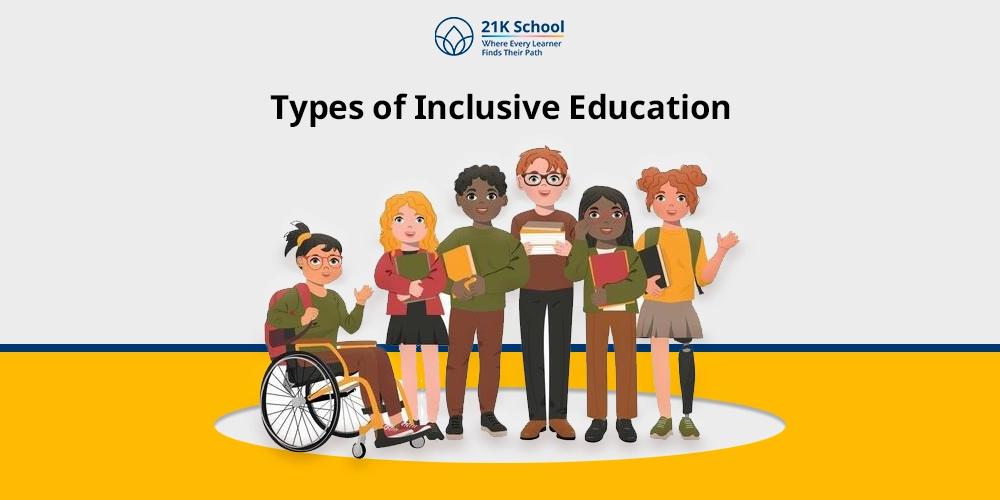
Every student deserves the opportunity to learn, participate, and succeed in school. However, students enter classrooms with different abilities, learning preferences, cultural backgrounds, language skills, experiences, and educational needs. Creating an environment where all students can access meaningful learning requires teachers to recognize these differences and plan instruction that supports everyone.
Inclusive education practices in schools help create learning environments where students feel respected, receive appropriate support, and participate meaningfully in classroom activities. These practices involve more than placing students with different abilities in the same classroom. They require schools to identify barriers, adapt teaching methods, provide accessible resources, and establish a culture of belonging.
Effective inclusion benefits students with disabilities, multilingual learners, students who need additional academic support, gifted learners, and children from diverse social and cultural backgrounds. When teachers design flexible lessons and provide appropriate accommodations, they can help more students engage with the curriculum and demonstrate what they know.
Inclusive education also requires collaboration. Teachers, school leaders, families, support professionals, and students all contribute to building an environment where differences are understood and individual needs are addressed.
This guide explores practical inclusive education strategies, explains how to adapt classroom instruction, and outlines ways schools can evaluate and improve their inclusion efforts.
What Is Inclusive Education?
Inclusive education is an approach to teaching and learning that aims to ensure all students can access quality education, participate in school life, and make meaningful progress regardless of their abilities, backgrounds, or individual circumstances.
Rather than expecting every student to learn in exactly the same way, inclusive education recognizes that learners may need different forms of instruction, resources, and support.
For example, one student may understand a science concept best through a written explanation, while another benefits from diagrams, demonstrations, or hands-on experiments. Both students can work toward the same learning objective using different pathways.
Inclusive education may involve:
- Adapting teaching methods to accommodate different learning needs.
- Providing accessible classroom materials and technology.
- Supporting students with disabilities.
- Helping multilingual learners understand academic content.
- Using flexible assessment methods.
- Promoting respectful interactions among classmates.
- Addressing bullying, discrimination, and exclusion.
- Working with families and specialized support professionals.
- Ensuring students have opportunities to participate in classroom decisions.
Inclusion does not mean lowering academic expectations or eliminating necessary support. Instead, it means maintaining meaningful learning goals while removing unnecessary barriers that prevent students from reaching them.
It also does not require teachers to create an entirely separate lesson for every student. Thoughtful lesson design, flexible resources, targeted assistance, and collaboration can make instruction more accessible without creating an unmanageable workload.
Why Are Inclusive Education Practices Important in Schools?
Inclusive education helps schools respond to the varied needs of their students while promoting fairness, participation, and belonging.
1. They Improve Access to Learning
Students may experience barriers because of inaccessible materials, unfamiliar vocabulary, physical classroom arrangements, or teaching methods that do not match their needs.
Teachers can reduce these barriers by presenting information in different formats, explaining instructions clearly, and providing appropriate tools.
For example, a teacher might explain a history topic through a short text, a timeline, a visual presentation, and a class discussion. Students gain several ways to understand the same content.
2. They Promote Belonging and Participation
Students are more likely to participate when they feel that their contributions are valued and that they are accepted by their classmates and teachers.
Inclusive classrooms encourage respectful discussion, collaborative activities, and opportunities for students to share their perspectives.
Teachers can strengthen belonging by learning students’ names, recognizing their interests, setting clear expectations for respectful behavior, and addressing exclusion promptly.
3. They Support Different Learning Needs
Students do not all require the same level or type of assistance.
Some may benefit from additional reading practice, while others need accessible technology, language support, movement breaks, enrichment activities, or more challenging assignments.
Inclusive teaching allows educators to respond to these differences while maintaining clear learning objectives.
4. They Encourage Collaboration and Communication
Inclusive classrooms provide opportunities for students to work with classmates who have different strengths, experiences, and perspectives.
Structured group activities can help students practice listening, problem-solving, communication, and shared decision-making.
These benefits are most likely when teachers establish clear group roles and ensure that every student has a meaningful contribution to make.
5. They Help Build Fairer School Communities
Schools communicate important values through their everyday decisions. When accessibility, respect, and participation are built into school policies and classroom routines, students see that fairness involves responding to individual needs rather than treating every situation identically.
UNICEF’s work on educational equity and inclusion highlights the importance of addressing barriers that affect marginalized learners, including children with disabilities, children living in poverty, and students whose education is disrupted by displacement or other circumstances.
Inclusive education is therefore both a classroom responsibility and a wider school improvement priority.
12 Inclusive Education Practices in Schools That Teachers Can Use
Teachers can introduce inclusive strategies gradually, starting with changes that address the most common barriers in their classrooms.
1. Use Universal Design for Learning
Universal Design for Learning (UDL) is a framework for planning lessons that anticipate differences among learners and reduce unnecessary barriers.
The framework encourages educators to provide multiple ways for students to engage with learning, access information, and demonstrate their understanding.
For example, during a science lesson, a teacher might:
- Introduce the topic with a demonstration or visual.
- Explain key concepts through spoken and written language.
- Provide diagrams or labeled illustrations.
- Allow students to demonstrate learning through writing, an oral explanation, or an appropriate project.
- Offer structured guidance for students who need additional support.
The learning objective remains clear, but students have different ways to work toward it.
UDL is especially useful because it encourages teachers to plan for learner variability before difficulties arise rather than waiting until students struggle.
However, UDL does not replace individualized accommodations or specialized instruction. Some students will still need specific supports based on their assessed needs.
2. Differentiate Instruction
Differentiated instruction involves adjusting aspects of teaching to respond to differences in students’ readiness, interests, and learning needs.
Teachers can differentiate content, learning activities, resources, the amount of support provided, or the way students demonstrate understanding.
For example, during a reading lesson, all students might explore the same central theme. Some students may read a more accessible version of a passage, others may work with the original text, and advanced learners may compare the passage with another source.
Teachers can also provide:
- Vocabulary previews.
- Sentence starters.
- Guided practice.
- Additional examples.
- Extension questions.
- Graphic organizers.
- Small-group instruction.
Differentiation should be purposeful rather than based on fixed assumptions about students. Teachers can use classroom observations, assessments, and student feedback to determine which supports are helpful.
3. Make Classroom Materials Accessible
Students cannot fully participate if the materials they need are difficult to read, hear, see, navigate, or understand.
Accessible resources help reduce these barriers.
Depending on students’ needs, teachers may use:
- Large-print materials.
- Screen-reader-compatible documents.
- Captions and transcripts for videos.
- Audio versions of texts.
- High-contrast visual materials.
- Clear headings and readable layouts.
- Diagrams with explanatory labels.
- Plain-language instructions.
- Translations or bilingual glossaries when appropriate.
For example, a teacher sharing a digital worksheet should consider whether students can navigate it using assistive technology and whether the text remains readable on different devices.
Accessibility should be considered when selecting and creating materials, not only after a student encounters a problem.
Teachers should also follow applicable accessibility requirements and work with specialists when they need help selecting suitable resources.
4. Provide Clear Instructions and Predictable Routines
Unclear instructions can create barriers for students who have language differences, attention difficulties, processing needs, or limited familiarity with a task.
Teachers can improve clarity by breaking assignments into manageable steps and presenting instructions in more than one format.
For example, instead of telling students to complete a complicated project in a single explanation, a teacher can provide a checklist:
- Read the project question.
- Identify the main topic.
- Gather information from approved sources.
- Organize the information.
- Create the final response.
- Review the work against the success criteria.
A visual schedule can also help students understand the order of classroom activities.
Predictable routines reduce uncertainty, while clear explanations help students focus on learning rather than trying to interpret what they are expected to do.
When appropriate, ask students to explain the first step in their own words. This helps teachers check understanding without assuming that everyone has interpreted the instructions correctly.
5. Support Multilingual Learners
Students who are learning the language of instruction may understand complex ideas even when they cannot yet express them fluently in that language.
Teachers should distinguish between a student’s understanding of academic content and their current language proficiency.
Helpful strategies include:
- Pre-teaching essential vocabulary.
- Using pictures, diagrams, and demonstrations.
- Connecting new ideas with familiar experiences.
- Providing sentence frames for discussion.
- Allowing structured partner conversations.
- Offering bilingual glossaries where available.
- Giving students time to formulate responses.
- Checking comprehension through several methods.
For example, during a geography lesson, a teacher might introduce key terms with labeled images and demonstrate how to interpret a map before asking students to write an explanation.
Where appropriate, students can also use their home languages to discuss ideas, build background knowledge, or plan a response.
The aim is to support access to the curriculum while helping students develop the language skills they need for academic success.
6. Use Flexible Ways to Assess Learning
Traditional tests and written assignments can provide useful information, but they do not always capture everything a student understands.
Inclusive assessment gives students appropriate opportunities to demonstrate learning while preserving the essential purpose of the assessment.
Depending on the learning objective and individual requirements, teachers might use:
- Written responses.
- Oral explanations.
- Demonstrations.
- Projects.
- Presentations.
- Practical tasks.
- Portfolios.
- Short formative assessments.
For example, if the goal is to assess understanding of a scientific process, a student might explain the process orally or use a labeled diagram when that format is consistent with the learning objective and assessment requirements.
If the goal is specifically to assess writing proficiency, however, replacing a written response with an oral explanation may not measure the intended skill.
The key is to distinguish between the knowledge or skill being assessed and barriers unrelated to that objective.
Teachers should follow students’ formal accommodation plans and applicable assessment policies when determining appropriate adjustments.
7. Create a Respectful and Culturally Responsive Classroom
An inclusive classroom recognizes that students bring different languages, cultural practices, family experiences, and perspectives to school.
Teachers can make classroom learning more welcoming by choosing materials that reflect a range of backgrounds and experiences without relying on stereotypes.
Practical approaches include:
- Using examples from different communities.
- Selecting books with diverse characters and perspectives.
- Learning how students prefer their names to be pronounced.
- Inviting students to contribute relevant experiences.
- Avoiding assumptions about family structure, income, or cultural knowledge.
- Providing multiple ways to participate in discussions.
- Addressing discriminatory comments respectfully and promptly.
For example, a teacher teaching a unit on family traditions could invite students to share experiences if they wish, while making it clear that no student is required to disclose private family information.
Culturally responsive teaching helps students connect new concepts with what they already know while ensuring that no student is expected to represent an entire culture or community.
8. Establish Positive Behavior and Emotional Support
Students are more likely to participate when they feel safe, understand expectations, and know how to seek help.
Inclusive behavior support emphasizes teaching expected behaviors, identifying barriers, and responding constructively rather than relying only on punishment.
Teachers can:
- Establish a small number of clear classroom expectations.
- Model respectful communication.
- Provide specific feedback.
- Recognize positive contributions.
- Teach students how to resolve disagreements.
- Use predictable transitions.
- Offer appropriate breaks or regulation strategies.
- Address bullying and exclusion consistently.
For example, if a student repeatedly struggles during transitions between activities, the teacher can provide advance notice, use a visual reminder, and explain the next step.
This approach does not mean ignoring harmful behavior. Schools must protect students and respond appropriately to unsafe actions while considering individual needs and the circumstances involved.
Positive classroom management can complement inclusion by making expectations clear and reducing avoidable conflict.
9. Use Cooperative Learning With Clear Roles
Group work can support participation and peer learning, but simply placing students into groups does not guarantee inclusion.
Without structure, some students may dominate discussions while others receive little opportunity to contribute.
Teachers can improve group activities by assigning meaningful roles, setting shared goals, and explaining what each student is expected to do.
Possible roles include:
- Discussion facilitator.
- Note-taker.
- Researcher.
- Materials organizer.
- Presenter.
- Evidence checker.
Roles should be flexible and accessible. A student should not be permanently assigned an easier task because of a disability, language difference, or perceived ability.
For example, a group researching renewable energy might divide the work into gathering information, comparing sources, organizing findings, and presenting conclusions. Students can select or rotate responsibilities according to the learning goals and their support needs.
Teachers should monitor group participation and intervene if a student is being excluded or prevented from contributing.
10. Provide Appropriate Assistive Technology
Assistive technology can help some students access information, communicate, organize work, or complete classroom tasks more independently.
Examples include:
- Text-to-speech tools.
- Speech-to-text software.
- Screen readers.
- Alternative keyboards or pointing devices.
- Communication devices.
- Digital magnification tools.
- Accessible electronic books.
- Visual scheduling applications.
The appropriate tool depends on the student’s needs, preferences, learning environment, and available support.
For example, a student who has difficulty producing written text may use speech-to-text technology to draft an assignment. Another student may benefit from text-to-speech to access a reading passage.
Technology should support learning goals rather than become an unnecessary distraction. Teachers should introduce tools carefully, provide time for students to learn how to use them, and ensure that the resources are compatible with school systems and accessibility requirements.
Assistive technology also works best when it is part of a broader support plan rather than treated as a complete solution on its own.
11. Build Strong Partnerships With Families
Families often have valuable information about a student’s interests, communication preferences, strengths, and experiences.
Regular communication can help teachers understand what support works well and identify concerns before they become larger problems.
Effective family partnerships may include:
- Sharing learning goals and progress.
- Asking families about useful strategies.
- Explaining classroom accommodations.
- Offering translated communications when possible.
- Providing several ways to contact the school.
- Discussing concerns respectfully and privately.
- Inviting family input into relevant support planning.
For example, if a student uses a particular communication method at home, the family may be able to explain how teachers can support similar communication at school.
Families should be treated as partners, not blamed when a student experiences difficulties. Schools must also protect student privacy and ensure that decisions comply with relevant policies and legal requirements.
12. Collaborate With Specialists and Support Staff
Some students require support beyond what a classroom teacher can provide independently.
Special education teachers, speech and language professionals, school counselors, occupational therapists, psychologists, and other specialists may contribute relevant expertise, depending on the student’s needs and the services available.
Collaboration can help staff coordinate goals, select suitable strategies, and avoid conflicting expectations.
For example, a classroom teacher and a special education teacher might work together to adapt a reading assignment while preserving the central learning objective.
Schools can support collaboration through:
- Scheduled planning meetings.
- Shared learning goals.
- Clear staff responsibilities.
- Appropriate progress records.
- Coordinated communication with families.
- Professional development.
- Time to review and adjust interventions.
Specialist support should complement classroom participation wherever appropriate. The purpose is to help students access meaningful learning, not to create unnecessary separation from classmates.
Inclusive Education Strategies for Different Student Needs
Inclusive education is not a single intervention. Teachers need to consider individual strengths, barriers, and learning objectives when choosing appropriate supports.
The following table offers general examples. It is not a substitute for individualized assessment or professional guidance.
| Student needs | Potential barriers | Inclusive strategies |
|---|---|---|
| Students with visual impairments | Inaccessible print, diagrams, or digital materials | Screen-reader-compatible content, large print, audio resources, and accessible diagrams |
| Students with hearing impairments | Difficulty accessing spoken instructions or audio content | Captions, written instructions, visual information, and appropriate hearing or communication support |
| Students with mobility-related disabilities | Inaccessible classroom layouts or activities | Accessible routes, suitable seating, adapted materials, and alternative ways to participate in practical tasks |
| Students with dyslexia or reading difficulties | Difficulties decoding text or reading fluently | Explicit reading instruction, structured practice, accessible text formats, and appropriate assistive tools |
| Multilingual learners | Unfamiliar academic vocabulary or language structures | Visual supports, vocabulary instruction, language scaffolds, and structured peer discussion |
| Students with attention or executive-function difficulties | Complex tasks, transitions, or organization demands | Task checklists, clear routines, chunked instructions, and appropriate movement or planning supports |
| Gifted and advanced learners | Repetitive tasks or insufficient challenge | Enrichment, deeper inquiry, complex problems, and opportunities for independent exploration |
| Students experiencing social or emotional barriers | Fear of failure, exclusion, or difficulty participating | Supportive relationships, predictable routines, appropriate choice, and access to relevant school support |
Teachers should avoid assuming that everyone within a category has the same needs. Two students with the same diagnosis may require different supports, and a student may need several forms of assistance at once.
The most effective decisions combine professional knowledge, student input, observation, assessment, and collaboration with families and relevant specialists.
How to Implement Inclusive Education Practices Across a School
Individual teachers can make important changes, but lasting inclusion usually requires school-wide planning and leadership.
Step 1: Identify Barriers to Participation
Begin by examining how students experience the school environment.
Consider whether classroom materials are accessible, instructions are understandable, school spaces are usable, and students have meaningful opportunities to participate.
Gather information through classroom observations, student feedback, family communication, and relevant school records.
Focus on identifying barriers rather than assuming that a student’s difficulties are caused only by individual limitations.
Step 2: Set Clear Inclusion Goals
Schools should establish specific, realistic goals that connect inclusion with teaching, participation, accessibility, and student well-being.
For example, a school might aim to make all core digital learning materials accessible, improve family communication, or provide staff training on differentiated instruction.
Goals should be relevant to the school’s context and reviewed regularly.
Step 3: Provide Teacher Training and Planning Time
Teachers need opportunities to learn how to adapt instruction, select accessible resources, use assistive technology, and respond to different learning needs.
Professional development is most useful when it includes practical examples, opportunities to plan lessons, and follow-up support.
School leaders should also provide time for teachers to collaborate. Inclusion is harder to sustain when educators are expected to make complex adjustments without appropriate resources or planning time.
Step 4: Coordinate Resources and Support Services
Schools should identify the materials, technology, specialist services, and staff expertise available to support students.
Clear procedures help teachers understand how to request assistance and how to coordinate with specialists.
Where resources are limited, schools can prioritize changes that address significant barriers, make effective use of existing materials, and seek appropriate support from education authorities or community partners.
Limited resources should not become a reason to ignore students’ needs. Instead, they should prompt thoughtful planning and advocacy for additional support.
Step 5: Involve Students and Families
Students should have appropriate opportunities to express what helps them learn and participate.
Schools can use age-appropriate surveys, student discussions, family meetings, and accessible feedback methods.
Participation should be voluntary where personal disclosure is involved, and schools must protect confidential information.
Step 6: Review Progress and Adjust
Inclusive education is an ongoing process rather than a one-time project.
Review whether students can access learning materials, participate in classroom activities, receive appropriate support, and make progress toward learning goals.
If a strategy is not working, investigate why and consider an alternative.
A regular review cycle allows schools to make improvements based on evidence instead of assuming that a policy or intervention is effective simply because it has been introduced.
How Schools Can Measure the Success of Inclusive Education
Schools need practical ways to understand whether their inclusion efforts are improving students’ educational experiences.
No single measure can capture every aspect of inclusion. Academic achievement, participation, accessibility, and belonging should be considered together.
Useful indicators include:
Access to learning materials: Are students able to use textbooks, worksheets, digital resources, and classroom technology?
Classroom participation: Do students have meaningful opportunities to contribute to discussions, group activities, and practical tasks?
Academic progress: Are students working toward clear learning goals and receiving appropriate support when they struggle?
Student belonging: Do students report feeling respected, safe, and included in classroom life?
Family engagement: Can families communicate with school staff and contribute relevant information about students’ needs?
Staff confidence: Do teachers have the knowledge, resources, and collaboration opportunities required to implement inclusive practices?
Behavior and attendance patterns: Are there signs that particular groups of students experience persistent exclusion, avoidable disciplinary responses, or barriers to attending school?
Schools can review these indicators using classroom observations, student feedback, assessment results, attendance data, and other appropriate records.
Data should be interpreted carefully. For example, a high attendance rate does not automatically mean students feel included, and an increase in reported concerns may reflect improved trust in the reporting process rather than a worsening school climate.
Schools should use evidence to identify areas for improvement, protect student privacy, and avoid labeling individual learners as problems.
Common Challenges in Inclusive Education and How to Address Them
Schools may encounter practical difficulties when implementing inclusive education. Recognizing these challenges can help educators plan realistic solutions.
Limited Resources
Some schools lack specialist staff, accessible technology, or suitable learning materials.
What schools can do: Prioritize the most significant barriers, use flexible teaching methods, share appropriate resources, seek support from relevant education authorities, and develop a clear plan for additional needs.
Large Class Sizes
Teachers may find it difficult to provide individual attention when many students require support.
What schools can do: Use clear routines, flexible grouping, accessible core materials, peer collaboration, and targeted small-group instruction when feasible. School leaders should also consider staffing and workload when planning inclusion initiatives.
Insufficient Teacher Training
Teachers may understand the value of inclusion but feel uncertain about adapting lessons or supporting particular needs.
What schools can do: Offer practical professional development, collaborative planning, coaching, and opportunities to observe effective classroom approaches.
Resistance to Change
Staff or families may worry that inclusive practices will lower academic standards or make teaching more difficult.
What schools can do: Explain the purpose of inclusion, share practical examples, invite questions, and use evidence to review whether changes are helping students access meaningful learning.
Inconsistent Family Communication
Language barriers, scheduling difficulties, or unclear communication procedures can prevent families from participating fully.
What schools can do: Offer flexible meeting options, use clear language, provide translation where possible, and establish consistent methods for sharing relevant information.
Difficulty Measuring Progress
Schools may focus on broad statements about inclusion without identifying specific areas that need improvement.
What schools can do: Set measurable goals, collect appropriate evidence, review outcomes regularly, and adjust strategies when results show that students continue to experience barriers.
Progress does not require every challenge to be solved immediately. It requires schools to identify problems honestly, take practical action, and remain accountable for improving students’ experiences.
A Practical Checklist for Inclusive Classrooms
Teachers can use this checklist when planning lessons or reviewing classroom routines.
- Learning objectives are clear and communicated in accessible language.
- Materials are available in formats suitable for students’ needs.
- Instructions are broken into manageable steps where necessary.
- Examples and learning resources reflect a range of experiences.
- Students have appropriate opportunities to ask questions.
- Classroom activities allow meaningful participation.
- Group roles are structured so all students can contribute.
- Assessment methods align with the skills being measured.
- Required accommodations are provided.
- Classroom expectations address respect, safety, and bullying.
- Students can communicate their needs in appropriate ways.
- Families and relevant specialists are involved when needed.
- Teachers review student progress and adjust support accordingly.
Teachers do not need to change every classroom practice at once. They can start with one or two priorities, observe the results, and gradually improve their approach.
Frequently Asked Questions About Inclusive Education Practices in Schools
1. What are inclusive education practices in schools?
Inclusive education practices are teaching methods, support systems, and school policies designed to help students with different abilities, backgrounds, and learning needs access education and participate meaningfully. Examples include differentiated instruction, accessible materials, flexible assessments, assistive technology, positive classroom management, and collaboration with families.
2. What are the most effective inclusive teaching strategies?
Useful strategies include clear instructions, flexible lesson design, multiple ways to present information, structured group work, accessible learning materials, and regular formative assessment. Teachers should select strategies according to learning objectives, student needs, and evidence of what is working in their classrooms.
3. How does Universal Design for Learning support inclusion?
Universal Design for Learning encourages teachers to anticipate learner variability when planning instruction. It promotes multiple ways for students to engage with learning, access information, and demonstrate understanding. This can reduce avoidable barriers while preserving meaningful academic expectations. Some students may still require individualized accommodations or specialized instruction.
4. How can teachers support students with disabilities in inclusive classrooms?
Teachers can provide accessible materials, appropriate accommodations, assistive technology, clear routines, and flexible ways to participate. They should collaborate with families and relevant specialists, follow applicable support plans, and respect students’ preferences and dignity. The appropriate approach depends on each student’s individual needs.
5. What is the difference between inclusion and integration?
Integration generally refers to placing students within an existing educational environment, sometimes with limited changes to the system. Inclusion requires schools to examine and address barriers so students can participate meaningfully in learning and school life. In practice, the distinction depends on how educational policies and services are implemented.
6. How can schools support multilingual learners?
Schools can pre-teach vocabulary, use visual explanations, provide structured opportunities for discussion, connect new concepts with students’ prior knowledge, and offer bilingual resources when appropriate. Teachers should assess content understanding separately from language proficiency whenever possible and provide appropriate support for language development.
7. Does inclusive education mean using the same lesson for every student?
No. Inclusive education involves maintaining meaningful learning goals while allowing appropriate flexibility in materials, teaching methods, support, and assessment. Students may need different pathways to reach the same objective, and some may require individualized learning goals or additional specialist support.
8. How can school leaders improve inclusive education?
School leaders can review accessibility, provide staff training, allocate resources, establish clear support procedures, involve families and students, and monitor progress. They should create time for teacher collaboration and ensure that inclusion is reflected in school policies, classroom practice, and resource planning.
9. What are the biggest barriers to inclusive education?
Common barriers include inaccessible learning materials, insufficient staff training, limited resources, rigid teaching methods, discrimination, weak family communication, and a lack of coordinated support. Schools can address these barriers through practical planning, professional development, accessible design, collaboration, and regular evaluation.
10. How can teachers know whether their inclusive practices are working?
Teachers can review student participation, progress toward learning objectives, access to materials, feedback from students, and the effectiveness of classroom accommodations. They should use several sources of evidence rather than relying on a single test score or observation. When a strategy does not work as expected, they can adjust it or seek additional support.
Conclusion
Inclusive education is essential to building school environments where students with different abilities, experiences, and learning needs can access meaningful educational opportunities.
Effective inclusive education practices in schools combine accessible lesson design, differentiated instruction, flexible assessment, appropriate technology, respectful classroom relationships, and collaboration among educators, families, and support professionals.
The most successful approach is not to expect every student to learn in exactly the same way. It is to establish clear learning goals, recognize individual strengths and barriers, and provide appropriate pathways for students to participate and make progress.
Schools can begin by reviewing classroom accessibility, improving the clarity of instructions, offering flexible learning materials, and listening to students and families. Over time, professional development, coordinated support, and regular evaluation can help make inclusion a consistent part of school culture.
Inclusive education is an ongoing commitment. When schools identify barriers, respond to individual needs, and maintain high expectations with appropriate support, they create stronger opportunities for students to learn, contribute, and feel that they belong.

Leave a Reply