Helping children develop a love of reading can be challenging when they avoid books, lose interest quickly, or view reading as a school task rather than an enjoyable activity. Some children struggle to find stories that interest them, while others find reading difficult because they have not yet developed the skills or confidence they need.
The good news is that reading motivation can grow when children experience success, discover books that match their interests, and receive encouragement without pressure. Parents and teachers can make reading more appealing by offering choices, sharing exciting stories, connecting books with everyday experiences, and creating positive reading routines.
Learning how to encourage reluctant readers begins with understanding why a child avoids reading and choosing approaches that make the experience more rewarding. This guide explores practical strategies for helping children discover enjoyable books, build confidence, and develop reading habits that can last a lifetime.
What Is a Reluctant Reader?
A reluctant reader is a child who shows limited interest in reading or regularly avoids reading activities. Some reluctant readers read only when required, while others prefer activities such as gaming, sports, drawing, or watching videos.
Reluctance does not necessarily mean that a child dislikes stories or learning. A child may enjoy listening to books but feel uncomfortable reading independently. Another child might love learning about animals but dislike the fictional stories selected for classroom assignments.
Understanding the reason behind a child’s reluctance is the first step toward providing meaningful support.
Why Do Some Children Avoid Reading?
Children may avoid books for different reasons. Identifying the underlying difficulty helps adults choose strategies that address the actual problem rather than simply asking the child to read more.
1. Reading Feels Too Difficult
Children who struggle with decoding, recognizing words, reading fluently, or understanding sentences may find reading tiring. When every page requires considerable effort, reading can become frustrating rather than enjoyable.
These children may benefit from explicit reading instruction, appropriately challenging books, and supportive practice with an adult.
2. The Books Do Not Match Their Interests
A child who enjoys football, animals, space, cooking, or adventure may not feel motivated by a book that has little connection to those interests.
Offering books on familiar and exciting topics can help children discover that reading is a way to explore what they already enjoy.
3. They Have Experienced Reading Pressure
Repeated correction, public reading mistakes, comparisons with classmates, or pressure to finish a certain number of pages can make children anxious about reading.
Some children begin to associate books with embarrassment or failure. A supportive environment can help them rebuild confidence gradually.
4. They Have Limited Choice
When adults select every book and determine every reading activity, children may feel that reading is something imposed on them.
Giving children a reasonable amount of choice can help them feel more involved in the process. Adults can still guide their selections toward suitable materials.
5. They Prefer Other Activities
Children have different interests, and reading may not immediately compete with the appeal of sports, games, social activities, or creative hobbies.
Instead of treating these interests as obstacles, adults can use them as starting points for finding engaging books and other reading materials.
6. They Have Not Found the Right Reading Format
Some children prefer illustrated books, graphic novels, joke books, comics, magazines, or short nonfiction articles rather than traditional chapter books.
These formats can provide meaningful reading experiences and help children develop confidence before moving toward longer or more complex texts.
12 Effective Ways to Encourage Reluctant Readers
The following strategies can help parents, teachers, and caregivers make reading more inviting while respecting children’s individual interests and learning needs.
1. Let Children Choose Their Own Books
Giving children opportunities to choose what they read can increase their sense of ownership and encourage them to explore new topics.
Instead of selecting a book and insisting that a child finish it, offer several suitable options. These might include an animal story, a sports biography, a funny illustrated book, or a nonfiction book about space.
How to put this strategy into practice:
- Visit a library or explore a collection of books at home.
- Allow the child to browse different subjects and formats.
- Ask what catches their attention.
- Help them choose a book that seems manageable and interesting.
- Let them change books if the first choice does not hold their interest.
For example, a child who loves dinosaurs might become more interested in reading after discovering an illustrated dinosaur encyclopedia.
Choice does not mean that every book must be easy or that adults should stop guiding reading development. The goal is to combine appropriate support with genuine opportunities for children to express their preferences.
2. Connect Reading With Their Hobbies
Children often become more willing to read when the material relates to something they already enjoy.
A child who loves football might enjoy player biographies, match reports, or books explaining how teams work. A child interested in animals might prefer wildlife guides, illustrated nonfiction, or stories about pets.
Try these connections:
- Sports: Player biographies, sports stories, and game summaries.
- Animals: Wildlife books, pet-care guides, and animal adventures.
- Science: Space books, experiments, and discoveries.
- Art: Drawing guides, illustrated stories, and books about artists.
- Cooking: Simple recipes, food stories, and illustrated cooking instructions.
- Technology: Books about inventions, robots, and how everyday devices work.
These choices show children that reading can help them explore their interests rather than distract them from those interests.
3. Read Aloud Together
Reading aloud is one of the simplest ways to make books enjoyable without requiring children to do all the reading themselves.
When adults read expressively, children can enjoy the story while hearing fluent reading, encountering new vocabulary, and following more complex ideas than they might manage independently.
Try this routine:
- Choose a story that interests the child.
- Read with natural expression and an engaging pace.
- Pause occasionally to discuss an interesting event or character.
- Invite the child to predict what might happen next.
- Stop before the experience becomes tiring.
- Return to the story at another convenient time.
You do not need to turn every reading session into a lesson. Sometimes the most effective way to encourage reading is simply to share a good story.
For older children, reading aloud can still be valuable. Middle-grade novels, biographies, mysteries, and nonfiction books can provide opportunities for family discussion and shared enjoyment.
4. Start With Short and Accessible Reading Materials
A long novel can feel overwhelming to a child who already avoids reading. Short texts provide opportunities to finish something, understand it, and feel successful.
Consider starting with:
- Short illustrated stories.
- Comics and graphic novels.
- Joke books and riddles.
- Magazine articles.
- Interesting facts about animals or science.
- Short biographies.
- Simple how-to guides.
- Brief stories with familiar characters.
Let the child build confidence through manageable reading experiences. As their interest and skills develop, they may become more willing to explore longer books.
Remember that the best text is not necessarily the shortest one. It should also be appropriate for the child’s reading skills and interesting enough to encourage continued engagement.
5. Make Regular Visits to the Library
Libraries offer children access to a wide variety of reading materials without requiring families to purchase every book.
A library visit can also turn book selection into an enjoyable activity. Children can explore new topics, discover different authors, and browse formats they may not encounter at school.
Ways to make library visits more engaging:
- Let the child choose a few books independently.
- Explore a section related to their favorite topic.
- Ask a librarian for age-appropriate recommendations.
- Look for illustrated nonfiction, comics, and short stories.
- Create a small challenge, such as finding a book about an unfamiliar animal.
- Let children return books they did not enjoy without criticism.
If visiting a physical library is not practical, explore digital library collections or school reading resources where available.
The purpose is to make discovering books feel exciting rather than like another assignment.
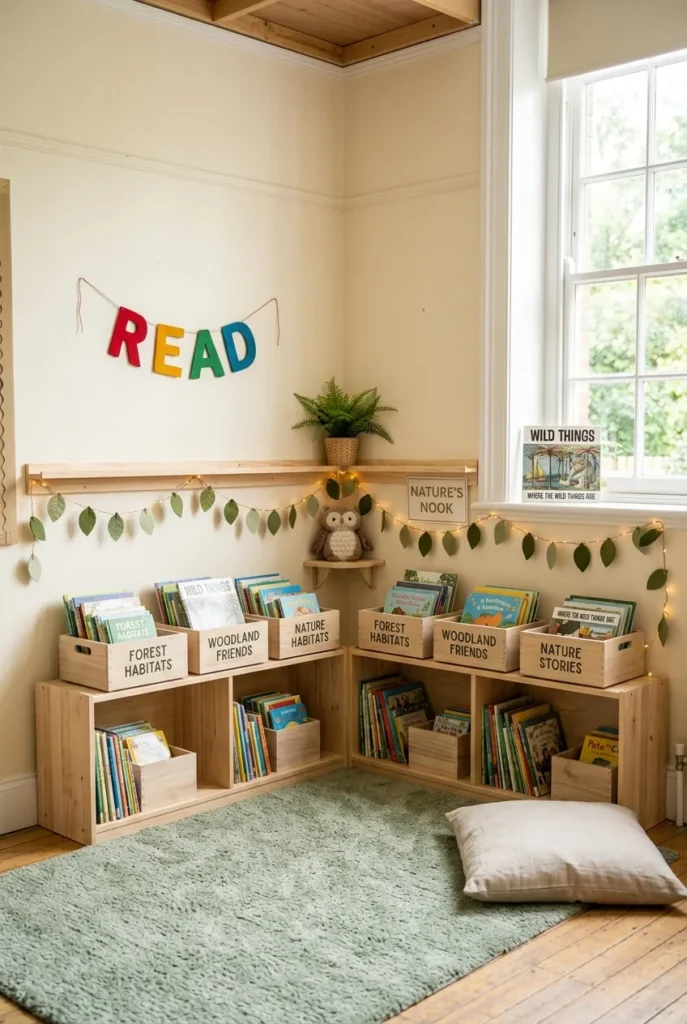
6. Create a Comfortable Reading Space
Children may be more willing to read when they have a comfortable, predictable place where they can focus.
A reading space does not need expensive furniture or elaborate decorations. A quiet corner, a comfortable chair, good lighting, and a small collection of interesting books can be enough.
You can make the space inviting by adding:
- A cushion or comfortable seat.
- A basket of books selected by the child.
- A reading lamp or natural light.
- A few favorite illustrations or posters.
- A place to keep bookmarks and reading notes.
Allow children to read in different comfortable locations when appropriate. Some may prefer a sofa, a quiet bedroom, or a spot outdoors.
The aim is to make reading accessible and pleasant, not to create a setting so elaborate that it becomes another requirement.
7. Use Graphic Novels, Comics, and Illustrated Books
Not every child is motivated by traditional storybooks. Comics and graphic novels combine words with illustrations, providing visual context that can help readers follow characters, actions, and events.
These formats can be especially appealing to children who enjoy humor, adventure, superheroes, or visual storytelling.
Graphic novels still require readers to interpret dialogue, understand vocabulary, follow a sequence of events, and make connections between text and images.
If a child chooses a comic or illustrated book, encourage them to discuss the story and explore related books when they are ready.
Avoid suggesting that these materials are inferior to chapter books. Different formats can support reading engagement and offer valuable opportunities to practice literacy skills.
8. Try Audiobooks and Follow-Along Reading
Audiobooks can introduce children to stories they might not yet be able to read independently. They also allow children to enjoy books during appropriate activities such as quiet time or a family journey.
For children who find reading difficult, listening to a story can reduce the immediate effort required to decode every word while allowing them to experience the plot, characters, and vocabulary.
How to use audiobooks effectively:
- Choose an engaging book that suits the child’s interests.
- Listen together to the opening section.
- Discuss the characters, setting, or main idea.
- If a printed copy is available, invite the child to follow along with the text.
- Encourage the child to read a manageable section aloud when appropriate.
- Ask whether they would like to continue the story independently or together.
Audiobooks can complement reading instruction, but they do not replace explicit teaching for children who need help decoding written words. Use them as an additional way to enjoy stories and develop language.
9. Make Reading Social
Some children enjoy reading more when it becomes a shared activity rather than an individual task.
Talking about books can help children discover new titles, hear different perspectives, and connect reading with friendship and family relationships.
Try these activities:
- Read the same short story with a sibling or friend.
- Start a small family book club.
- Ask children to recommend books to one another.
- Discuss favorite characters over dinner.
- Let children take turns reading a funny passage aloud.
- Invite students to share an interesting fact from a book.
For classroom use, teachers can organize informal book discussions where students explain what they enjoyed without needing to complete a formal report.
Avoid turning every social reading activity into a competition. The aim is to help children see books as something people can enjoy and discuss together.
10. Use Reading Games and Creative Activities
Games can make reading more interactive, particularly for children who find long periods of independent reading difficult.
The best activities still involve meaningful engagement with words, sentences, or stories.
Book scavenger hunt: Ask children to find a character, animal, location, or interesting fact in a book.
Story prediction game: Pause during a story and ask what might happen next. After reading, compare the prediction with the actual ending.
Character detective: Invite children to find clues about a character’s personality, feelings, or decisions.
Read and draw: Ask children to draw a scene, object, or character based on a passage they have read.
Family reading bingo: Create a simple grid with options such as reading a funny story, exploring an animal book, or reading with a family member.
These activities encourage children to interact with reading materials in different ways. Keep them flexible and enjoyable rather than making them compulsory tasks that increase pressure.
11. Celebrate Effort Without Comparing Children
Encouragement can help children recognize their progress, particularly if they have experienced frustration with reading.
Praise specific actions rather than making broad comparisons with other children.
For example, you might say:
- “You kept trying when that word was difficult.”
- “You chose a book about something you really enjoy.”
- “You remembered what happened in the last chapter.”
- “You read that sentence more smoothly today.”
- “You found an interesting fact and explained it clearly.”
Avoid statements that compare a child with siblings or classmates. Such comparisons may make reading feel like a performance rather than a personal learning experience.
Progress will not always be consistent. Some days a child may read enthusiastically, while on other days they may need more encouragement or a shorter session.
Celebrate meaningful effort and give children time to develop confidence.
12. Be a Reading Role Model
Children notice how adults use books and written information in everyday life. When they see parents, teachers, and other trusted adults reading for enjoyment or learning, they encounter a positive example of reading as a normal activity.
You can model this by reading a novel, looking through a magazine, exploring a recipe, or using a guide to learn something new.
Talk naturally about what you are reading.
For example, you might say, “I found an interesting idea in this book,” or “I am reading about how birds build their nests.”
Share the enjoyment without insisting that children copy everything you do. The purpose is to show that reading can be useful, relaxing, entertaining, and personally meaningful.
How to Encourage Reluctant Readers Who Struggle With Reading
Some children avoid books because reading itself is difficult. In these cases, motivational strategies should be combined with appropriate instruction and support.
Find Out Which Skills Are Difficult
Ask the child’s teacher or observe the child during reading to understand whether the main challenge involves recognizing words, decoding unfamiliar spellings, reading smoothly, understanding vocabulary, or following the meaning of a passage.
Different difficulties require different forms of support.
For example, a child who struggles to decode words may need explicit phonics instruction, while a child who reads accurately but cannot explain a passage may need support with vocabulary and comprehension.
Choose Books at an Appropriate Reading Level
A child may enjoy a topic but struggle to read a book independently because the text is too difficult.
Offer books that match the child’s current reading skills, and provide more challenging materials through shared reading or read-alouds.
This allows the child to enjoy rich stories while still receiving manageable independent practice.
Avoid Forcing Public Reading
Reading aloud in front of a group can be stressful for children who worry about making mistakes. If public reading causes anxiety, begin with private practice, shared reading, or reading with a trusted adult.
Gradually offer other opportunities as the child becomes more comfortable.
Seek Additional Help When Needed
If a child consistently struggles with reading despite suitable instruction and practice, speak with their teacher or a qualified reading specialist.
Persistent difficulties with decoding, word recognition, fluency, or comprehension may require targeted assessment and additional support. Avoid assuming that a child is lazy or uninterested when an underlying learning difficulty may be contributing to the problem.
Encouraging reading and teaching reading skills should work together.
How Parents Can Build a Daily Reading Routine
A predictable routine can make reading easier to fit into family life. However, the routine should remain flexible enough to accommodate the child’s interests, energy, and reading ability.
Try this simple approach:
Step 1: Choose a regular time. Reading might fit naturally after dinner, before bed, or during a quiet period in the afternoon.
Step 2: Offer a choice. Let the child select from a few suitable books or choose between independent reading and reading together.
Step 3: Start small. Begin with a manageable session, perhaps five to ten minutes, and adjust according to the child’s age and engagement.
Step 4: Keep the experience positive. Avoid interrupting constantly to correct every mistake if the main goal is shared enjoyment. Address skill difficulties during suitable guided practice.
Step 5: Talk about the experience. Ask what the child liked, what surprised them, or whether they would like to read something similar.
Step 6: Make room for change. If the book is not interesting, help the child choose another one. Developing a reading habit does not require finishing every book.
Over time, these small experiences can help reading become a familiar and enjoyable part of daily life.
A Simple Weekly Reading Plan for Reluctant Readers
A weekly plan can provide structure while giving children enough choice to explore different types of reading materials.
| Day | Activity | Purpose |
|---|---|---|
| Monday | Choose a book based on personal interests | Build ownership and curiosity |
| Tuesday | Read a short story together | Make reading enjoyable |
| Wednesday | Explore a comic, magazine, or nonfiction text | Introduce different formats |
| Thursday | Listen to an audiobook and discuss it | Enjoy stories and build language |
| Friday | Share a favorite passage or interesting fact | Encourage positive reflection |
| Weekend | Visit a library or explore books related to a hobby | Discover new reading options |
This is a flexible guide rather than a strict requirement. Some children may prefer to spend several days on one book, while others may enjoy sampling different materials.
The goal is to create regular opportunities for reading without turning the schedule into another source of pressure.
Common Mistakes to Avoid When Encouraging Reluctant Readers
Well-intentioned adults can sometimes make reading less appealing by focusing too heavily on compliance or performance.
Forcing Children to Finish Every Book
A child who dislikes a book may become less interested in reading if they are required to finish it. Help them find a more suitable option when necessary.
Focusing Only on Reading Time
The number of minutes spent reading does not tell the whole story. Consider whether the child understands the material, feels comfortable, and is becoming more willing to engage with books.
Choosing Books Only by Age
Children of the same age can have different reading skills and interests. Consider both when selecting books.
Treating Comics as Less Valuable
Illustrated books and comics can engage children and encourage meaningful reading. Focus on whether the material is appropriate and whether the child is actively engaging with it.
Correcting Every Mistake During Enjoyment Reading
Constant interruption can disrupt a story and make children self-conscious. Separate relaxed shared reading from targeted skill practice when possible.
Comparing Children With Their Peers
Comparisons may create pressure and discourage children who are developing at a different pace. Recognize individual progress instead.
Ignoring Persistent Reading Difficulties
If a child consistently avoids reading because it feels too hard, motivational activities alone may not solve the problem. Seek appropriate instruction and assessment when needed.
Frequently Asked Questions
How do you encourage a reluctant reader?
Start by discovering the child’s interests and offering suitable books that connect with those interests. Read aloud together, provide choices, use comics or audiobooks when appropriate, and create a relaxed reading routine. If reading is difficult, combine these strategies with explicit instruction and individualized support.
What types of books are best for reluctant readers?
The best books are those that match the child’s interests and reading skills. Options may include illustrated stories, graphic novels, comics, joke books, sports biographies, animal books, magazines, and short nonfiction texts. Let children explore different formats to discover what motivates them.
How can parents help children who dislike reading?
Parents can model reading, share stories aloud, offer book choices, connect books with hobbies, and discuss interesting ideas from what they read. Keep reading sessions manageable and avoid using comparisons or punishment to encourage participation.
Should parents force reluctant readers to read every day?
A regular reading routine can be helpful, but forcing long or stressful sessions may increase resistance. Start with manageable activities, offer choices, and make reading enjoyable. Children who need to develop specific reading skills may also benefit from structured practice guided by a teacher or reading specialist.
Are audiobooks helpful for reluctant readers?
Yes. Audiobooks can introduce children to engaging stories, expand their exposure to language, and make books accessible when independent reading is difficult. Following along with a printed copy can provide an additional opportunity to connect spoken language with written text. Audiobooks should complement, rather than replace, reading instruction when a child needs help decoding words.
How long should reluctant readers read each day?
There is no single duration that works for every child. A short session of five to ten minutes can be a useful starting point for a child who strongly resists reading. Increase the time gradually if the child becomes comfortable, and adapt the routine to their age, skills, and needs.
What if a child refuses to read even after trying different books?
Try to understand the reason for the refusal. The child may need more choice, a different format, less pressure, or support with a specific reading difficulty. Talk with the child’s teacher if avoidance persists or appears connected to problems with decoding, fluency, or comprehension.
Can reluctant readers become confident readers?
Yes. Many children become more engaged when they find relevant materials, experience success, and receive supportive instruction. Progress varies, and some children need additional help, but a positive reading environment can support confidence and long-term engagement.
Conclusion
Encouraging reluctant readers requires patience, flexibility, and an understanding of what makes reading difficult or unappealing for each child. Some children need more interesting books, while others need greater choice, positive experiences, or targeted support with reading skills.
The most effective approach combines engaging materials, shared reading, connections to children’s interests, manageable routines, and encouragement that recognizes individual progress. Comics, illustrated stories, audiobooks, library visits, and reading games can all provide opportunities for children to discover the value of books.
When adults make reading accessible, meaningful, and enjoyable, children have more opportunities to develop confidence and curiosity. The goal is not simply to make children read more pages. It is to help them discover that reading can offer entertainment, knowledge, imagination, and new ways to understand the world.
Leave a Reply