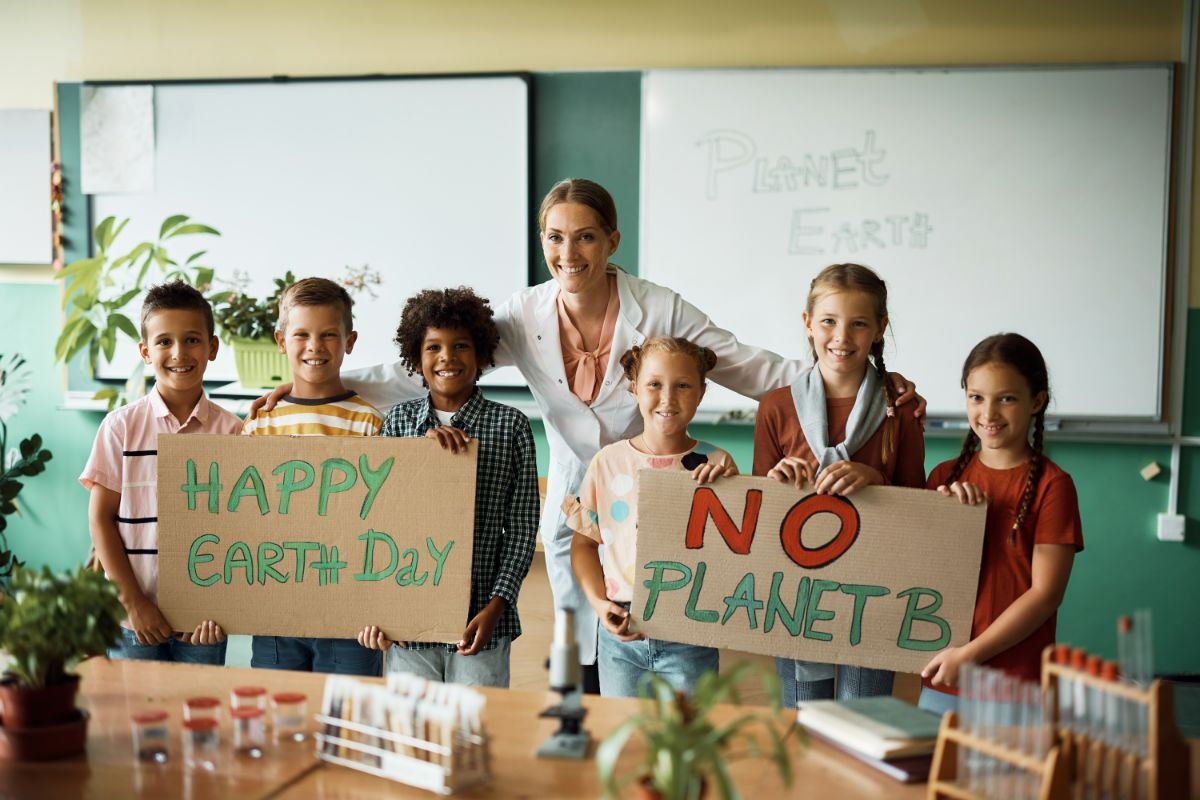
Environmental education helps children understand the natural world, recognize environmental challenges, and develop habits that support a healthier planet. Schools can make these lessons more engaging by combining classroom instruction with practical experiences, creative projects, outdoor exploration, and everyday problem-solving.
The best environmental education activities for students go beyond memorizing facts about pollution, climate change, and conservation. They encourage children to observe their surroundings, ask questions, investigate problems, and take meaningful action. Whether students are learning in an elementary classroom, a middle school science lesson, or a high school environmental studies program, hands-on activities can help them connect environmental concepts with real-life experiences.
Teachers do not need expensive equipment or a large outdoor space to introduce environmental learning. Simple projects involving plants, water, waste, energy, and local wildlife can provide valuable learning opportunities. With thoughtful planning, educators can make environmental education accessible, enjoyable, and relevant to students of different ages and abilities.
Why Environmental Education Matters for School-Age Children
Children interact with the environment every day, from the water they drink and the food they eat to the trees they see on their way to school. Environmental education helps them understand how these everyday experiences connect with larger ecological systems.
When environmental topics are taught through practical activities, students have opportunities to develop scientific knowledge, critical thinking, collaboration, and responsible decision-making skills.
Develops Environmental Awareness
Environmental education introduces students to important topics such as biodiversity, waste management, water conservation, air quality, and climate change. Instead of treating these subjects as distant problems, teachers can connect them to familiar places and routines.
For example, students can investigate how much paper their classroom uses in a week or identify sources of litter around the school grounds. These activities help them recognize that environmental challenges can occur in their immediate surroundings.
Encourages Critical Thinking
Environmental problems rarely have only one cause or solution. Students may need to compare evidence, identify patterns, evaluate different choices, and explain their conclusions.
A school waste audit, for instance, encourages learners to examine what is being discarded, determine which materials could be reused or recycled locally, and recommend realistic improvements.
Builds Responsible Daily Habits
Students can learn to conserve water, reduce unnecessary waste, care for plants, and use classroom resources responsibly. Repeated opportunities to practice these behaviors can help make environmental responsibility part of everyday life.
The goal is not to make children feel personally responsible for solving every environmental problem. Instead, educators should help them understand that individual actions, community participation, and wider environmental policies all play a role in protecting natural resources.
Connects Learning Across Subjects
Environmental education naturally supports interdisciplinary learning. A garden project can involve biology, mathematics, writing, and art. A water investigation can introduce measurement, data collection, scientific observation, and persuasive communication.
This approach helps students see that environmental knowledge is relevant across the school curriculum.
12 Practical Environmental Education Activities for Students
The following environmental education activities for students can be adapted for different grade levels, classroom sizes, school resources, and learning objectives.
1. Start a Classroom Recycling Investigation
A recycling investigation helps students understand how everyday waste is produced and what happens to discarded materials.
Begin by asking students to observe the waste generated in their classroom over a set period, such as one school day. Under teacher supervision, learners can record the types of waste they notice, including paper, cardboard, food scraps, and plastic packaging.
Students can then organize their observations into categories and create a simple chart showing which materials appear most frequently.
How to organize the activity:
- Introduce the difference between reducing, reusing, and recycling.
- Ask students to record common waste items without handling hazardous or contaminated materials.
- Group the observations into categories.
- Create a bar graph or pictorial chart.
- Discuss which items could be avoided, reused, or recycled through the school’s available services.
- Develop one realistic classroom waste-reduction goal.
Younger students can sort clean sample materials or picture cards, while older learners can calculate totals, compare results, and prepare recommendations.
Learning outcomes: Waste awareness, classification, mathematics, data interpretation, and problem-solving.
2. Create a School Garden
A school garden provides a direct way for children to explore plant growth, soil conditions, sunlight, water needs, and biodiversity.
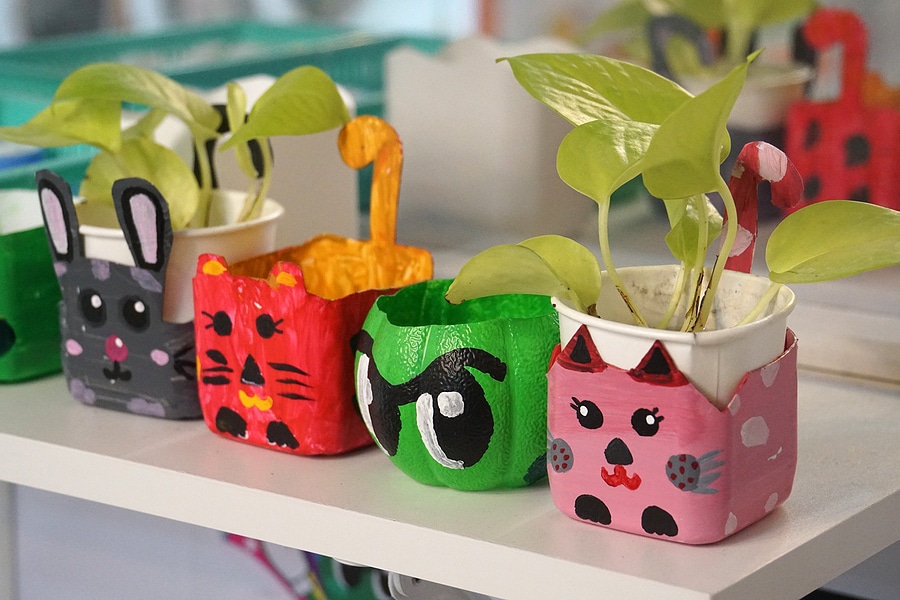
Students can grow herbs, flowers, vegetables, or native plants in a garden bed, containers, or recycled planting pots that are safe for growing plants. Even a few plants on a windowsill can support meaningful scientific observation.
Ask students to predict what plants need to grow and record their observations over several weeks. They can measure plant height, count new leaves, sketch changes, and compare growth under different appropriate conditions.
Steps for a successful school garden:
- Select suitable plants for the local climate and available space.
- Check that the growing area and soil are appropriate for the intended plants.
- Assign watering, observation, and maintenance responsibilities.
- Keep a plant-growth journal.
- Discuss pollinators, soil health, and the importance of plant diversity.
- Use the garden as a setting for science, writing, mathematics, and art lessons.
Teachers can also compare how different plants respond to sunlight and water, provided the experiment does not deprive plants of the conditions they need for healthy growth.
A garden can become a long-term learning resource rather than a one-day project. Students may help plan planting schedules, monitor seasonal changes, and share what they learn with other classes.
Learning outcomes: Plant biology, observation, responsibility, ecosystem awareness, and teamwork.
3. Conduct a Water Conservation Challenge
Fresh water is essential for people, plants, and animals. A water conservation activity helps students understand why using water responsibly matters.
Begin with a class discussion about where students use water at school and at home. Examples may include drinking, washing hands, cleaning, preparing food, and watering plants.
Next, ask students to identify situations where water might be wasted. They could investigate dripping taps with an adult, observe whether taps are left running unnecessarily, or review how the school waters its garden.
Students can then design a simple water-saving campaign.
Possible student tasks include:
- Creating signs that remind students to turn off taps.
- Designing illustrated water conservation posters.
- Recording water-saving observations over a week.
- Comparing water use in different everyday activities using teacher-provided data.
- Preparing a short presentation explaining practical ways to avoid waste.
Older students can research local water challenges using reliable sources and propose solutions appropriate to their community.
Avoid asking children to repair plumbing or handle potentially unsafe water sources. School staff should address maintenance problems.
Learning outcomes: Resource conservation, research, communication, measurement, and responsible decision-making.
4. Explore Local Plants and Animals
Nature observation encourages students to notice the living things around them and understand how organisms interact with their habitats.
A school courtyard, nearby park, garden, or other approved outdoor area can serve as a field-learning space. Students can observe birds, insects, trees, flowering plants, and other organisms without disturbing them.
Give each student a nature observation sheet with prompts such as:
- What living things can you see?
- Where did you find each organism?
- What features help it survive?
- What might it eat?
- What does it need from its habitat?
- What changes could make this habitat less suitable?
Students can draw their observations, record descriptions, and compare findings with classmates.
For younger children, a picture-based nature hunt can make the activity accessible. Older students can identify species using reliable field guides and investigate food chains, pollination, habitat loss, or biodiversity.
Important safety tip: Students should observe wildlife from a respectful distance and avoid touching unfamiliar plants, insects, nests, or animals.
Learning outcomes: Biodiversity awareness, scientific observation, habitat understanding, and curiosity about nature.
5. Build a Compost Learning Project
Composting introduces students to decomposition, organic waste, soil health, and natural nutrient cycles.
With school approval and suitable supervision, students can investigate how fruit and vegetable scraps, dry leaves, and other accepted organic materials break down over time.
Begin by explaining that composting is different from placing all waste into one container. Some materials may be suitable for a school compost system, while others can attract pests or create hygiene problems.
How to introduce composting:
- Explain decomposition and the role of microorganisms.
- Identify suitable compostable materials according to local guidance.
- Set up an approved composting system or use a teacher-prepared demonstration.
- Observe changes in color, texture, and volume.
- Keep a weekly compost journal.
- Discuss how finished compost can improve soil when used appropriately.
If a working compost system is not practical, teachers can use photographs, diagrams, or a sealed educational demonstration prepared in advance.
Students should wash their hands after garden or compost activities and should not handle spoiled food or unknown waste.
Learning outcomes: Decomposition, soil science, waste reduction, observation, and environmental responsibility.
6. Organize a School Litter Audit
A litter audit helps students investigate how waste appears in shared spaces and identify ways to prevent it.
Choose a clearly defined area, such as a section of the school courtyard or playground. Students can observe and record visible litter without picking it up themselves. If a cleanup is included, adults should supervise and provide appropriate equipment.
Ask learners to classify the litter they see, record approximate quantities, and consider where the items may have come from.
They can then discuss questions such as:
- Are food wrappers common in the area?
- Are waste bins easy to find?
- Do students need clearer disposal signs?
- Could reusable lunch containers reduce some waste?
- Which improvements would be realistic for the school?
After discussing their findings, groups can prepare recommendations for school administrators.
This activity is more valuable when it investigates the causes of litter rather than simply collecting rubbish for a photograph.
Learning outcomes: Data collection, environmental problem-solving, civic participation, and collaboration.
7. Design an Energy-Saving Classroom
Energy conservation activities help students understand how electricity is used and why reducing unnecessary consumption can be beneficial.
Ask students to observe ordinary classroom routines. They might notice lights left on in empty rooms, computers running when not needed, or daylight being overlooked when appropriate.
Students can create a classroom energy checklist and use it for one or two weeks.
A simple energy checklist might include:
- Are lights switched off when they are not needed?
- Are computers and screens shut down according to school policy?
- Is natural light being used where practical?
- Are doors and windows managed appropriately for the building’s heating or cooling system?
- Are energy-saving reminders visible and easy to understand?
Older students can investigate renewable and nonrenewable energy sources, compare electricity-use scenarios, or estimate potential savings using teacher-provided figures.
Avoid allowing students to handle electrical equipment, access utility areas, or change building systems.
Learning outcomes: Energy awareness, observation, data analysis, and sustainable decision-making.
8. Create Environmental Posters and Public Awareness Messages
Creative projects allow students to communicate environmental information in an accessible and memorable way.
Assign groups different topics, such as protecting local wildlife, reducing food waste, saving water, conserving energy, or keeping shared spaces clean.
Before designing their posters, students should identify the main message, the intended audience, and the action they want people to take.
Encourage learners to use accurate information, readable text, relevant illustrations, and specific suggestions.
For example, a poster about water conservation could encourage students to turn off taps while soaping their hands rather than simply saying, “Save the planet.”
Finished posters can be displayed in classrooms, corridors, libraries, or other approved spaces.
Older students can expand the activity by preparing short speeches, newsletters, presentations, or school announcements.
Learning outcomes: Visual communication, writing, research, creativity, and environmental awareness.
9. Investigate Food Waste at School
Food waste is a practical topic because students can connect it to lunch routines, food production, natural resources, and household habits.
A school food-waste investigation can begin with observation rather than handling discarded food. Students can record the types of food that are frequently left uneaten and discuss possible reasons.
They might investigate portion sizes, food preferences, lunch planning, storage, or opportunities to share unopened food through school-approved programs.
Activity plan:
- Explain how food production uses resources such as land, water, energy, and labor.
- Ask students to observe food waste patterns over several lunch periods.
- Record findings using a tally sheet.
- Create a chart showing common patterns.
- Brainstorm ways to prevent avoidable waste.
- Review the results after introducing one or two changes.
Students can also design a food-waste awareness campaign or develop sample lunch-planning ideas.
Any measurement of discarded food should be managed under school hygiene procedures. Students should not eat food that has been discarded or handle it without appropriate supervision.
Learning outcomes: Resource awareness, data analysis, planning, and responsible consumption.
10. Make a Mini Ecosystem Model
A mini ecosystem model helps students understand how living things interact with their surroundings.
Students can create a model of a forest, pond, grassland, desert, or local habitat using paper, clay, drawings, recycled craft materials, or digital tools.
The model should include living components, such as plants and animals, as well as nonliving elements, such as sunlight, water, air, and soil.
Ask students to explain how these components interact. For example, they could describe how plants use sunlight, how herbivores depend on plants, and how decomposers return nutrients to the environment.
Older learners can add food chains, nutrient cycles, or examples of how a disturbance affects an ecosystem.
A paper or digital model is often sufficient. Teachers do not need to collect wild organisms or create a living enclosure to teach the concept.
Learning outcomes: Ecosystem relationships, systems thinking, scientific explanation, and creativity.
11. Keep a Weather and Climate Journal
Weather and climate activities encourage students to observe environmental patterns and distinguish between short-term conditions and long-term trends.
For several weeks, students can record daily weather observations, including temperature where a suitable thermometer is available, cloud cover, rainfall, and wind conditions.
They can organize their observations in tables and create simple graphs.
Once students have collected enough data, discuss the difference between weather and climate. A few days of observations describe local weather conditions; understanding climate requires much longer-term records.
Older students can compare their observations with reliable historical climate data and explore questions about seasonal patterns, local heat, rainfall, or changing weather risks.
Learning outcomes: Scientific measurement, graphing, pattern recognition, and climate literacy.
12. Plan a Student-Led Environmental Action Project
A student-led environmental project allows learners to apply what they have discovered through earlier activities.
Rather than choosing a project for students without consultation, teachers can help them identify an environmental issue that matters to their school or community.
Potential projects include reducing unnecessary paper use, improving a garden, making recycling instructions clearer, promoting reusable water bottles, or developing a plan to reduce food waste.
A simple project framework includes:
Identify the problem: Students describe the issue and explain why it matters.
Gather evidence: They collect observations, review reliable information, or conduct a small survey.
Choose a realistic action: The class selects a practical solution that fits the available time and resources.
Assign responsibilities: Teams organize research, communication, implementation, and recordkeeping.
Measure progress: Students compare results with their starting observations.
Share the findings: The class presents what worked, what did not, and what could be improved.
The emphasis should be on thoughtful investigation and realistic progress rather than dramatic claims about environmental impact.
Learning outcomes: Leadership, teamwork, research, project management, and evidence-based decision-making.
Environmental Education Activities by Age Group
The most effective environmental education activities for students match their developmental stage, interests, and existing knowledge. A young child may learn best through observation and play, while an older student can conduct research, evaluate evidence, and develop a community project.
Preschool and Kindergarten Students
Young children benefit from short, sensory-rich experiences with clear instructions and adult supervision.
Suitable activities include:
- Naming plants, animals, and natural materials.
- Sorting pictures of reusable, recyclable, and non-recyclable items.
- Watering classroom plants.
- Listening for birds and other outdoor sounds.
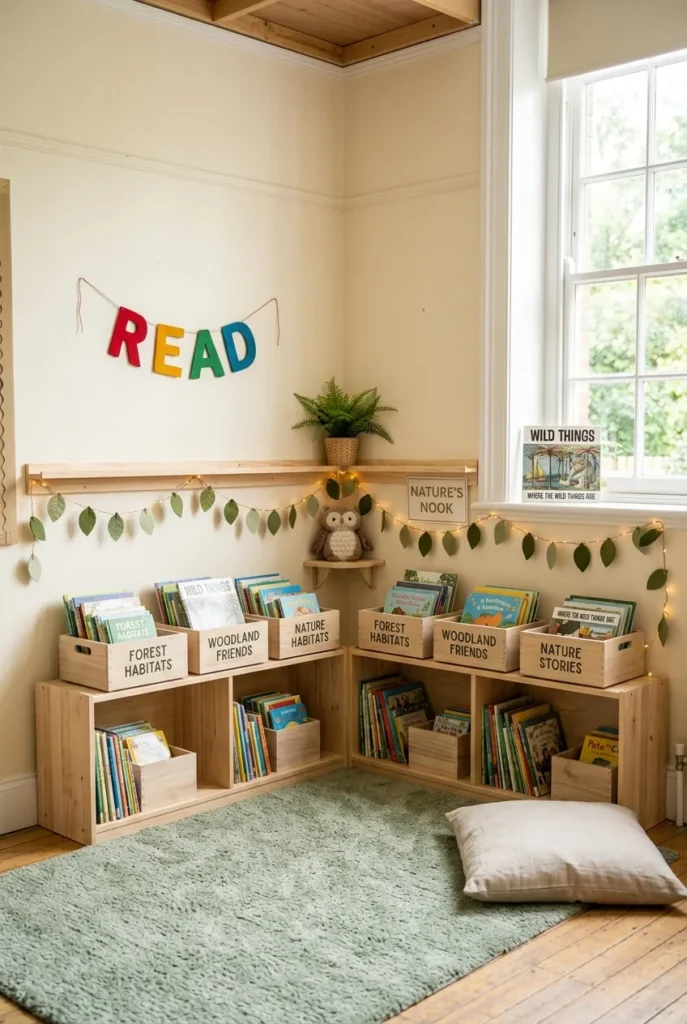
- Reading stories about nature and discussing their messages.
- Creating nature-inspired artwork from safe materials.
- Practicing simple habits such as turning off taps with adult guidance.
At this age, environmental education should focus on curiosity, kindness toward living things, and simple routines rather than complicated explanations of global environmental problems.
Elementary School Students
Elementary learners can begin connecting observations with basic scientific concepts.
Useful activities include classroom recycling investigations, school gardens, nature journals, water conservation challenges, compost demonstrations, and environmental posters.
Teachers can introduce simple data collection through tally charts, drawings, and basic graphs. Students can also work in pairs or small groups to explain what they noticed and suggest improvements.
For example, a class might observe how many disposable items are brought into the classroom over five days and develop a plan to reduce unnecessary use.
Middle School Students
Middle school students are ready for more structured investigations that involve evidence, comparison, and decision-making.
Suitable activities include:
- School waste audits.
- Water-use investigations using approved data.
- Biodiversity surveys.
- Energy conservation projects.
- Food-waste analysis.
- Ecosystem modeling.
- Research into local pollution or habitat challenges.
- Student-led sustainability campaigns.
Teachers can encourage students to identify limitations in their evidence and distinguish between an observation, an assumption, and a conclusion.
High School Students
High school learners can explore complex environmental systems and evaluate competing solutions.
Activities may include analyzing publicly available environmental data, comparing renewable energy options, investigating local land-use changes, reviewing conservation proposals, or developing a school sustainability plan.
Students can prepare research reports, interview relevant community experts with permission, conduct carefully designed surveys, or present evidence-based recommendations to school leaders.
Older learners should be encouraged to examine both the potential benefits and limitations of proposed solutions. For example, a recycling program may reduce some waste, but waste prevention and reuse may also need to be considered.
How to Make Environmental Education More Engaging
A successful environmental learning program combines clear learning goals with opportunities for active participation. Teachers can make activities more effective by following several practical principles.
Connect Activities to Local Environmental Issues
Students often engage more deeply when lessons reflect the environment they see around them.
A school in a dry region might explore water conservation, while a school near a forest could study habitat protection. Urban schools might investigate litter, air quality, green spaces, or waste management.
Local examples give students opportunities to connect classroom concepts with real places and familiar experiences.
Use Hands-On Learning
Reading and discussion are important, but students also need opportunities to observe, test ideas, and interpret evidence.
Instead of only explaining how plants grow, let students maintain a plant journal. Instead of discussing waste in general terms, ask learners to investigate what is commonly discarded in their classroom.
Hands-on learning should always be connected to a clear question or learning objective so students understand what they are investigating.
Encourage Questions and Predictions
Before beginning an activity, ask students what they expect to happen and why.
For a plant-growth investigation, learners might predict how different suitable growing conditions will affect plant development. For a litter audit, they could predict which locations will contain the most visible waste.
After the activity, students can compare their predictions with the evidence. This approach teaches them that scientific understanding develops through observation and testing rather than guessing alone.
Include Collaboration and Student Choice
Group projects allow students to share responsibilities and learn from different perspectives.
Teachers can offer several project options and let students choose the issue they want to investigate. One group might focus on food waste, another on water conservation, and another on biodiversity.
Clear roles help everyone contribute. Students might be responsible for recording observations, researching background information, creating visuals, or presenting conclusions.
Make Environmental Learning Inclusive
Not every student has the same physical abilities, sensory preferences, background knowledge, or access to outdoor spaces.
Offer different ways to participate, such as observing from an accessible location, analyzing photographs, working with classroom data, drawing diagrams, or completing a digital investigation.
Students who cannot take part in an outdoor activity can still contribute meaningfully through research, documentation, analysis, and presentation.
Avoid assuming that every family has access to a garden, recycling service, or particular household resources. Activities should emphasize learning and practical choices rather than judging students’ home circumstances.
Integrating Environmental Education Into the School Curriculum
Environmental education does not need to be a separate subject to be effective. Schools can integrate it into existing lessons and projects.
Science
Science lessons can explore ecosystems, plant growth, decomposition, weather, energy, biodiversity, and water cycles.
Students can use observations and simple experiments to investigate environmental questions and develop explanations supported by evidence.
Mathematics
Environmental topics provide real-world opportunities to practice measurement, arithmetic, statistics, and data visualization.
Students might calculate weekly paper use, graph plant growth, compare waste categories, or analyze weather observations.
Teachers should make clear whether students are working with actual measurements, estimates, or hypothetical data.
Language Arts
Students can write nature journals, prepare environmental reports, read informational texts, create persuasive posters, and deliver presentations about local environmental challenges.
These assignments strengthen reading, writing, speaking, and information-evaluation skills while building environmental knowledge.
Art and Design
Art projects can help students communicate environmental ideas through posters, drawings, models, photography, and creative displays.
Teachers can encourage students to use clean, safe, reusable materials where practical without implying that every material is suitable for recycling or reuse.
Social Studies and Civic Education
Environmental topics also connect with communities, public services, resource distribution, local decision-making, and responsible citizenship.
Students can explore how communities manage water, waste, public parks, and conservation programs. Older learners can compare policy options and consider how environmental decisions affect different groups of people.
A Sample Five-Day Environmental Education Plan
Teachers who want a manageable starting point can use the following five-day plan. Each activity can be shortened or expanded according to students’ ages and the available lesson time.
| Day | Activity | Main Learning Goal | Suggested Student Output |
|---|---|---|---|
| Monday | Classroom waste investigation | Understand waste categories and patterns | Tally chart |
| Tuesday | Water conservation challenge | Identify ways to avoid unnecessary water use | Conservation checklist |
| Wednesday | Plant or nature observation | Explore living things and their needs | Observation journal |
| Thursday | Environmental poster project | Communicate an evidence-based message | Poster or presentation |
| Friday | Student action planning | Apply learning to a practical issue | Short action plan |
At the end of the week, ask students to reflect on three questions:
- What new environmental idea did you learn?
- Which activity helped you understand it best?
- What practical action would you like to explore next?
This reflection helps teachers assess understanding and plan follow-up activities.
The five-day plan can also become a recurring program. For example, the class might revisit its waste audit each month or maintain its garden throughout the school year.
How to Assess Student Learning in Environmental Education
Environmental education should be assessed through more than participation alone. Students may enjoy an activity without fully understanding the scientific concepts behind it, so teachers should look for evidence of learning.
Use Observation Checklists
During group work, teachers can note whether students follow instructions, make relevant observations, work cooperatively, and explain their decisions.
A simple checklist can help educators provide consistent feedback without interrupting the activity.
Review Student Journals and Reports
Nature journals, investigation sheets, charts, and short reports provide evidence of students’ understanding.
Teachers can assess whether learners record observations accurately, distinguish facts from opinions, and use evidence to support conclusions.
Ask Students to Explain Their Reasoning
Questions such as “What evidence supports your conclusion?” or “How could we improve this investigation?” encourage students to think beyond memorized answers.
Older students can also explain the limitations of their findings and identify what additional information they would need.
Evaluate the Process, Not Just the Outcome
An environmental project may not produce the exact result students expected. That does not mean the learning experience failed.
Students should be assessed on their investigation, reasoning, collaboration, use of evidence, and ability to reflect on results. A project that reveals an ineffective solution can still provide valuable learning.
Measure Progress Realistically
When students carry out an environmental action project, establish a baseline before introducing changes.
For example, a class might record the number of unused sheets of paper discarded over several days and then compare the results after introducing a paper-reuse system.
Teachers should consider whether other factors influenced the results and avoid claiming that a small classroom activity produced a large environmental benefit without sufficient evidence.
Common Mistakes to Avoid When Teaching Environmental Education
Even well-intentioned activities can become less effective if they lack clear objectives or practical planning.
Focusing Only on Environmental Problems
Lessons that repeatedly emphasize pollution, climate change, or habitat loss without discussing possible solutions may leave students feeling discouraged.
Teachers should present accurate information alongside constructive examples of conservation, community action, scientific innovation, and practical problem-solving.
Choosing Activities Without Learning Objectives
A planting day or cleanup can be enjoyable, but students may learn more when the activity includes a specific question, observation task, or reflection.
Before starting, identify what students should understand and how they will demonstrate that understanding.
Making Unsupported Environmental Claims
Students should learn to distinguish evidence from assumptions. Teachers should use reliable information and avoid exaggerated statements about the effects of individual actions.
For instance, a class can accurately report that it reduced the number of disposable cups used during a school event without claiming that the project significantly changed global pollution.
Ignoring Safety and Accessibility
Outdoor activities require suitable supervision, clear boundaries, weather awareness, and appropriate hygiene practices.
Students should not handle hazardous waste, drink from untreated water sources, touch unknown organisms, or work with electrical equipment without appropriate adult oversight.
Alternative participation options should be available for students who cannot safely or comfortably complete an activity as originally planned.
Treating One-Day Events as Complete Solutions
An Earth Day celebration or a school cleanup can raise awareness, but lasting environmental learning requires repeated opportunities to investigate, practice, and reflect.
Schools should use special events as starting points for longer-term classroom projects and sustainable routines.
How Parents Can Support Environmental Education at Home
Environmental learning can continue outside school through ordinary family activities. Parents and caregivers do not need expensive equipment or specialized knowledge to help children develop environmental awareness.
Simple options include:
- Growing a plant in a suitable container.
- Reading age-appropriate books about nature.
- Observing birds, trees, and insects from a safe distance.
- Planning meals to reduce avoidable food waste.
- Discussing how household water and electricity are used.
- Reusing suitable materials for art projects.
- Taking a walk and identifying local plants.
- Talking about how community waste collection and recycling services work.
Families can also encourage children to ask questions and explain their observations. For example, a child who notices litter in a park might discuss why it is there and what could help prevent it.
The focus should be on curiosity, learning, and achievable habits rather than expecting children to solve environmental problems on their own.
Frequently Asked Questions
1. What Are Environmental Education Activities for Students?
Environmental education activities for students are learning experiences that help children understand the natural world and investigate environmental issues. Examples include school gardening, waste audits, nature observation, water conservation challenges, composting demonstrations, and energy-saving projects.
These activities combine environmental knowledge with practical skills such as observation, research, collaboration, and problem-solving.
2. Why Is Environmental Education Important in Schools?
Environmental education helps students understand how human activities interact with natural systems. It can develop scientific literacy, critical thinking, resource awareness, and responsible decision-making.
It also allows schools to connect science, mathematics, language arts, and civic learning with real-world situations.
3. What Are the Best Environmental Activities for Elementary Students?
Suitable activities include planting seeds, maintaining nature journals, sorting clean recyclable materials, creating environmental posters, observing local wildlife, and learning simple water-saving habits.
The best choices are age-appropriate, hands-on, safe, and connected to clear learning objectives.
4. How Can Teachers Teach Environmental Education Without a Garden?
Teachers can use indoor plants, nature photographs, classroom waste investigations, weather journals, ecosystem models, environmental stories, and digital data activities.
A garden is helpful but not essential. Students can learn important environmental concepts through observation, research, discussion, and creative projects.
5. How Can Schools Make Environmental Learning Fun?
Schools can introduce nature challenges, student-led investigations, environmental art, classroom competitions focused on learning goals, group projects, and practical experiments.
Giving students opportunities to choose questions and present their findings can also increase engagement.
6. How Can Environmental Education Be Integrated Into Other Subjects?
Teachers can connect environmental topics to science through ecosystems and plant growth, mathematics through data collection and graphs, language arts through research and writing, art through posters and models, and social studies through community environmental issues.
This interdisciplinary approach helps students understand the relevance of environmental learning across the curriculum.
7. What Environmental Projects Can Middle and High School Students Complete?
Older students can conduct waste audits, analyze publicly available environmental data, investigate local biodiversity, compare energy options, develop conservation proposals, and design school sustainability campaigns.
Projects should encourage reliable research, evidence-based conclusions, collaboration, and realistic recommendations.
8. How Can Teachers Measure the Success of Environmental Activities?
Teachers can assess student journals, investigation reports, presentations, charts, reflection questions, and project outcomes.
For practical initiatives, collecting baseline information and comparing it with later observations can help students evaluate progress while recognizing the limitations of their data.
9. How Can Parents Encourage Environmental Awareness at Home?
Parents can involve children in gardening, nature observation, meal planning, reducing avoidable waste, and discussing household resource use.
Everyday conversations and simple activities can reinforce what children learn at school.
10. How Often Should Schools Conduct Environmental Education Activities?
Environmental learning is most useful when it is part of regular teaching rather than limited to an annual event. Schools can include short activities each week, develop longer projects each term, and organize occasional field experiences where appropriate.
The right frequency depends on the curriculum, student needs, available resources, and school priorities.
Conclusion
Environmental education gives school-age children opportunities to understand the natural world, investigate environmental challenges, and develop practical problem-solving skills. From classroom recycling investigations and school gardens to biodiversity surveys and student-led sustainability projects, teachers can introduce meaningful learning experiences with relatively simple resources.
The most effective environmental education activities for students combine accurate information, hands-on investigation, reflection, and realistic action. They help learners connect scientific concepts with everyday decisions while encouraging curiosity, collaboration, and responsible participation.
Schools can strengthen these efforts by adapting activities to different age groups, integrating environmental topics across the curriculum, providing inclusive learning opportunities, and evaluating progress through evidence rather than assumptions.
By making environmental education a consistent part of school life, educators can help students become informed learners who understand environmental issues and are better prepared to contribute thoughtfully to their communities.
Leave a Reply