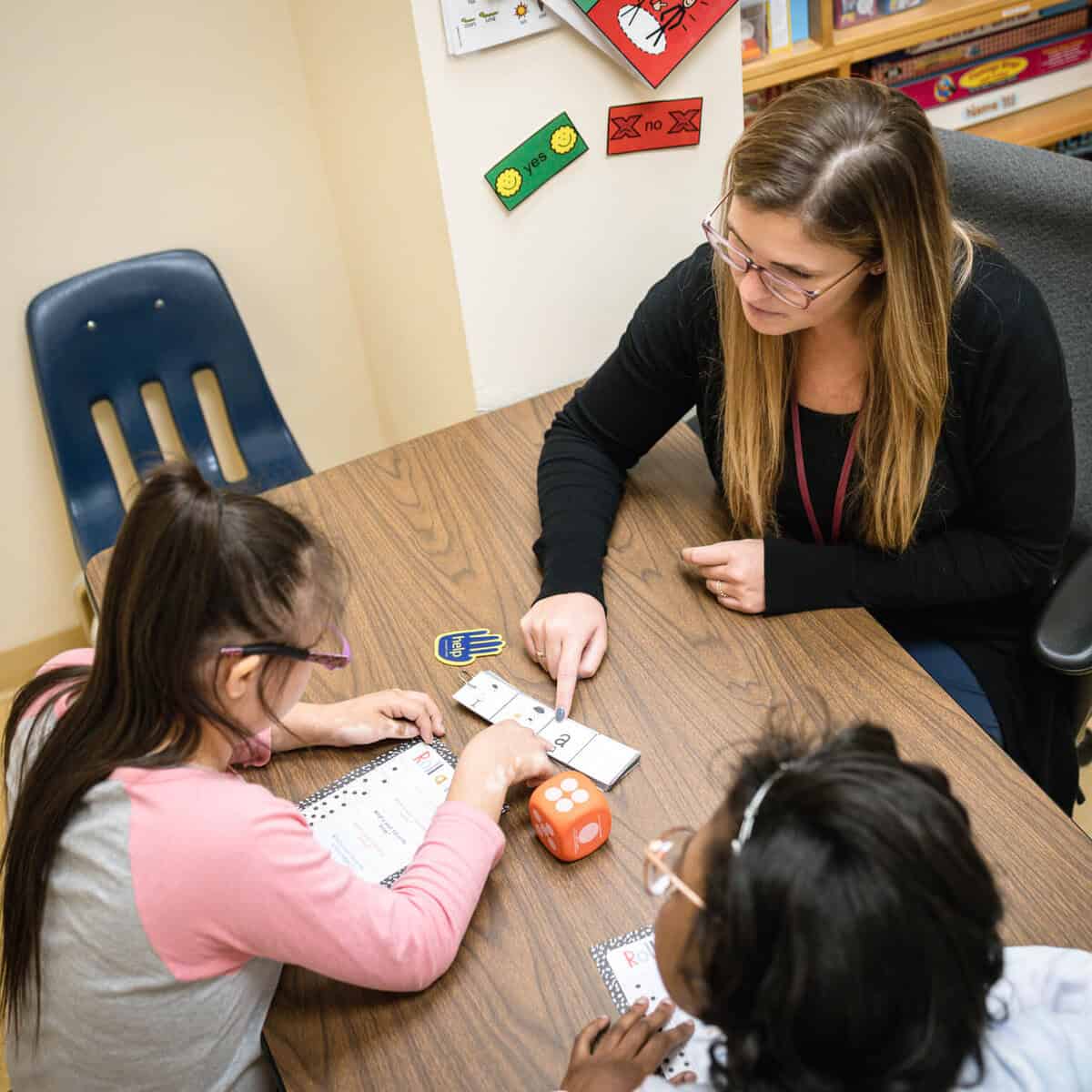
Gifted students often learn quickly, ask complex questions, and demonstrate advanced abilities in particular subjects. However, traditional classroom instruction may not always provide enough depth, challenge, or flexibility to meet their learning needs. When students repeatedly complete work they have already mastered, they may lose interest, become frustrated, or miss opportunities to develop their full potential.
Providing meaningful enrichment opportunities can help address these challenges. Through independent research, creative projects, advanced problem-solving, mentorship, and hands-on learning, educators can encourage gifted students to explore their interests and develop new skills. Effective enrichment goes beyond giving students extra assignments. It creates opportunities for deeper thinking, creativity, discovery, and personal growth.
Understanding how to design enrichment activities for gifted students can help teachers, school leaders, and parents build more engaging learning experiences that support both academic achievement and social-emotional development.
What Are Enrichment Opportunities for Gifted Students?
Enrichment opportunities are learning experiences that extend beyond the standard curriculum by allowing students to investigate topics in greater depth, explore new subjects, and apply knowledge in meaningful ways. Unlike simply assigning more work, enrichment focuses on complexity, creativity, independent thinking, and real-world applications.
For example, a student who quickly understands basic fractions might explore ratios, mathematical patterns, or practical problems involving measurement. A student with a strong interest in science could design an experiment, study environmental challenges, or investigate how scientific discoveries influence everyday life.
Enrichment can take place inside the classroom, through extracurricular activities, during independent study, or in collaboration with community organizations. The most effective opportunities are matched to students’ abilities, interests, readiness, and learning goals.
Why Enrichment Activities Matter for Gifted Learners
Gifted students have diverse learning needs. Some excel in mathematics or science, while others demonstrate exceptional creativity, language skills, leadership, or artistic ability. A flexible enrichment program helps schools respond to these differences rather than assuming every advanced learner needs the same experience.
1. Encourage Deeper Learning
Enrichment allows students to move beyond memorizing information and develop a deeper understanding of important concepts. They can examine different perspectives, investigate difficult questions, compare evidence, and connect ideas across subjects.
For instance, students studying climate change might analyze weather data, investigate local environmental issues, and develop practical recommendations for reducing waste. This approach encourages them to apply knowledge rather than simply repeat facts.
2. Develop Critical Thinking and Problem-Solving
Advanced learners benefit from opportunities to solve open-ended problems that require reasoning, analysis, and decision-making. Enrichment activities can challenge them to consider multiple solutions, test assumptions, and explain why a particular approach works.
These experiences help students become more independent thinkers and prepare them to approach unfamiliar challenges with confidence.
3. Strengthen Creativity and Innovation
Creative enrichment encourages students to develop original ideas and experiment with different approaches. Activities such as designing inventions, writing short stories, creating digital artwork, or building prototypes allow learners to express their ideas in different ways.
Students should have opportunities to make choices, revise their work, and learn from unsuccessful attempts. This helps them understand that creativity involves exploration, persistence, and improvement.
4. Improve Motivation and Engagement
When lessons connect with students’ interests and provide an appropriate level of challenge, learning can become more meaningful. Students who enjoy astronomy, robotics, literature, history, or entrepreneurship may become more engaged when they can investigate these subjects beyond the regular curriculum.
Well-designed enrichment also helps prevent unnecessary repetition by allowing students who have mastered a concept to move toward more advanced learning.
5. Support Social and Emotional Development
Gifted students may experience perfectionism, frustration, social isolation, or anxiety about making mistakes. Enrichment activities can provide supportive opportunities to collaborate with peers, receive constructive feedback, and develop resilience.
Group investigations, creative workshops, and collaborative competitions can help students appreciate different strengths and understand that learning involves both individual effort and teamwork.
10 Effective Enrichment Activities for Gifted Students
Schools do not always need expensive equipment or specialized facilities to provide meaningful enrichment. Many activities can be adapted to different ages, subjects, budgets, and classroom environments.
1. Independent Research Projects
Independent research allows students to explore questions that interest them while developing research, organization, and communication skills.
Teachers can invite students to choose a topic, develop a research question, gather reliable information, and present their findings. A student interested in marine life, for example, might investigate how plastic pollution affects ocean ecosystems and recommend possible solutions.
To make the experience meaningful, teachers should establish clear learning goals and provide guidance on evaluating evidence, organizing information, and citing sources. Students should also have opportunities to share their discoveries through presentations, posters, reports, or digital projects.
2. STEM Challenges and Experiments
Science, technology, engineering, and mathematics activities provide opportunities for hands-on investigation and advanced problem-solving.
Students might design a bridge using limited materials, build a simple water filtration model, program a small robot, or test how different variables affect plant growth. These activities encourage learners to make predictions, test ideas, analyze results, and improve their designs.
Teachers can increase the challenge by introducing additional constraints, requiring students to justify their decisions, or asking them to compare several possible solutions.
3. Creative Writing and Story Development
Students with strong language skills may benefit from creative writing opportunities that extend beyond routine classroom assignments.
Possible activities include writing a short story from multiple perspectives, developing a fictional world, creating a mystery with carefully constructed clues, or producing a collection of poetry. Students can also explore persuasive writing by preparing arguments about relevant school or community issues.
Providing a choice of topics and formats encourages originality while helping students strengthen vocabulary, structure, editing, and communication skills.
4. Advanced Mathematics and Logic Puzzles
Gifted learners who demonstrate mathematical strengths often enjoy tasks that require logical reasoning and flexible thinking.
Teachers can introduce mathematical investigations, number patterns, probability challenges, strategy games, and real-world budgeting problems. Rather than focusing only on speed, these activities should encourage students to explain their reasoning and compare different methods.
For example, students could plan a school event within a fixed budget, calculate possible expenses, evaluate alternatives, and defend their final decisions.
5. Project-Based Learning
Project-based learning gives students an opportunity to investigate a meaningful question and create a product or solution. It can combine several subjects and encourage students to apply knowledge in authentic contexts.
A group might design a more environmentally friendly school, create a public awareness campaign, or develop a proposal for improving a local community space.
Successful projects include a clear question, manageable milestones, access to appropriate resources, regular feedback, and a final presentation. Teachers should ensure that each student contributes meaningfully and develops the intended skills.
6. Mentorship and Expert Guidance
Mentorship connects students with knowledgeable adults who can introduce them to advanced ideas, professional practices, and possible career paths.
A student interested in engineering might learn from an engineer, while a young writer could benefit from feedback from an author or editor. Mentors can recommend reading materials, discuss real-world challenges, and help students set achievable goals.
Schools should arrange appropriate supervision, establish clear expectations, and ensure that mentoring relationships follow relevant safeguarding policies. When individual mentors are unavailable, teachers can use recorded interviews, supervised virtual sessions, or guest presentations.
7. Debate and Public Speaking
Debate activities help gifted students develop communication, evidence-based reasoning, listening, and persuasive speaking skills.
Teachers can present questions about technology, environmental protection, historical decisions, or community development. Students research different viewpoints, construct arguments, respond to counterarguments, and explain their conclusions.
A supportive debate environment should reward thoughtful reasoning and respectful discussion rather than simply declaring one student the winner. These activities can also help learners become more comfortable presenting ideas in front of others.
8. Art, Music, and Creative Design
Enrichment should recognize that advanced abilities are not limited to academic subjects. Art, music, drama, photography, and design can provide valuable opportunities for students to develop specialized talents.
Activities might include composing an original piece of music, designing a product prototype, creating an illustrated story, or preparing a theatrical performance. Students can research professional techniques, experiment with different materials, and refine their work through feedback.
Schools can make these experiences more challenging by introducing advanced techniques, encouraging interdisciplinary projects, or allowing students to develop a portfolio of original work.
9. Coding and Digital Innovation
Technology-based enrichment can help students develop computational thinking, creativity, and practical problem-solving skills.
Depending on their experience, students might create a simple website, develop an educational game, build an interactive story, or use spreadsheets to analyze data. More advanced learners could explore algorithms, app design, or introductory machine learning concepts with age-appropriate resources.
The goal should be to create something meaningful and understand how it works, rather than simply complete a sequence of tutorials. Students should also discuss digital responsibility, privacy, accessibility, and ethical technology use.
10. Community-Based Learning and Service Projects
Community projects allow students to connect classroom learning with real needs. They can investigate local challenges, collect information, collaborate with community members, and propose practical improvements.
For example, students might develop a recycling awareness campaign, create educational materials for younger learners, or research ways to improve accessibility in public spaces.
These activities strengthen research and leadership skills while helping students understand how knowledge can contribute to society. Teachers should ensure that projects are age-appropriate, safe, and respectful of the communities involved.
How Teachers Can Design Effective Enrichment Activities
Selecting an interesting activity is only the first step. Teachers must also consider how the experience will match students’ learning needs and produce meaningful progress.
Assess Student Readiness and Interests
Begin by identifying what students already know, which skills they have mastered, and which subjects interest them. Classroom observations, pre-assessments, student conversations, portfolios, and previous work can help teachers make informed decisions.
A student may demonstrate advanced ability in mathematics but need additional support with writing or organization. Enrichment plans should recognize these differences rather than treating gifted learners as one uniform group.
Establish Clear Learning Objectives
Each activity should have a purpose. Students might aim to develop a research question, evaluate competing explanations, design a working prototype, or communicate a complex idea clearly.
Clear objectives help teachers choose appropriate resources, guide students without controlling every decision, and evaluate progress more consistently.
Offer Choice and Flexibility
Whenever practical, allow students to choose topics, research questions, materials, or presentation formats. One student might communicate findings through a written report, while another creates a model or digital presentation.
Choice can increase ownership and motivation, but teachers should still provide clear expectations and support to ensure that the activity meets its learning objectives.
Increase Depth and Complexity
Effective enrichment should extend learning rather than simply increase the amount of work. Teachers can introduce more complex questions, unfamiliar applications, advanced resources, interdisciplinary connections, or opportunities to evaluate competing solutions.
For example, instead of asking students to complete twenty additional arithmetic problems, a teacher might invite them to investigate a mathematical pattern and explain why it occurs.
Provide Guidance Without Removing Independence
Gifted students need opportunities to make decisions and manage their own learning. However, independence does not mean leaving students without support.
Teachers can use milestone check-ins, guiding questions, planning templates, short conferences, and targeted feedback. These structures help students develop self-management skills while retaining responsibility for their work.
Evaluate Progress and Adjust Activities
Regular assessment helps teachers determine whether enrichment is providing an appropriate level of challenge. Student reflections, project rubrics, presentations, portfolios, and teacher observations can reveal strengths and areas for development.
If an activity becomes too easy, the teacher can increase its complexity. If a student struggles with a particular skill, additional instruction or scaffolding may be necessary.
Differentiating Enrichment for Different Learning Needs
Gifted students differ in age, background, interests, learning preferences, and levels of achievement. Some may have advanced abilities in one subject but perform at an expected level in another. Others may be gifted and also have disabilities or learning differences.
An inclusive enrichment program should provide flexible pathways rather than relying on a single type of assignment.
Teachers can differentiate enrichment in several ways:
- Content: Provide advanced texts, specialized resources, complex concepts, or additional subject knowledge.
- Process: Use inquiry, experimentation, independent research, discussion, and creative problem-solving.
- Product: Allow students to demonstrate understanding through reports, presentations, models, performances, or digital projects.
- Pacing: Let students move beyond mastered material while ensuring that important learning foundations remain secure.
- Learning environment: Offer quiet independent work, collaborative opportunities, flexible grouping, and access to suitable resources.
These adjustments help educators create appropriate challenges while maintaining access and participation for students with different needs.
Common Mistakes to Avoid in Gifted Enrichment Programs
Even well-intentioned activities can become ineffective when they are poorly matched to students’ abilities or interests.
Assigning more of the same work: Extra worksheets or repetitive exercises may increase workload without developing new skills. Enrichment should provide greater depth, complexity, creativity, or authentic application.
Assuming every gifted student has the same interests: Not all advanced learners enjoy mathematics, coding, competitions, or independent research. Offering different pathways helps students discover and develop their individual strengths.
Providing too little guidance: Open-ended projects can become overwhelming when students do not understand the goals, available resources, or expected outcomes. Clear milestones and constructive feedback provide useful structure.
Focusing only on academic achievement: Emotional well-being, confidence, collaboration, communication, and persistence also matter. Activities should support the development of the whole learner.
Using enrichment as a reward for finishing early: If enrichment is offered only after students complete repetitive work, it can become an additional burden. When students have already demonstrated mastery, teachers should consider replacing unnecessary repetition with appropriately challenging learning.
Ignoring equitable access: Advanced opportunities should not depend exclusively on family income, access to technology, or a student’s ability to advocate for themselves. Schools should monitor participation and make reasonable accommodations so that students from different backgrounds can benefit.
How Parents Can Support Enrichment at Home
Parents can complement school-based enrichment by encouraging curiosity and providing opportunities to explore interests outside the classroom. These experiences do not need to be expensive or complicated.
Families can visit libraries and museums, conduct simple science experiments, play strategy games, explore nature, read challenging books, or work together on creative projects. Children can also learn through cooking, gardening, building models, writing stories, and investigating questions that arise in everyday life.
Parents should encourage children to ask questions, explain their reasoning, and explore different possibilities. It is equally important to allow time for rest, friendships, play, and activities unrelated to academic achievement.
Rather than expecting every interest to become a major project, parents can follow the child’s curiosity and provide support when deeper exploration is desired. Regular communication with teachers can help families understand the child’s progress and identify useful opportunities for further development.
Measuring the Success of Enrichment Opportunities
The success of an enrichment activity should not be measured only by grades, awards, or the number of completed projects. A broader evaluation provides a more accurate understanding of student development.
Teachers can consider the following indicators:
- Knowledge and understanding: Does the student demonstrate deeper knowledge or apply concepts in unfamiliar situations?
- Critical thinking: Can the student analyze evidence, explain reasoning, and evaluate alternative solutions?
- Creativity: Does the student develop original ideas or explore different approaches?
- Independence: Can the student plan tasks, manage time, and make informed decisions?
- Engagement: Does the student demonstrate curiosity, sustained effort, and interest in learning?
- Collaboration: Can the student communicate effectively, consider different viewpoints, and contribute to shared goals?
- Reflection: Can the student identify progress, recognize challenges, and set future learning goals?
Assessment methods should reflect the objectives of the activity. A science investigation may require a research report and explanation of results, while a creative project may be evaluated through a portfolio, performance, and reflective discussion.
Teachers should use the evidence collected to refine future activities. Enrichment is most useful when it responds to student progress rather than following a fixed plan regardless of individual needs.
Conclusion
Supporting gifted learners requires more than providing advanced textbooks or additional assignments. Students need meaningful opportunities to explore interests, solve challenging problems, develop creativity, and apply their knowledge in real-world contexts.
Well-designed enrichment activities for gifted students can strengthen critical thinking, academic engagement, independence, collaboration, and personal development. From independent research and STEM experiments to mentorship, creative design, and community projects, educators have many ways to create engaging learning experiences.
The most effective approach begins with understanding each student’s readiness, strengths, and interests. Teachers should set clear objectives, offer appropriate choices, provide constructive guidance, and adjust activities as students progress. Parents can reinforce these efforts by encouraging curiosity and supporting exploration at home.
When schools make enrichment purposeful, flexible, and accessible, gifted learners have more opportunities to develop their abilities and discover what they can achieve.
Frequently Asked Questions
What are the best enrichment activities for gifted students?
Effective options include independent research projects, STEM challenges, advanced mathematics, creative writing, debate, coding, mentorship, artistic projects, and project-based learning. The best choice depends on the student’s interests, readiness, age, and learning goals.
How do enrichment activities help gifted students?
Enrichment activities extend learning beyond the standard curriculum. They can help students develop critical thinking, creativity, problem-solving, independence, subject knowledge, and collaboration skills while providing a more appropriate level of challenge.
How can teachers enrich learning without increasing homework?
Teachers can use curriculum compacting, advanced classroom tasks, open-ended investigations, and differentiated projects. When students have already mastered a concept, unnecessary repetition can be reduced so that time is available for deeper learning.
Can enrichment activities support gifted students with learning differences?
Yes. Enrichment can be combined with appropriate accommodations, accessible resources, flexible pacing, and targeted support. Teachers should consider both advanced abilities and any additional learning needs when planning activities.
How can parents provide enrichment at home on a budget?
Parents can encourage reading, nature exploration, library visits, creative writing, household science experiments, puzzles, strategy games, and hands-on building activities. Many valuable opportunities require curiosity, time, and encouragement rather than expensive equipment.
How often should gifted students participate in enrichment activities?
Frequency depends on student needs, school resources, and the learning objectives involved. Enrichment can be integrated into regular classroom instruction, offered through scheduled projects, or provided through extracurricular opportunities. Teachers should monitor whether students receive enough challenge without becoming overloaded.
What is the difference between enrichment and acceleration?
Enrichment broadens or deepens learning through advanced investigations, creative projects, and additional subject exploration. Acceleration allows a student to progress through educational material more quickly or study content normally offered at a later stage. Schools may use either approach or combine them according to individual needs.
Leave a Reply