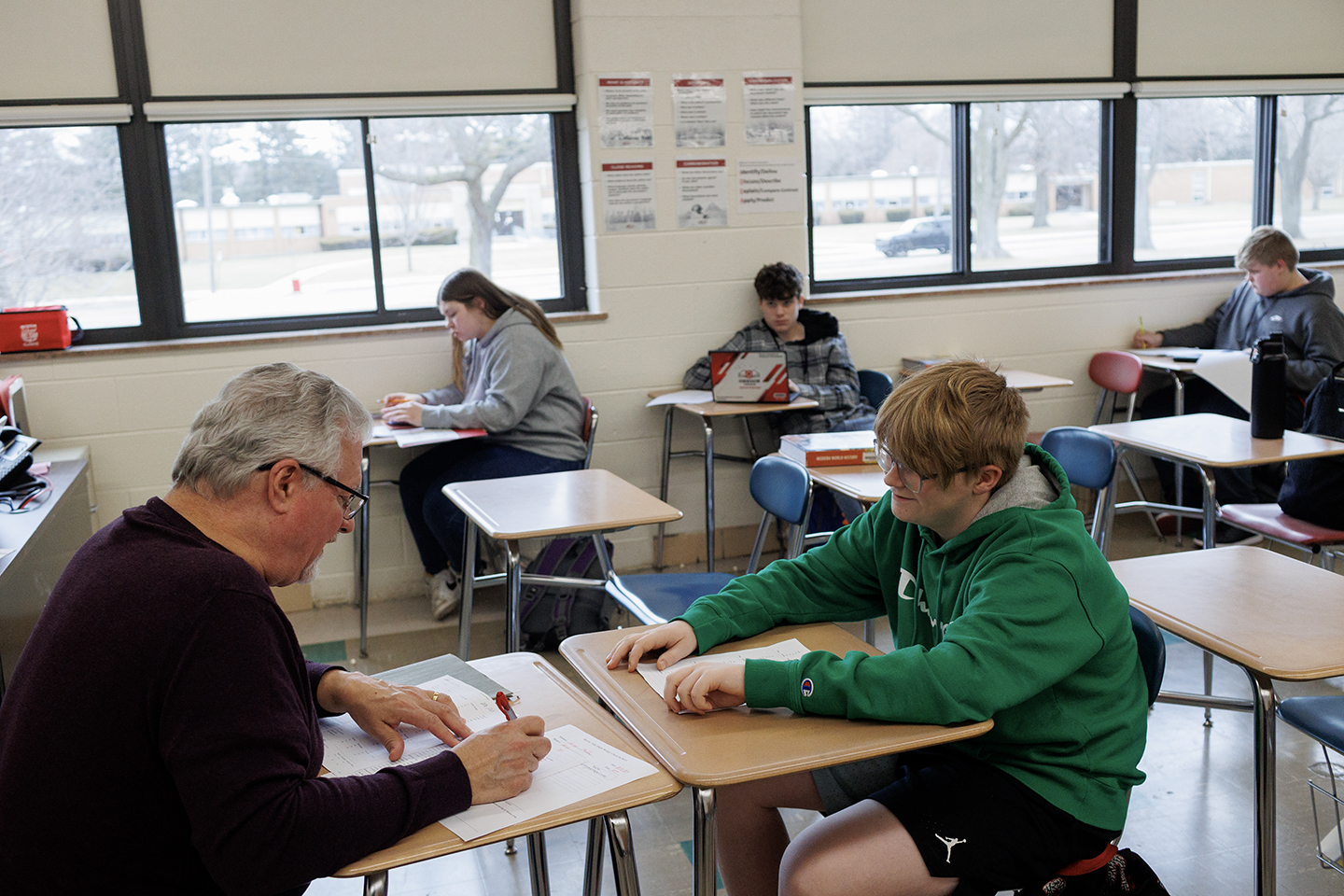
Every classroom includes students with different abilities, interests, backgrounds, experiences, and learning needs. While some students understand new concepts through written explanations, others benefit from visual demonstrations, hands-on activities, discussion, or additional guidance. Effective teaching recognizes these differences and creates meaningful opportunities for every student to participate and succeed.
Universal Design for Learning (UDL) is an educational framework that helps teachers design flexible learning experiences from the beginning. Rather than waiting for students to encounter barriers, educators anticipate potential challenges and provide different ways for students to engage with lessons, access information, and demonstrate their understanding.
Using universal design for learning strategies can help teachers make instruction more accessible, encourage student independence, and support diverse learning needs without lowering academic expectations. These strategies can be applied across subjects, grade levels, and learning environments, including traditional classrooms, online courses, and blended learning programs.
UDL is not a single teaching method or a fixed lesson plan. It is a framework for making thoughtful decisions about learning goals, instructional materials, classroom activities, and assessment methods.
This guide explains the principles of Universal Design for Learning, provides practical strategies educators can use, and outlines how schools can implement UDL to create more inclusive and engaging learning experiences.
What Is Universal Design for Learning?
Universal Design for Learning is an educational framework developed by CAST to improve teaching and learning by anticipating learner variability and reducing unnecessary barriers.
The framework recognizes that students differ in how they engage with information, develop understanding, communicate ideas, and manage learning tasks. Instead of designing instruction for an imagined average student, teachers plan flexible learning experiences that accommodate a broader range of needs.
UDL is organized around three core principles:
- Multiple means of engagement: Provide different ways to motivate students and sustain their participation.
- Multiple means of representation: Present information in different formats so students can access and understand it.
- Multiple means of action and expression: Provide appropriate options for students to interact with learning materials and demonstrate what they know.
These principles guide decisions about learning objectives, instructional methods, materials, and assessments.
For example, a teacher introducing a science topic might begin with a demonstration, provide a labeled diagram and written explanation, and let students demonstrate their understanding through a written response, an oral explanation, or a suitable project.
The learning objective remains consistent, but students have more than one pathway to access the information and communicate their understanding.
According to CAST’s Universal Design for Learning Guidelines, UDL aims to help learners become purposeful, reflective, resourceful, and strategic in their approach to learning.
Why Is Universal Design for Learning Important?
Traditional teaching methods sometimes assume that all students can access the same materials, follow the same instructions, and demonstrate learning in the same way. However, these assumptions can create unnecessary obstacles.
UDL encourages educators to consider learner variability when planning instruction. This can make learning experiences more flexible and responsive.
1. It Reduces Barriers to Learning
Students may experience difficulties because of complex instructions, inaccessible digital resources, unfamiliar vocabulary, or activities that offer only one way to participate.
UDL encourages teachers to identify these barriers before lessons begin.
For example, providing captions for instructional videos can support students who are deaf or hard of hearing, students learning the language of instruction, and students who benefit from reading information while listening.
The goal is to make essential learning opportunities accessible to more students.
2. It Supports Diverse Learning Needs
Students bring different strengths and support needs to the classroom. Some may need additional language support, while others benefit from assistive technology, structured instructions, enrichment tasks, or alternative ways to respond.
UDL helps teachers build flexibility into lessons while maintaining meaningful learning objectives.
It does not eliminate the need for individualized accommodations or specialist support. Instead, it provides a foundation for designing instruction that is more accessible from the start.
3. It Encourages Student Engagement
Students are more likely to participate when learning connects with their interests, goals, and experiences.
Offering appropriate choices, using relevant examples, and incorporating collaborative activities can help students see the purpose of a lesson.
For example, students learning persuasive writing might choose to write about environmental protection, school facilities, community safety, or another suitable topic.
Each student practices the same core writing skills while exploring a subject that interests them.
4. It Develops Independent Learning Skills
UDL can help students learn how to set goals, select useful resources, monitor progress, and reflect on their work.
Teachers can provide checklists, planning templates, progress trackers, and opportunities for self-assessment.
Over time, these tools can help students recognize which strategies support their learning and when they need additional assistance.
5. It Promotes Inclusive Classrooms
UDL encourages educators to plan for differences rather than treating them as unusual exceptions.
When students can access materials in suitable formats and participate through appropriate methods, they have more opportunities to contribute to classroom activities.
This approach can strengthen belonging and reduce avoidable barriers for students with disabilities, multilingual learners, students who need additional academic support, and learners who require greater challenge.
The Three Core Principles of Universal Design for Learning
Understanding the three UDL principles helps teachers translate the framework into everyday classroom decisions.
Principle 1: Multiple Means of Engagement
Engagement addresses the reasons students become interested in learning and how they sustain effort when tasks become challenging.
Students do not all find the same activities motivating. Some enjoy collaborative projects, while others prefer independent work. Some appreciate predictable routines, while others respond well to opportunities for exploration.
Teachers can support engagement by providing meaningful choices, connecting lessons to real-life situations, setting clear goals, and creating a supportive learning environment.
For example, when studying ecosystems, students might choose to investigate forests, oceans, grasslands, or urban environments. They can explore different topics while working toward shared learning objectives.
Effective engagement strategies include:
- Offering appropriate choices.
- Connecting content to students’ interests.
- Explaining why learning objectives matter.
- Setting clear expectations.
- Providing constructive feedback.
- Encouraging collaboration.
- Supporting persistence through challenging tasks.
- Building a respectful classroom community.
Engagement does not mean making every lesson entertaining or removing all difficulty. Students also need opportunities to practice persistence, solve problems, and work through challenging ideas with appropriate support.
Principle 2: Multiple Means of Representation
Representation concerns how information is presented and how students perceive and understand it.
Some students benefit from written explanations, while others need diagrams, demonstrations, spoken explanations, or concrete examples. Providing multiple formats can help more learners access important concepts.
For example, a mathematics teacher introducing fractions might use written instructions, fraction strips, drawings, number lines, and practical examples involving food or measurement.
These representations help students explore the same concept from different perspectives.
Useful representation strategies include:
- Combining text with meaningful visuals.
- Explaining unfamiliar vocabulary.
- Using examples and demonstrations.
- Providing captions or transcripts for audio and video.
- Connecting new information to prior knowledge.
- Highlighting important patterns and relationships.
- Offering accessible digital and printed materials.
- Using diagrams to explain complex processes.
The purpose is not to overwhelm students with as many formats as possible. Teachers should select formats that clarify the content and support the learning objective.
For instance, an unnecessary animation can distract students from a complex explanation, while a clearly labeled diagram may make the same concept easier to understand.
Principle 3: Multiple Means of Action and Expression
Action and expression focus on how students interact with learning materials and demonstrate their knowledge or skills.
A single assessment format may create barriers unrelated to the intended learning objective. For example, a student may understand a scientific concept but struggle to communicate that understanding through a lengthy written response.
Where appropriate, teachers can provide different ways for students to demonstrate learning.
Options might include:
- Written explanations.
- Oral presentations.
- Labeled diagrams.
- Practical demonstrations.
- Digital projects.
- Concept maps.
- Structured performances.
- Portfolios.
Suppose students are learning about the water cycle. They might explain the process in a written paragraph, create a labeled diagram, or give an oral explanation using a visual aid.
If the learning objective specifically assesses scientific writing, however, a written response remains important. Flexible assessment should preserve the essential skill being measured.
Teachers can also support action and expression by providing planning templates, task checklists, assistive technology, and opportunities for students to review their progress.
12 Universal Design for Learning Strategies Teachers Can Use
The following universal design for learning strategies show how educators can apply UDL principles to everyday instruction.
1. Provide Clear and Flexible Learning Goals
Students benefit when they understand what they are learning, why it matters, and what successful work looks like.
Teachers should communicate objectives in clear language and explain the criteria students will use to evaluate their progress.
For example, instead of saying, “Complete the chapter activity,” a teacher might explain, “By the end of this lesson, you should be able to identify the main idea of a passage and support your answer with two details.”
Teachers can share the objective verbally, display it on the board, and provide a short checklist.
The learning goal should remain clear even when students use different materials or methods to demonstrate their understanding.
Practical tip: Ask students to restate the learning objective in their own words before beginning a major task.
2. Offer Meaningful Student Choices
Choice can increase students’ sense of ownership and encourage participation.
Teachers can offer options without creating an entirely different assignment for every student.
For example, students studying a historical event might choose to create a timeline, write a short explanation, or prepare a presentation, provided each option assesses the same essential learning objectives.
Useful areas for choice include:
- Topics within a defined subject.
- Reading materials.
- Individual or collaborative work.
- The order of selected tasks.
- Appropriate methods of presenting learning.
- Examples used in a project.
Choices should have clear boundaries and remain appropriate to the student’s developmental level.
Too many options can be confusing, so teachers may offer two or three suitable alternatives and provide guidance when needed.
3. Present Information in Multiple Formats
Providing information in more than one format can help students access unfamiliar or complex concepts.
A teacher explaining a scientific process might combine a written explanation, a diagram, a demonstration, and a short discussion.
In a literature lesson, the teacher might provide a printed passage, an accessible digital version, an audio recording, and a visual organizer showing relationships among characters.
When choosing formats, consider accessibility, accuracy, and the needs of the lesson.
For example:
- Use captions for relevant instructional videos.
- Provide alternative text for meaningful images.
- Use readable fonts and clear document layouts.
- Label diagrams carefully.
- Explain symbols and technical terms.
- Make digital resources compatible with assistive technology.
The aim is to help students understand the essential content rather than requiring them to overcome unnecessary presentation barriers.
4. Activate Prior Knowledge Before Introducing New Content
Students learn new concepts more effectively when they can connect them to existing knowledge and experiences.
Before starting a lesson, teachers can ask students what they already know, present a familiar example, or invite them to make a prediction.
For example, before teaching weather patterns, a teacher might ask students to describe the weather they have observed during different seasons.
A short discussion or concept map can reveal misconceptions and help the teacher decide which ideas require additional explanation.
Other approaches include:
- Reviewing key concepts from a previous lesson.
- Showing a relevant photograph.
- Asking a prediction question.
- Connecting a topic to everyday experiences.
- Creating a quick mind map.
- Comparing a new idea with a familiar concept.
Prior-knowledge activities should not assume that every student has had the same experiences. Teachers can provide background information so all learners have an opportunity to participate.
5. Break Complex Tasks Into Manageable Steps
Large assignments can overwhelm students who have difficulty organizing information, managing time, or understanding multistep instructions.
Breaking a task into smaller stages can make expectations clearer.
For a research project, the stages might include:
- Understand the research question.
- Identify appropriate sources.
- Gather relevant information.
- Organize notes.
- Develop a central argument.
- Create the final project.
- Review the work against the criteria.
Teachers can provide checklists, sample work, planning templates, or progress milestones.
As students gain confidence, educators can gradually reduce the amount of support provided.
This approach helps students practice organization and planning without removing responsibility for their learning.
6. Use Flexible Assessment Methods
Assessment should measure the intended learning objective as accurately as possible.
When the format is not itself the skill being assessed, providing appropriate alternatives may allow students to demonstrate their knowledge more effectively.
For example, if the goal is to assess understanding of a historical event, students might write an explanation, give an oral response, or create a well-labeled timeline.
If the objective is to assess formal essay writing, however, the assessment should include writing.
Teachers should consider:
- The essential knowledge or skill being measured.
- Whether the format introduces unrelated barriers.
- Any required accommodations.
- The criteria for evaluating student work.
- Whether all response options provide comparable evidence of learning.
Flexible assessment does not mean reducing rigor. It means making sure the assessment measures the intended outcome rather than an unnecessary obstacle.
7. Incorporate Collaborative Learning
Collaboration can help students explain ideas, listen to different perspectives, and learn from classmates.
However, group work needs structure to ensure that everyone has an opportunity to participate.
Teachers can assign roles, establish shared goals, provide discussion prompts, and use clear expectations for respectful communication.
For example, during a group investigation, students might take responsibility for researching evidence, organizing information, checking accuracy, and presenting findings.
Teachers should make roles accessible and avoid assigning students permanent responsibilities based on assumptions about their abilities.
Collaborative learning works best when each student contributes meaningfully and individual understanding is also checked.
8. Provide Timely, Actionable Feedback
Feedback helps students understand what they are doing well and what they should do next.
General comments such as “Good job” may encourage students, but specific feedback provides more useful guidance.
For example, a teacher might say, “Your explanation identifies the main cause. Add evidence from the text to strengthen your conclusion.”
Effective feedback should:
- Relate directly to the learning objective.
- Identify specific strengths.
- Explain a useful next step.
- Arrive while students can still apply it.
- Encourage reflection and revision.
- Recognize progress without comparing students unnecessarily.
Students should also have opportunities to act on feedback. A comment is more useful when learners can revise an answer, practice a skill, or try a different strategy.
9. Build Accessibility Into Digital Learning Materials
Digital resources can support flexibility, but only when students can access and use them.
Teachers should consider accessibility when creating presentations, worksheets, videos, online assignments, and learning management system content.
Practical steps include:
- Use descriptive headings.
- Add alternative text to meaningful images.
- Provide captions or transcripts for relevant media.
- Use descriptive link text.
- Ensure sufficient color contrast.
- Avoid communicating information through color alone.
- Make documents navigable with a keyboard.
- Check whether digital files work with screen readers.
- Offer printable or alternative formats when appropriate.
For example, a presentation that uses only red and green to distinguish correct and incorrect answers may create difficulties for some students. Adding text labels or symbols makes the information easier to interpret.
Accessibility should be reviewed before materials are distributed whenever possible.
10. Support Self-Regulation and Reflection
Self-regulation involves recognizing emotions, managing attention, responding to challenges, and using strategies to remain engaged in learning.
Teachers can help students develop these skills through simple reflection routines.
At the beginning of a task, students might identify their goal. During the activity, they can use a checklist to monitor progress. At the end, they can reflect on what worked and what they need to improve.
Useful prompts include:
- What am I trying to learn?
- Which step should I complete next?
- What is making this task difficult?
- Which resource could help me?
- How will I know whether I have met the goal?
- What would I do differently next time?
These questions can be adapted for different ages and abilities.
Reflection should help students make decisions about learning rather than become another demanding assignment.
11. Provide Appropriate Scaffolding and Gradually Reduce It
Scaffolding gives students temporary support while they learn a new skill or concept.
Examples include worked examples, sentence starters, vocabulary lists, guided practice, and partially completed diagrams.
For instance, a teacher teaching paragraph writing might first model how to develop a topic sentence and supporting details. Students could then complete a partially structured paragraph before writing independently.
As students develop competence, the teacher can remove some supports.
This gradual approach helps students move toward independence without expecting them to master a complex task immediately.
Scaffolds should be selected according to actual learning needs and reviewed regularly. Support that is useful at the beginning may become unnecessary as a student gains confidence.
12. Invite Student Feedback and Reflection
Students can often identify obstacles that teachers may not notice.
Regular opportunities to share feedback can help educators understand whether instructions, materials, activities, and assessment methods are working as intended.
Teachers might ask students:
- Which part of today’s lesson helped you understand the topic?
- Was any instruction unclear?
- Which resource would you like to use again?
- What made the activity difficult?
- What would help you participate more effectively?
Students can respond verbally, in writing, through a short survey, or using an appropriate communication method.
Not every suggestion can be adopted, but teachers should explain their decisions and make reasonable adjustments when feedback reveals a genuine barrier.
Student feedback is most valuable when it contributes to an ongoing process of improvement.
Universal Design for Learning Examples Across Different Subjects
UDL can be applied to many curriculum areas. The following examples illustrate how teachers can use flexible approaches while maintaining clear learning goals.
| Subject | Learning objective | Possible UDL strategies | Ways to demonstrate learning |
|---|---|---|---|
| English | Identify the main idea of a passage | Provide accessible text, audio, vocabulary support, and a graphic organizer | Written response, oral explanation, or concept map |
| Mathematics | Explain how fractions represent parts of a whole | Use diagrams, fraction strips, number lines, and worked examples | Solve problems, explain a model, or demonstrate with materials |
| Science | Describe the stages of the water cycle | Combine diagrams, demonstrations, written explanations, and vocabulary previews | Labeled diagram, written explanation, or oral presentation |
| History | Explain causes and consequences of an event | Use timelines, primary-source excerpts, maps, and guided questions | Essay, timeline, presentation, or structured discussion |
| Geography | Interpret information from a map | Provide labeled examples, visual keys, accessible digital maps, and guided practice | Written explanation, annotated map, or oral response |
| Art | Explain how selected design choices communicate meaning | Show examples, model techniques, and offer accessible tools | Artwork with a written, oral, or recorded explanation |
These options are examples, not mandatory alternatives for every lesson. Teachers should select methods that align with the curriculum and the knowledge or skills being assessed.
The same principle applies to students who require formal accommodations. UDL can improve the overall learning environment, while individual plans may specify additional support.
How to Design a UDL Lesson Plan
Teachers can incorporate UDL into lesson planning by working through a few practical steps.
Step 1: Identify the Essential Learning Objective
Begin by deciding what students should know or be able to do by the end of the lesson.
Write the objective clearly and distinguish essential learning outcomes from optional activities or presentation formats.
For example, a lesson objective might be: “Students will explain two causes of soil erosion and describe one way to reduce it.”
Step 2: Anticipate Potential Barriers
Consider what might prevent students from accessing the lesson or demonstrating their understanding.
Possible barriers include unfamiliar vocabulary, inaccessible diagrams, complex instructions, limited background knowledge, or a task that requires an unnecessary skill unrelated to the objective.
Use knowledge of the class, student feedback, previous assessment results, and accessibility requirements to guide planning.
Step 3: Plan Multiple Ways to Engage Students
Choose activities that connect the topic to students’ interests and provide appropriate opportunities for participation.
For a soil erosion lesson, students might examine photographs, analyze a local example, observe a simple demonstration, or discuss how land use affects soil.
The selected activities should support the learning objective rather than distract from it.
Step 4: Provide Accessible Representations
Decide how to explain the key information clearly.
You might combine a diagram, a short reading passage, a demonstration, and explicit vocabulary instruction.
Check that the materials are accessible and that the information presented in different formats is consistent and accurate.
Step 5: Plan Appropriate Ways to Demonstrate Learning
Determine how students will show whether they have met the objective.
Depending on the learning goal, options might include a written explanation, a labeled diagram, or an oral response.
Make sure each option provides suitable evidence of the intended learning.
Step 6: Include Scaffolds and Feedback
Plan the support students may need during the lesson.
This might include a checklist, sentence starters, a worked example, guiding questions, or a short conference.
Decide when students will receive feedback and how they can use it to improve their work.
Step 7: Review the Lesson After Teaching
After the lesson, consider what helped students participate and where barriers remained.
Ask:
- Did students understand the objective?
- Were the materials accessible?
- Which activities encouraged meaningful engagement?
- Did assessments measure the intended skills?
- Which students required additional support?
- What should change in the next lesson?
UDL lesson planning becomes more effective when teachers use classroom evidence to refine their approach over time.
Universal Design for Learning vs. Differentiated Instruction
Universal Design for Learning and differentiated instruction both help educators respond to learner variability, but they emphasize different aspects of lesson design.
| Feature | Universal Design for Learning | Differentiated Instruction |
|---|---|---|
| Main emphasis | Anticipating barriers and designing flexible learning opportunities from the beginning | Adjusting teaching to respond to differences in student readiness, interests, and learning needs |
| Planning approach | Builds multiple options into learning goals, materials, methods, and assessments | May adjust content, process, products, or support for individuals or groups |
| Timing | Primarily proactive, although teachers also revise designs based on experience | Can be proactive and responsive during instruction |
| Student options | Plans varied ways to engage, access information, and express learning | Adapts tasks and supports to students’ current needs |
| Example | Providing a clear text, diagram, vocabulary support, and suitable response options for a lesson | Providing additional guided reading for one group and advanced analysis for another |
The two approaches can work together.
For example, a teacher might use UDL to ensure that a lesson includes accessible materials and multiple ways to engage with the content. The teacher can then differentiate instruction by providing additional guided practice to students who need it and extension tasks to students who are ready for more challenge.
Neither approach requires teachers to abandon learning objectives or create a completely separate curriculum for every student.
Common Challenges When Implementing UDL
Although UDL offers a useful planning framework, teachers may encounter practical challenges when applying it.
Limited Planning Time
Preparing multiple resources and assessment options can initially require additional work.
Possible solution: Begin with one lesson or unit. Reuse accessible templates, build a collection of adaptable materials, and collaborate with colleagues to share resources.
Limited Technology or Resources
Not every school has access to advanced educational technology or specialist tools.
Possible solution: Start with practical changes that use available resources, such as clearer instructions, printed graphic organizers, labeled diagrams, structured discussion, and flexible grouping. Identify where additional resources are genuinely necessary.
Uncertainty About Assessment
Teachers may worry that allowing different response formats will make it difficult to compare student performance.
Possible solution: Define the essential learning objective and assessment criteria first. Offer alternative formats only when they provide valid evidence of the intended knowledge or skill.
Too Many Choices
Excessive options can make tasks confusing rather than accessible.
Possible solution: Offer a small number of meaningful alternatives, explain the requirements, and provide guidance when students need help choosing.
Difficulty Meeting Individual Needs
A flexible lesson will not automatically address every student’s needs.
Possible solution: Use UDL alongside formal accommodations, individualized support plans, targeted instruction, and collaboration with relevant specialists.
Inconsistent Implementation
Teachers may introduce UDL strategies without a shared understanding of their purpose.
Possible solution: Provide professional development, opportunities for collaborative planning, and regular discussions about what is working. School leaders can support implementation by allocating time and resources.
The goal is not to implement every strategy at once. A thoughtful, incremental approach can help teachers make sustainable improvements.
How to Evaluate the Effectiveness of UDL Strategies
Teachers should examine whether their instructional choices help students access the curriculum and make progress toward learning objectives.
Useful sources of evidence include:
Formative assessment: Short quizzes, exit tickets, observations, and discussions can reveal whether students understand key concepts.
Student work: Comparing assignments over time can help teachers identify progress, persistent misunderstandings, and areas that need additional support.
Participation: Observe whether students have meaningful opportunities to engage with materials, ask questions, collaborate, and demonstrate understanding.
Student feedback: Ask learners which resources help them understand content and where they encounter difficulties.
Accessibility checks: Review whether digital and printed materials can be used by students with different access needs.
Reflection on teaching: Record which strategies worked, which required adjustments, and what should change in the next lesson.
Teachers should not evaluate UDL solely by whether students appear more engaged or enjoy an activity. Engagement matters, but the central question is whether the design supports access to meaningful learning.
Likewise, improved performance on one task does not automatically prove that a strategy will work in every context. Teachers should consider multiple forms of evidence and adapt their decisions to the needs of their students.
Frequently Asked Questions About Universal Design for Learning
1. What are the three principles of Universal Design for Learning?
The three principles are multiple means of engagement, multiple means of representation, and multiple means of action and expression. Together, they help teachers design flexible learning experiences that address how students participate, access information, and demonstrate understanding.
2. What are some examples of universal design for learning strategies?
Examples include providing captions for videos, using diagrams alongside written explanations, offering meaningful topic choices, breaking assignments into smaller steps, providing accessible digital materials, and allowing appropriate ways to demonstrate understanding. Teachers should select strategies that align with the learning objective and students’ needs.
3. How does UDL benefit students with disabilities?
UDL encourages teachers to anticipate common barriers and provide accessible materials, flexible participation options, and clear instructions. These design choices can improve access for students with disabilities. However, UDL does not replace individualized accommodations, assistive technology, specialized instruction, or other required support.
4. Is Universal Design for Learning suitable for all grade levels?
Yes. UDL principles can be applied in early childhood education, elementary schools, secondary schools, higher education, and adult learning. The strategies should be adapted to students’ developmental stages, learning goals, subject areas, and educational settings.
5. What is the difference between UDL and accommodations?
UDL focuses on designing learning experiences that anticipate variability and reduce barriers for a broad range of learners. Accommodations provide specific adjustments that help an individual student access learning or assessment. A classroom can use UDL and still need to provide individualized accommodations.
6. Does UDL mean students can choose any way to complete an assignment?
No. Teachers can offer appropriate options, but those options must align with the learning objective and assessment requirements. If a task is intended to assess essay writing, for example, a student generally needs to demonstrate writing skills. If the goal is understanding a scientific concept, more than one response format may be appropriate.
7. Can teachers implement UDL without technology?
Yes. UDL does not depend on expensive digital tools. Teachers can use clear instructions, diagrams, physical materials, graphic organizers, discussion, structured choices, and flexible teaching methods. Technology can help when it improves accessibility or supports a specific learning need.
8. How can teachers start using UDL in the classroom?
Start with a clear learning objective and identify possible barriers students may encounter. Then provide suitable ways to engage with the lesson, access information, and demonstrate learning. Review student work and feedback afterward to determine which changes were effective.
9. Does UDL replace differentiated instruction?
No. UDL and differentiated instruction can complement each other. UDL encourages proactive lesson design that anticipates learner variability, while differentiated instruction allows teachers to adjust content, activities, support, or outcomes in response to student needs.
10. How can schools support teachers implementing UDL?
Schools can provide professional development, collaborative planning time, accessible teaching resources, appropriate technology, and opportunities to review classroom evidence. Leadership support is important because teachers need time and resources to design, evaluate, and improve flexible learning experiences.
Conclusion: Making Learning More Accessible Through UDL
Universal Design for Learning gives educators a practical framework for designing lessons that recognize differences among learners and reduce unnecessary barriers.
By using universal design for learning strategies, teachers can provide meaningful choices, present information in accessible formats, clarify learning goals, scaffold challenging tasks, and create appropriate ways for students to demonstrate understanding.
The three UDL principles—engagement, representation, and action and expression—provide a foundation for making these decisions. Teachers can apply them in everyday lessons without abandoning academic expectations or creating a separate curriculum for every student.
Successful implementation begins with thoughtful planning. Identify the essential learning objective, anticipate barriers, select suitable resources, provide appropriate options, and review the results. Start with manageable changes and build on strategies that help students participate and make progress.
UDL is not a one-size-fits-all solution. It works best when combined with professional judgment, student feedback, evidence-informed instruction, accessibility practices, and individualized support where needed.
When educators plan with learner variability in mind, they create more opportunities for students to become confident, capable, and increasingly independent learners.

Leave a Reply