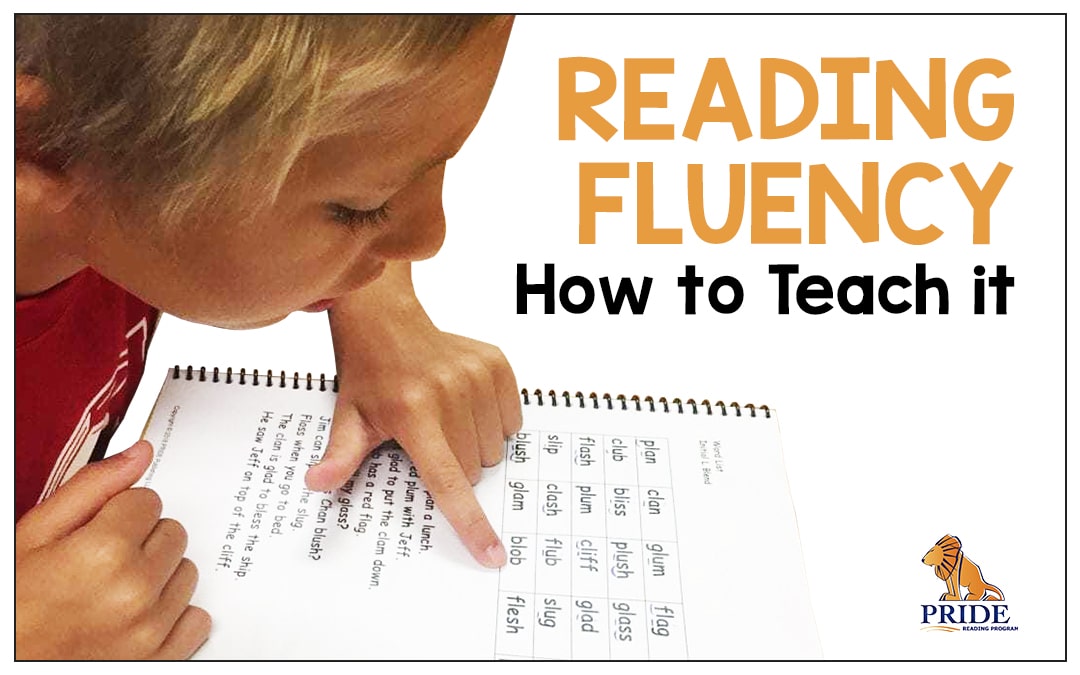
Reading fluency is an essential skill that helps children move from sounding out individual words to understanding complete sentences, paragraphs, and stories. When students read accurately, at an appropriate pace, and with natural expression, they can focus more of their attention on understanding what they read.
However, developing reading fluency takes more than asking children to read faster. Students need regular reading practice, effective instruction, helpful feedback, and opportunities to understand and discuss the texts they encounter.
Using effective reading fluency strategies for elementary students can help teachers and parents support developing readers, identify learning difficulties, and build confidence through consistent practice.
In this guide, you will learn what reading fluency means, why it matters, and which practical strategies can help elementary students become more confident and capable readers.
What Is Reading Fluency?
Reading fluency is the ability to read written text accurately, smoothly, and with appropriate expression. Fluent readers recognize many words automatically, group words into meaningful phrases, and adjust their voices to reflect punctuation and meaning.
Reading fluency has three main components.
1. Reading Accuracy
Accuracy means recognizing and pronouncing words correctly. Students need to identify words accurately to understand the meaning of a sentence.
For example, a child who frequently misreads important words may misunderstand the events in a story. Explicit phonics instruction, vocabulary development, and supported reading practice can help strengthen accuracy.
2. Reading Rate
Reading rate refers to how efficiently a student reads. Beginning readers may need to sound out many words, while more experienced readers recognize familiar words more quickly.
The goal is not to make every child read as fast as possible. Students should develop a comfortable pace that supports understanding and allows them to notice important details.
3. Reading Prosody
Prosody means reading with appropriate phrasing, rhythm, emphasis, and expression. Fluent readers pause at punctuation, recognize meaningful word groups, and change their voices to reflect questions, dialogue, or emotions.
For example, a student reading a question should recognize the question mark and use an appropriate expression rather than reading every sentence in the same tone.
Accuracy, rate, and prosody work together to support reading comprehension.
Why Is Reading Fluency Important for Elementary Students?
Reading fluency connects accurate word recognition with understanding written language. When students spend less effort working out familiar words, they can devote more attention to the ideas, events, and information in a text.
Developing fluency can support elementary students in several ways.
- Improved comprehension: Reading smoothly can help students retain information and understand relationships between ideas.
- Stronger word recognition: Repeated exposure to words can make familiar vocabulary easier to recognize.
- Greater reading confidence: Guided practice helps students approach challenging texts with increasing independence.
- Better oral reading: Students learn to use punctuation, phrasing, and expression when reading aloud.
- Increased classroom participation: As reading becomes more comfortable, students may feel more prepared to participate in discussions and reading activities.
- Support for other subjects: Students use reading skills to understand instructions, science materials, mathematics word problems, and social studies texts.
Fluency does not automatically guarantee comprehension. Students also need vocabulary, background knowledge, language skills, and explicit support in understanding what they read.
10 Effective Reading Fluency Strategies for Elementary Students
Teachers can combine several strategies to address different aspects of reading fluency. The best approach depends on each student’s reading level, current skills, and learning needs.
1. Use Repeated Reading Practice
Repeated reading involves reading a short passage more than once with a clear learning goal. It is a well-established approach for helping students improve oral reading fluency when the text is appropriate for their current reading skills.
How to implement repeated reading:
- Choose a short passage that the student can read with reasonable accuracy.
- Preview unfamiliar vocabulary and explain important words.
- Model fluent reading or read the passage together.
- Ask the student to read the passage aloud.
- Provide specific feedback on errors, pacing, and expression.
- Have the student reread the passage with a particular goal in mind.
- Discuss the passage to check understanding.
For example, during the first reading, a student might focus on accurate word recognition. During the second reading, the goal could be smoother phrasing. During the third reading, the student might concentrate on expression and punctuation.
Two to four readings may be sufficient for a short passage, depending on the learner and the purpose of the activity. Repeated reading should not become endless repetition. Once a student has practiced successfully, introduce a new passage to help transfer the skills to different texts.
2. Model Fluent Reading Through Read-Alouds
Children benefit from hearing what fluent reading sounds like. Teachers and parents can demonstrate how experienced readers use expression, appropriate pacing, and natural pauses.
How to use this strategy:
- Choose an engaging story, poem, or short informational text.
- Read a section aloud at a natural pace.
- Emphasize punctuation and meaningful phrases.
- Pause to explain why a sentence sounds the way it does.
- Invite students to imitate a short section.
- Ask students what they noticed about the reading.
For example, when reading dialogue, change your expression to reflect the speaker’s feelings. When you encounter a comma, demonstrate a brief pause without interrupting the sentence’s meaning.
Regular read-alouds expose students to fluent reading while also developing vocabulary, listening comprehension, and interest in books.
3. Practice Echo Reading
Echo reading allows students to hear a model and then repeat the same words or sentences. It is particularly helpful for children who need support with pronunciation, phrasing, and expression.
Steps for echo reading:
- Select a short text that is suitable for the student’s reading level.
- Read one sentence or phrase aloud.
- Ask the student to repeat it.
- Give feedback on difficult words and phrasing.
- Continue with the next sentence.
- Reread the complete passage together when appropriate.
For example, the teacher might read, “The little bird flew across the garden.” The student repeats the sentence, attempting to match the teacher’s natural rhythm and expression.
Keep the sections short enough for students to remember comfortably. As their confidence improves, encourage them to read longer sections independently.
4. Introduce Choral Reading
Choral reading involves a teacher and a group of students reading the same text aloud together. It gives students an opportunity to practice reading without the pressure of performing individually in front of classmates.
How teachers can use choral reading:
- Select a short poem, repetitive story, or passage with clear phrasing.
- Read the text aloud once to demonstrate the pace and expression.
- Read it together with the class.
- Repeat selected sections that contain difficult words or punctuation.
- Ask students to discuss the text afterward.
Choral reading works particularly well with rhymes, repeated phrases, and predictable texts.
Teachers should listen for students who are struggling to keep up. Some may need a smaller group, individual modeling, or easier text before participating comfortably.
5. Use Partner Reading
Partner reading gives students additional opportunities to read aloud and receive support. It can be used in classrooms, tutoring sessions, and at home.
Pair students thoughtfully. One child may model fluent reading while the other follows along, but both students should have meaningful opportunities to practice.
A simple partner-reading routine:
- Give both students the same short passage.
- Have one partner read while the other follows the text.
- Ask the listening partner to offer a specific, encouraging observation.
- Switch roles.
- Reread a difficult section together.
- Discuss the main idea or an interesting detail.
Teach students to give helpful feedback, such as, “Let’s try that sentence again and pause at the period.”
Avoid placing students in situations where one child becomes a permanent helper and the other rarely gets to read. Both partners should receive practice matched to their needs.
6. Teach Students to Read in Meaningful Phrases
Some children read one word at a time, making it difficult to understand how words connect. Phrase reading teaches students to group words into meaningful units.
Consider the sentence:
“The young girl / carried her books / into the classroom.”
Reading the sentence in these phrases sounds more natural than pausing after every word.
How to teach phrase reading:
- Choose a short sentence or paragraph.
- Read it aloud naturally.
- Mark meaningful phrase boundaries with slashes on a practice copy.
- Ask the student to read each phrase smoothly.
- Gradually remove the markings as the student becomes more independent.
- Discuss how the phrasing helps communicate the sentence’s meaning.
Phrase reading should reflect the structure and meaning of the sentence, not create unnecessary pauses. With practice, students learn to recognize meaningful word groups without relying on visual markings.
7. Make Use of Audio-Assisted Reading
Audio-assisted reading lets students listen to a fluent reading model while following the printed text. It can provide additional practice when a teacher or parent is not available for every session.
How to use audio-assisted reading:
- Choose an audiobook or recording that matches the printed text.
- Make sure the text is appropriate for the student’s reading level.
- Ask the student to follow along with the words on the page.
- Pause at selected points to review unfamiliar vocabulary.
- Invite the student to read a short section aloud afterward.
- Ask questions to check understanding.
Students who need additional support may benefit from listening to a sentence and then repeating it. Others may listen to a short section and reread it independently.
Audio should complement active reading instruction rather than replace opportunities to decode words and practice reading aloud.
8. Use Readers’ Theater
Readers’ theater combines reading practice with performance. Students rehearse a script and read their assigned parts with expression, without needing to memorize the entire script or perform elaborate stage movements.
This strategy can make fluency practice engaging for students who enjoy storytelling and collaboration.
How to organize readers’ theater:
- Choose a short script with clear dialogue.
- Assign roles that match students’ reading skills and comfort levels.
- Preview unfamiliar words and explain the story.
- Model how to read dialogue with expression.
- Allow students to rehearse their parts several times.
- Provide feedback on accuracy, pacing, and meaningful phrasing.
- Present the script to a small group or classroom audience if students feel comfortable.
Readers’ theater provides a reason to reread the same text. Students can focus on making their characters understandable while developing oral reading skills.
Avoid forcing students into public performances if they feel anxious. A small-group reading can offer the same practice with less pressure.
9. Build Automatic Word Recognition
Fluent reading becomes easier when students can recognize familiar words without laboriously sounding out each one. Teachers can support this development through explicit word instruction and regular practice with words students are ready to learn.
Useful activities include:
- Reviewing previously taught letter-sound patterns.
- Practicing words containing familiar spelling patterns.
- Reading short lists of words in context.
- Exploring common words that appear frequently in grade-level texts.
- Practicing decoding longer words by breaking them into manageable parts.
- Returning to difficult words during passage reading.
For example, if a student repeatedly struggles with words containing a particular vowel pattern, provide direct instruction on that pattern before asking the student to reread a passage containing those words.
Do not encourage children to guess words from pictures or the first letter alone. Help them use appropriate decoding strategies and confirm that the word makes sense in context.
10. Provide Regular Independent Reading at the Right Level
Students need opportunities to apply their developing fluency skills to a variety of texts. Independent reading can support reading development when children have suitable materials and can read them successfully.
Help students select books that match their reading abilities and interests. A text that is too difficult may lead to frequent errors and frustration, while an accessible text allows students to practice reading smoothly and understand what they are reading.
Ways to encourage independent reading:
- Offer books on different subjects and in different formats.
- Let students choose from suitable reading options.
- Schedule a consistent reading period.
- Encourage students to share an interesting fact or favorite part.
- Discuss unfamiliar words and important ideas.
- Gradually introduce more challenging texts as their skills develop.
Independent reading is valuable, but it should not replace explicit fluency instruction for students who need guided support.
How to Measure Reading Fluency Progress
Teachers and parents can monitor fluency by observing more than the number of words a child reads in a minute. A useful assessment considers accuracy, rate, expression, and comprehension together.
Measure Words Correct Per Minute
Words correct per minute (WCPM) is a common measure of oral reading fluency. It estimates how many words a student reads correctly during a timed passage.
To calculate it:
- Select a passage appropriate for the student’s grade and reading level.
- Ask the student to read aloud for one minute.
- Count the total words attempted.
- Subtract the words read incorrectly according to the assessment rules.
- Record the resulting score.
For example, if a student reads 85 words in one minute and makes five errors, the score is 80 words correct per minute.
Use consistent assessment procedures and suitable grade-level benchmarks when interpreting scores. A single number does not fully describe a student’s reading ability, and expectations vary by grade, assessment, text difficulty, and time of year.
Observe Accuracy and Expression
During oral reading, note whether the student:
- Reads familiar words correctly.
- Uses decoding strategies when encountering unfamiliar words.
- Pauses appropriately at punctuation.
- Groups words into meaningful phrases.
- Reads dialogue with suitable expression.
- Maintains an appropriate pace.
- Understands the main ideas of the passage.
These observations help teachers identify which aspects of fluency require more practice.
Track Progress Over Time
Use a simple reading log to record the date, passage, accuracy, fluency observations, and comprehension responses.
Compare performance across similar passages rather than drawing conclusions from unrelated texts of different difficulty levels. Look for steady progress and identify patterns in the student’s errors.
Most importantly, use assessment results to adjust instruction. If the student reads slowly because of decoding difficulties, additional phonics instruction may be necessary. If the student reads accurately but struggles with phrasing, modeled reading and phrase practice may be more appropriate.
A Simple Weekly Reading Fluency Plan
A structured routine can help teachers and parents provide consistent practice without making lessons unnecessarily long.
| Day | Reading activity | Main objective |
|---|---|---|
| Monday | Teacher or parent read-aloud followed by echo reading | Model accurate, expressive reading |
| Tuesday | Guided repeated reading | Improve accuracy and smoothness |
| Wednesday | Partner reading and phrase practice | Develop meaningful phrasing |
| Thursday | Audio-assisted reading or readers’ theater | Practice expression and pacing |
| Friday | Read a new, appropriately leveled passage and discuss it | Apply skills and check comprehension |
Adjust the plan to the student’s needs. A child who struggles with word recognition may need more explicit decoding instruction, while a student who reads accurately but sounds robotic may benefit from additional modeling and prosody practice.
Short, focused sessions several times a week are a practical starting point. The amount and type of practice should depend on the student’s age, attention, current reading skills, and instructional goals.
How Parents Can Improve Reading Fluency at Home
Families can reinforce classroom learning through regular, enjoyable reading routines. Home practice does not require expensive materials or complicated lesson plans.
Read Together Every Day
Set aside a regular time to read a short story, poem, or informational passage together. Let the child listen to fluent reading and then take a turn reading a suitable section.
Let Children Choose Interesting Books
Children are more likely to engage with reading when they can explore topics they enjoy. Offer choices such as animals, sports, science, adventures, and everyday experiences.
Be Patient With Mistakes
When a child misreads a word, allow a brief opportunity to work it out. If the child cannot read it, provide the word, help them understand it, and invite them to reread the sentence.
Avoid interrupting every minor hesitation if the child is still working through the word successfully.
Talk About What You Read
Ask simple questions such as:
- What happened in the story?
- Which part did you enjoy most?
- Why do you think the character made that choice?
- What did you learn from this passage?
These conversations remind children that reading is about understanding and enjoying ideas, not simply finishing a page.
Celebrate Improvement
Recognize specific progress, such as reading a sentence more smoothly, correcting a difficult word, or using punctuation appropriately. Avoid comparing a child’s reading speed with that of siblings or classmates.
Common Reading Fluency Mistakes to Avoid
Even well-intentioned reading practice can be less effective when the focus is too narrow or the materials are unsuitable.
Focusing only on speed: Fast reading is not the goal if students make frequent errors or cannot explain what they read. Accuracy, expression, and comprehension also matter.
Choosing texts that are too difficult: Excessively challenging passages can create frustration and limit opportunities for successful practice. Choose texts that provide an appropriate level of challenge.
Skipping word-reading instruction: Students who struggle to decode words may need explicit teaching of phonics and word recognition before they can benefit fully from fluency practice.
Using public reading without preparation: Unprepared round-robin reading can create anxiety and provides limited practice for each child. Guided reading, partner practice, and prepared performance activities are often more productive choices.
Ignoring comprehension: After reading, ask students to explain the main idea, describe an event, or answer a question about the text.
Giving vague feedback: Instead of saying only “Read better,” identify a specific next step, such as “Let’s try that sentence again and pause at the comma.”
Using the same passage indefinitely: Repeated reading can be helpful, but students also need opportunities to apply their skills to new texts. Move forward when the passage has served its purpose.
When Should a Student Receive Additional Reading Support?
Some children need more time and targeted instruction to develop reading fluency. Persistent difficulty deserves attention, particularly when it affects the student’s ability to understand grade-level material.
Consider discussing additional support with the child’s teacher or a reading specialist if the student:
- Frequently struggles to decode familiar spelling patterns.
- Makes repeated errors with common words.
- Reads very slowly despite regular, appropriate practice.
- Has difficulty grouping words into meaningful phrases.
- Shows little progress over time.
- Finds it difficult to explain what they have just read.
The next step may include a closer assessment of phonics, word recognition, oral language, fluency, and comprehension. Based on the results, the school can develop targeted instruction or consider further evaluation when appropriate.
Reading difficulties have different causes, so students should not be labeled based on reading speed alone. Early, individualized support can help teachers respond to the student’s actual needs.
Frequently Asked Questions
What are the best reading fluency strategies for elementary students?
Useful strategies include repeated reading, modeled read-alouds, echo reading, choral reading, partner reading, phrase practice, audio-assisted reading, and readers’ theater. Teachers should select strategies based on the student’s reading level and combine fluency practice with accurate word-reading instruction and comprehension checks.
How can teachers improve reading fluency in the classroom?
Teachers can improve fluency by modeling expressive reading, providing guided oral reading opportunities, teaching unfamiliar words, offering specific feedback, and monitoring student progress. Short, consistent practice sessions help students develop accuracy, appropriate pacing, and expression.
How long should elementary students practice reading fluency?
The appropriate duration depends on the child’s age, reading level, and attention. Short sessions of approximately 10–15 minutes can be a useful starting point for focused practice, but students who need intensive support may require a more structured plan. Quality, feedback, and consistency matter more than a fixed number of minutes.
Does repeated reading improve reading fluency?
Repeated reading can improve oral reading fluency when students practice suitable passages with guidance and feedback. It is most useful when students understand the purpose of each rereading and have opportunities to apply their skills to other texts.
How can parents help children become fluent readers?
Parents can read aloud, listen to children read suitable books, practice short passages, encourage rereading, and discuss the meaning of stories. Patient feedback and access to interesting, appropriately leveled books can make home reading more productive.
Should elementary students focus on reading speed or accuracy?
Accuracy should be established alongside appropriate pacing and expression. Students should not be encouraged to rush through text at the expense of correct word recognition or comprehension. Fluency means reading accurately, smoothly, and meaningfully rather than simply reading quickly.
What is the difference between reading fluency and reading comprehension?
Reading fluency concerns accurate, reasonably effortless reading with appropriate expression. Reading comprehension is the ability to understand and interpret written information. Fluency can support comprehension, but students also need vocabulary, background knowledge, and strategies for understanding text.
Conclusion
Reading fluency helps elementary students move beyond laborious word-by-word reading toward a smoother, more meaningful reading experience. Developing this skill requires consistent practice, effective modeling, suitable reading materials, and feedback that addresses each student’s needs.
The most effective reading fluency strategies for elementary students combine repeated reading, echo reading, partner practice, phrase instruction, and opportunities to read a variety of texts. Teachers and parents should monitor accuracy, pacing, expression, and comprehension rather than focusing exclusively on speed.
By creating supportive reading routines and responding to individual learning needs, adults can help children strengthen their reading skills, build confidence, and become more independent learners.


Leave a Reply