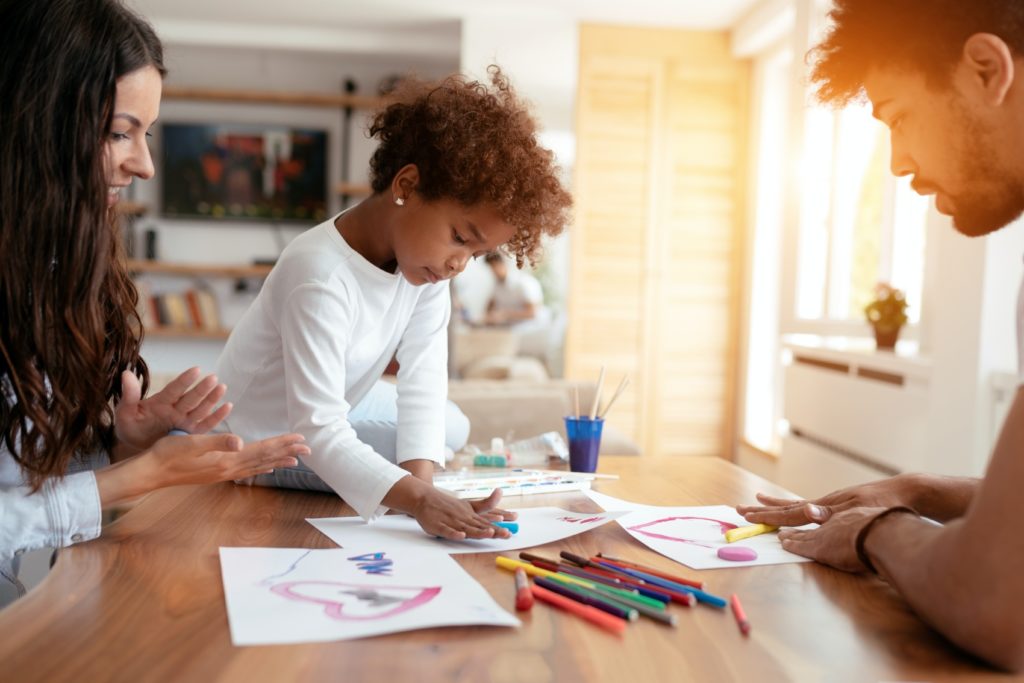
The preschool years are an important time for children to develop language, social skills, curiosity, independence, and early academic abilities. During this stage, children learn through everyday experiences, conversations, play, observation, and interactions with the people around them. Parents can support this development by creating a safe, encouraging home environment where learning feels natural and enjoyable.
Understanding how parents support preschool learning can help families build habits that prepare children for school while strengthening their confidence and relationships. Activities such as reading together, counting household objects, drawing pictures, asking questions, and playing pretend games can introduce valuable skills without requiring expensive educational materials or formal lessons.
Parents do not need to become professional teachers to help their children learn. Small, consistent interactions throughout the day can create meaningful opportunities for growth. The most effective approach combines affection, patience, playful exploration, age-appropriate challenges, and encouragement to try new things independently.
This guide explains practical ways parents can support preschool learning at home, strengthen essential developmental skills, work with preschool teachers, and help children build a positive attitude toward learning.
Why Are the Preschool Years Important for Learning?
The preschool years generally cover the period before children begin formal primary education, often including ages three to five, although programs and school-entry ages vary by location.
During this stage, children develop important foundations for future learning. They begin using more complex language, recognizing patterns, exploring numbers, developing coordination, and understanding how to interact with others. They also become increasingly interested in asking questions, solving simple problems, and completing everyday tasks independently.
Learning during these years extends beyond recognizing letters and numbers. Children also need opportunities to develop emotional awareness, communication, creativity, physical coordination, and self-regulation.
Parents influence this process through everyday interactions. Talking during meals, sharing picture books, playing outside, preparing simple food together, and allowing children to help with household routines can all create opportunities for learning.
A supportive home environment does not need to be expensive or complicated. Children benefit from caring relationships, safe opportunities to explore, accessible books and materials, and adults who respond to their interests and needs.
12 Practical Ways Parents Can Support Preschool Learning
Parents can encourage learning through small activities that fit naturally into daily life. The following strategies help children practice important skills while keeping family interactions positive.
1. Read Together Every Day
Reading with children is one of the simplest ways to support early literacy and language development. Shared reading introduces new vocabulary, helps children understand stories, and encourages them to connect words with pictures and experiences.
Choose age-appropriate picture books, familiar stories, or books about topics that interest your child. You do not need to finish an entire book in one sitting. Even a short, enjoyable reading session can create an opportunity for connection and conversation.
Try these strategies:
- Let your child choose between a few books.
- Point to pictures and name familiar objects.
- Ask what might happen next in the story.
- Encourage your child to describe a character or picture.
- Connect the story to something your child has experienced.
- Invite your child to retell part of the story in their own words.
For example, when reading a book about animals, you might ask, “Which animal do you think lives on a farm?” or “What sound does this animal make?”
Avoid turning every page into a test. Follow your child’s interest and allow them to enjoy the story at their own pace.
2. Make Everyday Activities Learning Opportunities
Children can develop important skills through ordinary household routines. Cooking, shopping, organizing toys, setting the table, and folding laundry all offer opportunities to practice language, mathematics, sequencing, and responsibility.
For example, while preparing a snack, ask your child to count three pieces of fruit or identify which container is larger. During cleanup, encourage them to group toys by color, type, or size.
These experiences help children understand that learning is connected to real life.
Useful everyday learning opportunities include:
- Counting steps while walking.
- Naming objects during shopping trips.
- Sorting socks by color or size.
- Comparing the weight of safe household objects.
- Following simple instructions while preparing a meal.
- Identifying shapes in windows, doors, and furniture.
Choose tasks that match your child’s abilities and supervise activities involving heat, sharp objects, cleaning products, or other potential hazards.
3. Encourage Learning Through Play
Play supports exploration, imagination, problem-solving, and social interaction. Children can practice valuable skills while building with blocks, creating artwork, playing with dolls, inventing stories, or pretending to run a shop.
You can support play-based learning by providing safe materials and giving your child enough time to explore them independently.
For example, building a tower with blocks can introduce concepts such as height, balance, shape, and counting. Pretend shopping can encourage communication, classification, and early mathematics.
Parents can extend these activities by asking open-ended questions:
- What are you building?
- How could we make it taller?
- What do you think will happen next?
- Can you find another way to solve that problem?
Give children opportunities to make decisions instead of directing every step. Adult guidance is useful, but children also need freedom to experiment and develop their own ideas.
4. Introduce Early Mathematics Through Everyday Play
Preschool children can begin developing mathematical understanding long before they work with formal equations. Counting, comparing, sorting, matching, and recognizing patterns all provide foundations for later mathematics.
Try incorporating simple mathematical activities into everyday routines.
Counting games: Count toys, steps, fruit, or blocks together. Invite your child to count small groups of objects and connect the spoken numbers with actual quantities.
Shape hunts: Look for circles, squares, triangles, and rectangles around the house or outdoors.
Sorting activities: Group safe objects by color, shape, size, or type.
Pattern games: Arrange blocks in a repeating sequence, such as red, blue, red, blue, and invite your child to continue it.
Simple measuring: Compare which container holds more water during a supervised activity, or identify which toy is longer.
Keep activities playful and concrete. If your child struggles, simplify the task and demonstrate it rather than insisting on a correct answer immediately.
5. Develop Language Through Conversation
Children learn language by listening, responding, asking questions, and participating in meaningful conversations. Parents can support this process by talking with children throughout the day and showing genuine interest in what they say.
Instead of asking only questions that require a yes-or-no answer, invite your child to describe experiences and explain ideas.
For example, after a visit to the park, ask, “What was your favorite thing we did today?” or “What did you notice about the birds?”
You can also expand your child’s sentences naturally. If your child says, “Big truck,” you might respond, “Yes, that is a very big blue truck.”
This introduces additional vocabulary without criticizing the child’s speech.
Families should feel comfortable speaking the languages they know best. Meaningful conversation in a familiar home language can support connection, communication, and learning. Children can also be introduced to additional languages through songs, stories, and everyday interaction.
6. Build Fine Motor Skills Through Creative Activities
Fine motor skills involve the small movements of the hands and fingers. These abilities support activities such as drawing, using utensils, handling small learning materials, and eventually writing.
Parents can encourage fine motor development through age-appropriate creative activities.
Useful ideas include:
- Drawing with thick crayons.
- Painting with child-safe brushes.
- Playing with suitable, nontoxic playdough.
- Placing large objects into containers.
- Tearing and pasting paper for collages.
- Building with age-appropriate construction materials.
- Turning the pages of picture books.
- Practicing simple tasks such as opening and closing suitable containers.
Focus on exploration and gradual improvement rather than expecting children to produce perfect drawings or write letters before they are ready.
Always supervise young children and avoid small objects or craft materials that could create choking hazards.
7. Support Social and Emotional Development
Learning involves more than academic knowledge. Preschool children are also learning how to identify feelings, communicate needs, manage frustration, cooperate, and respond to other people.
Parents can support these skills by acknowledging emotions and demonstrating calm responses to difficult situations.
For example, if a child becomes upset because a tower collapses, you might say, “You worked hard on that tower, and it is disappointing that it fell. Would you like to try building it again?”
This response recognizes the child’s feelings while encouraging problem-solving.
Other helpful strategies include:
- Naming common emotions such as happiness, sadness, anger, and worry.
- Reading stories that explore feelings and relationships.
- Practicing turn-taking games.
- Helping children use words to express needs.
- Modeling respectful disagreement.
- Praising effort, kindness, and persistence.
- Allowing children to practice manageable challenges with support.
Children will not manage every emotion independently. Patient guidance helps them gradually develop skills for handling everyday difficulties.
8. Encourage Independence Through Small Responsibilities
Preschool children often enjoy doing things for themselves. Giving them age-appropriate responsibilities can strengthen confidence, coordination, decision-making, and practical life skills.
Examples include putting toys away, choosing clothes from suitable options, carrying their own lightweight bag, placing books on a shelf, or helping set the table with safe items.
Allow extra time when a child is learning a new task. Doing everything for them may be faster in the moment, but offering guided practice helps them develop independence over time.
If a task is too difficult, break it into smaller steps. Demonstrate the first step, let your child try, and offer assistance when needed.
The aim is not perfection. It is helping children learn that they can participate, practice, and gradually take on more responsibility.
9. Explore Nature and the Outdoors
Outdoor experiences can introduce children to science, movement, observation, and environmental awareness.
A walk around the neighborhood, time in a garden, or a visit to a safe park can become a learning opportunity when parents encourage children to notice their surroundings.
Try activities such as:
- Finding leaves with different shapes.
- Observing ants or birds from a respectful distance.
- Comparing rough and smooth natural surfaces.
- Looking for clouds and describing their shapes.
- Watering plants and observing their growth.
- Collecting visual observations through drawings or photographs.
Ask children what they notice and what they wonder about. Their questions can guide further exploration.
Outdoor activities should always be appropriate for local conditions, weather, and the child’s abilities. Supervise children near roads, water, unfamiliar plants, and animals.
10. Use Songs, Rhymes, and Movement
Songs and rhymes make learning engaging while supporting listening, memory, rhythm, language, and coordination.
Sing familiar songs, clap to a rhythm, make up rhymes with your child’s name, or use movement games that involve following simple directions.
For example, a song about body parts can encourage children to identify and move different parts of the body. A counting rhyme can help them hear number sequences while enjoying a familiar rhythm.
You can also create simple action games, such as hopping a few times, moving slowly like a turtle, or pretending to fly like a bird.
These activities provide opportunities for physical movement and playful learning without requiring special equipment.
11. Introduce Simple Science Through Questions
Preschool children are naturally curious about how things work. Parents can support early scientific thinking by helping children observe, predict, test, and describe what happens.
Try a simple experiment with safe, large objects and a container of water. Ask your child which objects might float and which might sink. Test the predictions together and talk about the results.
Other ideas include observing how shadows change during the day, watching a seed grow, comparing ice and liquid water under appropriate supervision, or investigating how different materials feel.
The goal is not to memorize scientific explanations. It is to help children ask questions, notice differences, and develop curiosity about the world.
Choose safe materials and supervise experiments closely, especially when water, heat, small parts, or unfamiliar substances are involved.
12. Create a Predictable Daily Routine
Predictable routines help children understand what to expect and make transitions between activities easier. A consistent pattern for waking, meals, play, reading, outdoor time, and bedtime can provide a reassuring structure.
A routine does not need to follow an exact timetable every day. Flexibility is important because family schedules, children’s needs, and unexpected events vary.
Parents can use simple verbal reminders or picture-based schedules to help children understand what comes next.
For example, after breakfast, the family might get dressed, read a short book, and then prepare to leave for preschool.
Predictable routines also create repeated opportunities for children to practice independence, language, organization, and everyday skills.
How to Support Preschool Learning Without Putting Too Much Pressure on Children
Parents may feel that children need to recognize every letter, count to a certain number, or complete formal worksheets before starting school. However, preschool readiness involves a broad range of developmental skills.
Children benefit from opportunities to build language, curiosity, physical coordination, social confidence, independence, and early academic understanding. Progress varies from child to child, and one skill does not tell the whole story.
To keep learning positive, consider the following strategies.
Focus on Progress Rather Than Comparison
Children develop at different rates. Comparing siblings, classmates, or children of the same age can create unnecessary pressure.
Instead, notice your child’s individual progress. Perhaps they are using new words, staying engaged with a puzzle for longer, asking more questions, or becoming more independent during everyday tasks.
These small developments are meaningful parts of learning.
Keep Learning Sessions Short and Flexible
Preschool children often benefit from brief activities that match their interests and attention levels. Some days they may enjoy a long story or building project; on other days, they may prefer movement or outdoor play.
Follow your child’s cues and allow breaks when needed. Learning does not have to happen in a formal session to be valuable.
Avoid Turning Every Activity Into a Test
Constantly asking children to name letters, count objects, or provide correct answers can make ordinary experiences feel stressful.
Instead, participate in the activity together. Count blocks while building, describe shapes while drawing, or talk about characters during a story.
This approach allows children to practice skills in context while preserving the enjoyment of learning.
Praise Effort and Strategies
Specific encouragement can help children understand what they did well.
Rather than relying only on general praise, say things such as, “You tried a different way to make the tower stand,” or “You kept looking until you found the matching shape.”
This highlights effort, persistence, and problem-solving without suggesting that children must always succeed immediately.
Allow Time for Unstructured Play
Not every activity needs an adult-designed learning objective. Children also need opportunities to choose their own games, invent stories, explore materials, and decide how to use their time within safe boundaries.
Unstructured play gives children space to follow their interests and practice decision-making.
How Parents Can Work With Preschool Teachers
Children often benefit when their families and teachers share information and support consistent learning goals. A strong partnership helps adults understand the child’s interests, strengths, challenges, and experiences across different environments.
Communicate Regularly
Ask teachers what your child is exploring in the classroom, which skills they are practicing, and whether there are simple ways to reinforce those experiences at home.
Share relevant observations from home as well. You may notice that your child enjoys a particular type of story, is developing a new interest, or finds certain transitions challenging.
These conversations can help adults provide more consistent support.
Connect Home Activities With Classroom Learning
If the class is exploring animals, you might read an animal story or observe birds outdoors. If children are learning about shapes, you could look for circles and rectangles around the house.
These connections reinforce concepts without requiring parents to recreate the classroom at home.
Discuss Concerns Early
If you notice persistent difficulties with communication, movement, interaction, or other developmental skills, discuss your observations with the preschool teacher and an appropriate healthcare or child-development professional.
Avoid relying on comparisons with other children or assuming that every difference indicates a problem. Professional guidance can help determine whether additional support or assessment would be useful.
Respect Individual Differences
Children may show their understanding in different ways. Some communicate verbally, while others use gestures, pictures, movement, or other methods.
Parents and teachers should work together to identify effective ways to help each child participate and express what they know.
Creating a Learning-Friendly Home Environment on a Budget
Supporting preschool learning does not require expensive toys, electronic devices, or a dedicated classroom. Many useful materials are already available at home.
Use Everyday Household Materials
Clean cardboard boxes, paper, crayons, large building pieces, picture books, and safe household objects can support a variety of activities.
For example, a cardboard box can become a pretend shop, a house, or a vehicle. Paper and crayons can support drawing and storytelling. Large containers can be used for sorting and matching activities.
Always check materials for sharp edges, loose parts, toxic substances, and other hazards before allowing children to use them.
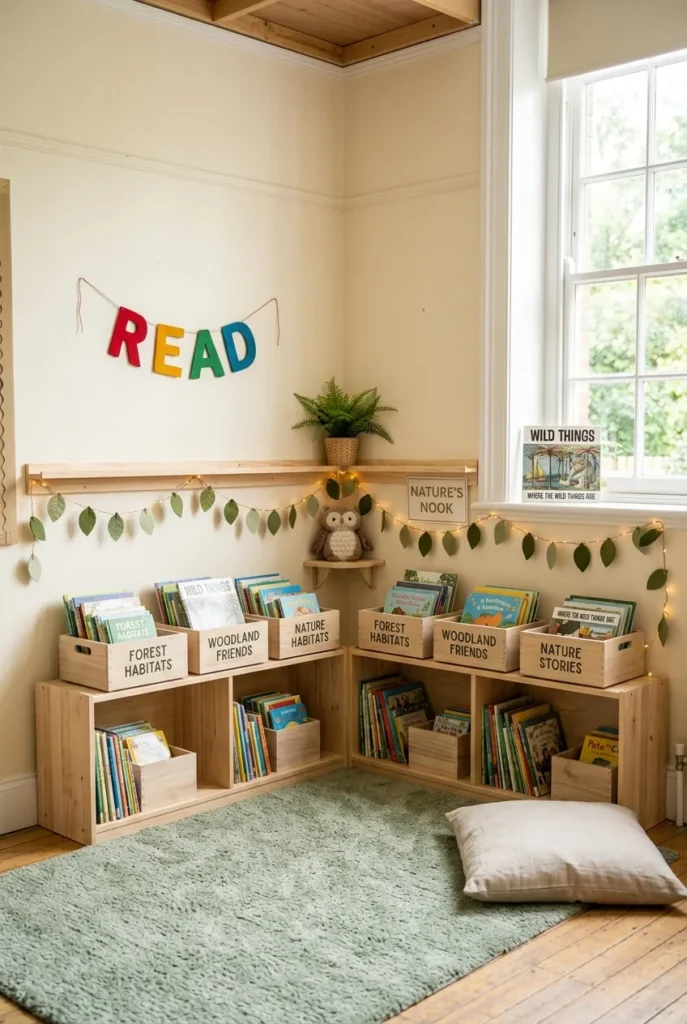
Organize a Small Learning Area
Choose a comfortable place where your child can access a few books, art materials, puzzles, or toys suitable for their age.
Keep the area simple and organized so children can select activities and put materials away afterward.
You can rotate available items occasionally to renew interest without purchasing new things.
Use Local Community Resources
Depending on what is available in your area, public libraries, community centers, parks, and preschool programs may offer books, activities, and opportunities for social interaction.
Everyday outings can also introduce new vocabulary and experiences. A visit to a market, garden, or local place of interest can become an opportunity to observe, ask questions, and talk together.
Prioritize Interaction Over Equipment
The most valuable part of many learning activities is the interaction between the child and a caring adult.
Talking, listening, reading, singing, and playing together can support development even when families have limited resources.
Parents do not need to provide a constant stream of activities. Consistent, responsive interaction is more important than having an elaborate collection of educational materials.
A Simple Daily Learning Routine for Preschool Children
Families can adapt the following example to their schedules, cultural practices, and children’s needs. It is a flexible guide rather than a strict timetable.
| Part of the day | Example activity | Skills supported |
|---|---|---|
| Morning | Talk about the day and get dressed independently | Language, planning, and independence |
| Breakfast | Count pieces of fruit or compare cup sizes | Early mathematics and vocabulary |
| Morning play | Build with blocks or play pretend games | Creativity, problem-solving, and social skills |
| Reading time | Share a picture book and discuss the story | Language, listening, and early literacy |
| Outdoor time | Walk, observe nature, or play a movement game | Physical development and observation |
| Afternoon | Draw, sort objects, or complete a simple puzzle | Fine motor skills and reasoning |
| Household routine | Put toys away or help organize safe items | Responsibility and classification |
| Evening | Talk about the day’s experiences or tell a story | Memory, communication, and emotional connection |
You do not need to complete every activity each day. Choose opportunities that fit naturally into your routine and leave room for rest, spontaneous play, and family time.
Common Mistakes Parents Should Avoid
Even well-intentioned parents can make learning unnecessarily stressful when they focus too heavily on formal achievement.
Expecting Every Child to Develop at the Same Pace
Children have individual strengths and needs. Avoid assuming that a child must master every skill at the same age or in the same order as another child.
Overusing Worksheets and Memorization
Worksheets and repetition may have a place in some learning activities, but preschool development also requires movement, conversation, play, creativity, and hands-on experiences.
A balanced approach helps children explore concepts in different ways.
Correcting Every Mistake Immediately
Mistakes are a normal part of learning. Give children time to think, try again, and discover solutions when the task is safe and appropriate.
Offer help when needed, but avoid taking over every challenge.
Using Screen Time as the Main Learning Method
Digital resources can sometimes support learning, but they should not replace conversations, physical play, shared reading, sleep, and real-world exploration.
When using digital media, choose age-appropriate content, participate where possible, and follow current pediatric guidance for your child’s age.
Ignoring Signs of Difficulty
If a child consistently struggles with a skill or you have concerns about development, seek advice rather than relying only on home activities.
Early conversations with teachers and qualified professionals can help families understand what support may be appropriate.
Frequently Asked Questions
How can parents support preschool learning at home?
Parents can support preschool learning by reading together, talking throughout the day, encouraging play, introducing counting and sorting activities, exploring nature, and involving children in age-appropriate household tasks. A safe, caring environment and responsive interaction are central to these experiences.
What are the most important skills for preschool children to develop?
Important areas include language and communication, early literacy, basic mathematical understanding, social-emotional development, physical coordination, creativity, independence, and problem-solving. The balance of skills varies by child, and development should be considered as a whole.
How much time should parents spend teaching preschool children?
There is no single daily amount that works for every family. Learning can happen throughout ordinary routines rather than only during formal lessons. Short periods of shared reading, conversation, and play can be valuable when they are enjoyable and responsive to the child’s needs.
Do preschool children need educational toys to learn?
No. Many learning opportunities come from books, conversations, outdoor exploration, drawing, pretend play, and safe household materials. The way adults interact with children and the opportunities children have to explore are often more important than the price of the toys.
How can parents prepare children for kindergarten?
Parents can encourage school readiness by supporting communication, independence, curiosity, social interaction, basic self-care, and positive attitudes toward learning. Reading together, practicing simple routines, and allowing children to participate in group activities can also help.
What should parents do if their preschool child struggles with learning?
Start by observing which tasks are difficult and whether the challenge occurs consistently across different settings. Discuss your concerns with the preschool teacher and, when appropriate, a qualified healthcare or child-development professional. They can help identify suitable next steps and additional support.
Is play more important than formal teaching during preschool?
Play is a major way young children explore ideas and practice skills, but it is not the only useful approach. Children can also benefit from stories, demonstrations, conversations, and direct guidance. A balanced, developmentally appropriate environment combines these experiences according to children’s needs.
Can parents support preschool learning if they have limited time?
Yes. Learning opportunities can fit into short everyday interactions, such as talking during a meal, counting steps, singing a song, or sharing a picture book. Consistency and meaningful engagement matter more than creating a complicated schedule.
Conclusion
Understanding how parents support preschool learning helps families recognize that children’s education begins long before formal classroom lessons. Everyday experiences can develop communication, early mathematics, creativity, independence, problem-solving, and social-emotional skills.
Parents can make a meaningful difference by reading together, encouraging play, asking thoughtful questions, exploring the outdoors, introducing simple household activities, and giving children opportunities to complete age-appropriate tasks independently.
The goal is not to turn home into a school or expect children to master every skill early. Instead, create a supportive environment where children feel safe asking questions, making mistakes, exploring their interests, and trying again.
When parents and preschool teachers communicate regularly and respond to children’s individual needs, they can provide a stronger foundation for school readiness and lifelong learning.

Leave a Reply