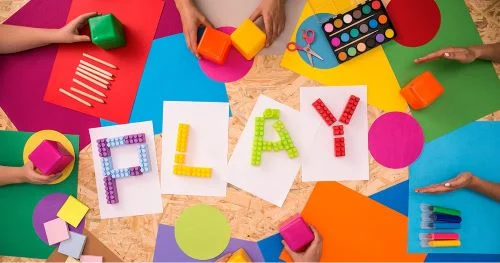
Play is one of the most natural ways children explore the world, develop new skills, and make sense of everyday experiences. When children build with blocks, pretend to run a shop, paint pictures, sing songs, or investigate objects outdoors, they are doing more than having fun. They are practicing communication, problem-solving, coordination, creativity, and social interaction.
Play based learning activities for children combine enjoyable experiences with meaningful opportunities to learn. These activities can support early literacy, mathematics, physical development, emotional awareness, and curiosity without making learning feel like a formal lesson.
Parents, caregivers, and teachers can introduce play-based learning at home, in preschool classrooms, or in other early childhood settings. Many activities require only simple materials, such as cardboard boxes, paper, blocks, household objects, books, or natural items.
This guide explains the benefits of play-based learning and shares practical activities that adults can adapt to children’s ages, interests, and developmental needs.
What Is Play-Based Learning?
Play-based learning is an educational approach in which children develop knowledge and skills through play, exploration, imagination, experimentation, and interaction with others.
Instead of learning exclusively through worksheets or direct instruction, children participate in activities that encourage them to investigate questions, test ideas, solve problems, and communicate their discoveries.
For example, when children build a tower with blocks, they may explore balance, height, shapes, and counting. When they pretend to operate a grocery store, they practice vocabulary, social interaction, sorting, and early mathematics.
Play-based learning can take several forms:
- Free play: Children choose what to play with and direct their own activities.
- Guided play: Adults prepare an activity or environment and offer suggestions while children remain active participants.
- Imaginative play: Children create stories, pretend to be different people, and explore imaginary situations.
- Constructive play: Children build, design, arrange, or create objects using different materials.
- Physical play: Children use movement, balance, coordination, and active exploration.
- Games with rules: Children practice turn-taking, following instructions, planning, and cooperation.
Each form of play offers different learning opportunities. A balanced learning environment includes a combination of child-directed exploration and thoughtful adult guidance.
Why Are Play-Based Learning Activities Important for Child Development?
Children develop several interconnected skills during play. The value of an activity depends on how children engage with it, their developmental stage, and the opportunities available to explore and practice.
1. Cognitive Development and Problem-Solving
Play gives children opportunities to think, experiment, compare possibilities, and discover solutions.
When a child tries to build a bridge with blocks, for example, they may discover that a wider base creates a more stable structure. If the bridge falls, the child can try another arrangement and observe what changes.
These experiences encourage reasoning, memory, curiosity, and flexible thinking.
2. Language and Communication Skills
Play creates natural opportunities for children to hear new words, explain ideas, ask questions, and communicate with others.
During pretend play, children might describe what they are doing, assign roles, or explain the rules of a game. Storytelling and picture-book activities also introduce vocabulary and encourage children to understand and express ideas.
Adults can support language development by talking with children, responding to their questions, introducing useful words, and allowing time for them to answer.
3. Social and Emotional Development
Playing with others helps children practice sharing, taking turns, negotiating, cooperating, and responding to different feelings.
A group building activity, for instance, may require children to agree on what to create and decide how to use the available materials. These interactions give them opportunities to practice patience, communication, and conflict resolution.
Play can also help children express emotions through stories, role-play, art, and movement.
4. Physical Development
Physical play supports both gross motor skills and fine motor skills.
Gross motor activities involve larger movements such as running, jumping, balancing, and throwing. Fine motor activities involve smaller, controlled movements, such as drawing, threading large beads, manipulating playdough, or using child-safe tools.
Providing a range of movement and hands-on activities helps children practice coordination, balance, strength, and control.
5. Creativity and Imagination
Open-ended play allows children to create their own ideas instead of always following a single correct answer.
A cardboard box might become a spaceship, a shop, a house, or a train. A collection of leaves and stones might inspire a nature collage or an imaginary landscape.
These experiences encourage children to think creatively, explore possibilities, and develop confidence in their ideas.
15 Play-Based Learning Activities for Children
The following activities are suitable for many early childhood settings. Adjust the difficulty, materials, and level of adult involvement according to each child’s age and abilities.
1. Building Towers With Blocks
<text>Best for: Toddlers and preschool children</text>
<text>Skills developed: Early mathematics, spatial awareness, coordination, and problem-solving</text>
Give children a collection of age-appropriate building blocks and invite them to construct a tower, bridge, house, or other structure.
Encourage them to compare tall and short towers, count the blocks, identify different shapes, and investigate why some structures remain standing while others fall.
How to extend the activity: Ask questions such as, “What could make your tower stronger?” or “Can you build a tower with ten blocks?”
Avoid immediately correcting every mistake. Give children time to experiment and discover solutions.
2. Pretend Grocery Store
<text>Best for: Preschool and early elementary children</text>
<text>Skills developed: Vocabulary, counting, classification, communication, and social interaction</text>
Create a pretend grocery store using empty, clean packages, toy food, baskets, and reusable shopping bags. Children can take turns being customers, cashiers, and store assistants.
Ask them to sort items by type, color, or size. Older children can make simple price labels, count objects, or add small amounts using pretend money.
This activity connects everyday experiences with early literacy and mathematics while encouraging children to communicate and cooperate.
3. Water Play and Floating Experiments
<text>Best for: Toddlers and preschool children with close adult supervision</text>
<text>Skills developed: Scientific thinking, observation, vocabulary, and hand-eye coordination</text>
Fill a shallow container with a small amount of water and provide a selection of large, safe objects made from different materials.
Invite children to predict which objects will float and which will sink. Let them test their predictions and describe what they notice.
Ask questions such as:
- What happened when you placed the object in the water?
- Which objects floated?
- Did anything surprise you?
- What could we test next?
Use only suitable objects and supervise continuously. Never leave young children unattended around water, even in a shallow container.
4. Storytelling With Picture Cards
<text>Best for: Preschool and early elementary children</text>
<text>Skills developed: Language, imagination, sequencing, listening, and early literacy</text>
Prepare picture cards showing familiar people, animals, places, and everyday objects. Ask children to choose a few cards and create a story that includes each one.
For example, a picture of a dog, a park, and a ball might inspire a story about a dog searching for its favorite toy.
Younger children can name objects and describe what they see. Older children can create longer stories with characters, problems, and endings.
Encourage different ideas rather than expecting every child to tell the same story.
5. Nature Scavenger Hunt
<text>Best for: Preschool and elementary-aged children</text>
<text>Skills developed: Observation, classification, vocabulary, movement, and environmental awareness</text>
Take children to a safe outdoor area and invite them to find examples of natural features, such as a smooth stone, a fallen leaf, a feather, or something green.
Younger children can identify colors and textures. Older children can group findings by shape, size, or type and discuss how natural objects are similar or different.
Encourage children to observe plants and animals without damaging habitats. They can photograph or draw items instead of collecting them.
6. Playdough Shape and Letter Making
<text>Best for: Preschool children</text>
<text>Skills developed: Fine motor control, creativity, early literacy, and shape recognition</text>
Provide child-safe playdough and invite children to roll, flatten, twist, and shape it.
They can create circles, triangles, letters, numbers, animals, or imaginary objects. An adult can demonstrate a letter and help children connect its shape with a sound.
Children who are not yet ready to form letters can focus on squeezing, rolling, and shaping the material.
Always use age-appropriate, nontoxic materials and supervise children who may put playdough in their mouths.
7. Sorting and Matching Games
<text>Best for: Toddlers and preschool children</text>
<text>Skills developed: Classification, attention, visual discrimination, and early mathematical thinking</text>
Gather safe household objects or toys and invite children to sort them into groups.
They might group objects by color, shape, size, or purpose. For example, toy animals can be sorted by where they live, while building pieces can be organized by shape.
As children become more confident, introduce more complex categories or ask them to explain how they decided to group the objects.
Use large items that are safe for the child’s age and avoid small objects that could present a choking hazard.
8. Music, Rhythm, and Movement
<text>Best for: Children across early childhood, with age-appropriate adjustments</text>
<text>Skills developed: Listening, coordination, memory, rhythm, and self-expression</text>
Play a song and invite children to clap, tap, march, sway, or move in different ways.
You can also create a simple rhythm for children to copy, such as two claps followed by one stomp. Older children can invent their own sequences for others to follow.
Music and movement activities help children practice listening and remembering patterns while providing opportunities for joyful physical activity.
Ensure that the space is clear of obstacles and adapt movements to each child’s mobility and comfort.
9. Indoor Obstacle Course
<text>Best for: Preschool and elementary-aged children</text>
<text>Skills developed: Balance, coordination, spatial awareness, and following directions</text>
Use cushions, floor markers, sturdy boxes, or other safe household materials to create a simple movement course.
Children might walk along a marked path, step over a low obstacle, crawl through a large open space, or throw a soft ball into a basket.
Change the course as children develop confidence, but keep every element stable and suitable for their abilities.
The purpose is to practice movement and problem-solving, not to compete for speed. Provide alternative movements for children with different physical needs.
10. Dramatic Play and Role-Playing
<text>Best for: Preschool and early elementary children</text>
<text>Skills developed: Communication, imagination, emotional understanding, and cooperation</text>
Set up a pretend environment such as a doctor’s office, restaurant, post office, classroom, or repair shop. Use safe props and encourage children to choose roles and create their own scenarios.
A pretend restaurant may involve writing a menu, taking orders, preparing imaginary meals, and serving customers.
Role-playing helps children explore familiar social situations, develop vocabulary, and practice seeing a situation from another person’s perspective.
Adults can introduce new words or ask open-ended questions while allowing children to direct the story.
11. Painting and Open-Ended Art
<text>Best for: Toddlers and preschool children, with age-appropriate materials</text>
<text>Skills developed: Creativity, fine motor skills, color recognition, and self-expression</text>
Offer paper, washable paints, thick brushes, crayons, or child-safe drawing tools. Let children experiment with colors, lines, shapes, and textures.
Instead of asking every child to create an identical picture, encourage them to make something based on their interests.
You can ask, “Tell me about your picture” or “What did you discover when you mixed those colors?”
Focus on the creative process and the child’s choices rather than judging artwork by how closely it resembles an example.
12. Number Hunt
<text>Best for: Preschool and early elementary children</text>
<text>Skills developed: Number recognition, counting, attention, and early mathematics</text>
Place large number cards around a room or learning area. Ask children to find a particular number, arrange the cards in sequence, or match each number with a group of objects.
For example, children might match the number four with four blocks or four toy animals.
Younger children can focus on recognizing numbers and counting small groups. Older children can explore simple addition or subtraction using physical objects.
Keep the activity flexible so children can learn through movement and hands-on practice.
13. Gardening and Plant Care
<text>Best for: Preschool and elementary-aged children</text>
<text>Skills developed: Responsibility, observation, science, sequencing, and environmental awareness</text>
Invite children to plant suitable seeds in a pot or small garden area. Show them how to add soil, place the seed, water it appropriately, and observe changes over time.
Children can draw the plant at different stages, compare growth, and discuss what plants need to survive.
Gardening creates opportunities to explore living things and develop patience. Use child-safe tools, supervise soil and water activities, and select plants that are safe for the setting.
14. Puzzle and Problem-Solving Challenges
<text>Best for: Toddlers through elementary-aged children, depending on puzzle difficulty</text>
<text>Skills developed: Visual reasoning, persistence, spatial awareness, and concentration</text>
Offer puzzles that match the child’s current abilities. Younger children may enjoy large-piece matching puzzles, while older children may prefer more complex designs or construction challenges.
Encourage children to examine shapes, rotate pieces, compare images, and try different approaches.
If a child becomes frustrated, offer a small hint or demonstrate one strategy without completing the entire puzzle for them.
The goal is to help children experience manageable challenges and build confidence through practice.
15. Simple Board Games and Turn-Taking Games
<text>Best for: Preschool and elementary-aged children</text>
<text>Skills developed: Social skills, memory, counting, patience, and following rules</text>
Choose simple matching games, picture-based board games, or activities that involve taking turns.
Children can practice waiting, listening to instructions, remembering rules, and responding to winning or losing.
For younger children, simplify the rules and keep games short. Older children can help explain the rules or suggest fair ways to resolve disagreements.
Adults should model respectful behavior and remind children that playing together and learning new skills matter more than winning.
Play-Based Learning Activities by Age Group
Children develop at different rates, so age recommendations should be treated as general guidance rather than strict rules. Choose activities based on individual abilities, interests, and safety needs.
| Age group | Suitable activities | Main learning opportunities |
|---|---|---|
| Babies | Face-to-face interaction, songs, supervised sensory exploration, peekaboo | Early communication, sensory awareness, bonding, and attention |
| Toddlers | Large-block building, sorting large objects, music, simple pretend play | Coordination, vocabulary, independence, and exploration |
| Preschool children | Storytelling, water experiments, role-play, puzzles, art, counting games | Early literacy, mathematics, creativity, and social skills |
| Early elementary children | Board games, gardening, building challenges, nature investigations, dramatic play | Reasoning, collaboration, planning, and more complex problem-solving |
Activities for Babies
Babies learn through safe sensory exploration, movement, interaction, and repeated experiences with familiar caregivers.
Try singing songs, responding to babbling, showing age-appropriate picture books, or offering safe objects with different textures for supervised exploration.
Talk to babies during everyday routines and pause to give them time to respond through sounds, facial expressions, or movements.
Avoid objects with small parts, loose components, sharp edges, or materials that could cause choking.
Activities for Toddlers
Toddlers often enjoy repeating actions, moving objects, imitating adults, and exploring cause and effect.
Try stacking large blocks, placing large objects into and out of containers, pretending to cook, or sorting toys into simple groups.
Use short instructions and demonstrate activities when needed. Toddlers benefit from repetition and should have enough time to explore without being rushed.
Activities for Preschool Children
Preschool children can often participate in more elaborate imaginative play, early counting activities, storytelling, simple experiments, and cooperative projects.
Invite them to create a pretend shop, invent a story, investigate which objects float, or design a structure using blocks.
Ask open-ended questions that encourage them to explain their ideas and make predictions.
Activities for Early Elementary Children
Older children can engage with more complex projects that combine several skills.
For example, they might design a pretend town with blocks, create signs for its buildings, count objects, plan roads, and explain how the community works.
They can also keep a simple gardening journal, invent a board game, or investigate a question about nature.
These activities connect play with increasingly advanced communication, planning, mathematics, and reasoning.
How Parents Can Encourage Learning Through Play at Home
Families do not need expensive toys or a dedicated playroom to create useful learning experiences. Everyday routines and simple materials can provide many opportunities for exploration.
Create a Safe, Accessible Play Space
Choose an area where children can move comfortably and reach suitable toys or materials. Keep frequently used items organized in accessible containers and remove objects that present safety hazards.
A small collection of versatile materials is often more useful than an overcrowded play area.
Follow the Child’s Interests
Notice what captures the child’s attention. If they enjoy animals, introduce animal books, pretend animal care, or matching games. If they enjoy construction, provide blocks and opportunities to build.
Following a child’s interests can make activities more engaging while giving adults opportunities to introduce new concepts naturally.
Ask Questions Without Taking Over
Instead of giving children every answer, invite them to think about what they are doing.
Useful questions include:
- What do you think will happen next?
- How could we make this stronger?
- What do you notice about these objects?
- Can you think of another way to do it?
- How would you like to continue your story?
Give children time to respond. If they are not ready to answer verbally, they can demonstrate an idea through actions or pictures.
Make Everyday Routines Playful
Activities such as setting the table, sorting laundry, preparing a snack, or putting away toys can become learning opportunities.
Children can count items, compare sizes, identify colors, follow a sequence, or learn new words while participating in daily routines.
Always choose tasks appropriate to the child’s abilities and supervise activities involving food preparation, tools, water, or other potential hazards.
Balance Adult Guidance With Independent Exploration
Adults can introduce materials, demonstrate a new skill, or suggest a challenge. However, children also need opportunities to make decisions and develop their own ideas.
Avoid turning every play session into a quiz or formal lesson. Some of the most useful learning happens when children have time to explore freely.
How Teachers Can Use Play-Based Learning in the Classroom
Teachers can make play-based learning more effective by connecting activities to clear developmental goals while respecting children’s interests and choices.
Plan Activities Around Learning Objectives
Before introducing an activity, identify the skills children might practice.
For example, a pretend grocery store can support counting, sorting, vocabulary, and cooperation. A block-building challenge can introduce spatial relationships, measurement, and problem-solving.
Learning objectives help teachers choose suitable materials and observe progress without making the activity overly restrictive.
Prepare Materials and Learning Areas
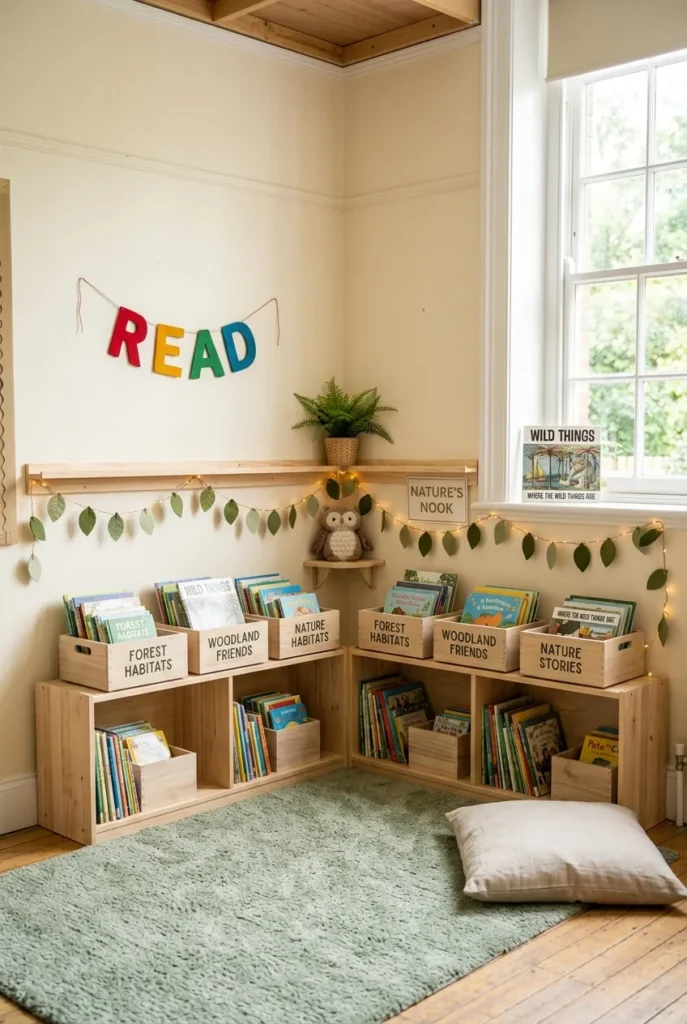
Organize materials so children can access them safely and understand how to use them. Separate areas for reading, construction, art, dramatic play, and sensory activities can help children explore different interests.
Rotate materials when useful, but avoid changing everything so frequently that children lose opportunities for sustained practice.
Observe and Document Children’s Progress
Teachers can learn a great deal by watching how children approach activities, communicate, respond to challenges, and use materials.
Brief observation notes, samples of children’s work, photographs taken with appropriate permissions, and conversations with families can help educators identify strengths and plan next steps.
Assessment should consider the child’s development over time rather than judging ability from a single activity.
Adapt Activities for Different Learning Needs
Children may differ in communication, mobility, sensory preferences, attention, and prior experience. Teachers can adapt materials and instructions to make participation more accessible.
For example, a child may use larger building pieces, picture-based instructions, additional time, or alternative ways to communicate an idea.
The aim is to preserve the learning purpose while allowing children to participate meaningfully.
Encourage Cooperation Without Forcing It
Some activities naturally work best in groups, while others may be more suitable for individual exploration.
Teachers can offer shared construction projects, partner storytelling, or turn-taking games while respecting children’s needs for space and quieter activities.
Model respectful communication and help children resolve disagreements when necessary.
How to Make Play-Based Learning More Effective
The best activities are not necessarily the most expensive or complicated. Their value comes from how well they match children’s needs and create opportunities to learn.
Use these practical strategies:
- Keep activities developmentally appropriate. Choose materials and challenges that children can engage with safely and meaningfully.
- Allow repetition. Repeating an activity helps children practice skills and notice new details.
- Use open-ended materials. Blocks, paper, cardboard, art materials, and safe natural objects can support many different ideas.
- Encourage curiosity. Invite children to predict, investigate, compare, and explain what they observe.
- Focus on the process. Recognize effort, experimentation, and problem-solving instead of praising only correct answers or finished products.
- Provide enough time. Children may need time to become engaged, develop an idea, and explore it fully.
- Include indoor and outdoor play. Different environments offer different opportunities for movement, observation, creativity, and discovery.
- Prioritize safety and inclusion. Supervise appropriately and adapt activities to individual abilities, cultural contexts, and accessibility needs.
Play-based learning should complement other developmentally appropriate experiences, including conversation, reading, explicit demonstrations, and direct teaching when useful.
Common Mistakes to Avoid During Play-Based Learning
Although play can provide valuable learning opportunities, the way adults organize and support it matters.
Overdirecting Every Activity
When adults control every decision, children may have fewer opportunities to explore, make choices, and develop their own solutions.
Provide guidance when needed, but allow room for children’s ideas.
Expecting Every Child to Produce the Same Result
Children have different interests, strengths, and developmental needs. An open-ended art activity or building challenge should allow for different outcomes.
Evaluate what children are learning rather than expecting identical finished products.
Choosing Activities That Are Too Difficult
An activity that is far beyond a child’s current abilities can lead to frustration. Break complex tasks into manageable steps and offer support when necessary.
Gradually increase the challenge as skills develop.
Treating Play as a Reward Rather Than a Learning Opportunity
Play is not merely a break from learning. When thoughtfully supported, it can help children explore academic concepts, develop social skills, and practice emerging abilities.
Include purposeful play as a regular part of the learning environment.
Ignoring Safety
Check materials for small parts, sharp edges, toxic substances, and other hazards. Supervise water play, outdoor exploration, and activities involving tools or potentially unsafe materials.
For babies and toddlers, pay particular attention to choking risks and the need for close supervision.
Frequently Asked Questions About Play-Based Learning
What are play-based learning activities for children?
Play-based learning activities are experiences that help children develop skills through exploration, imagination, movement, games, and interaction. Examples include block building, storytelling, pretend shopping, puzzles, nature hunts, art, and simple science experiments.
What age is best for play-based learning?
Play-based learning can begin in infancy and continue throughout early childhood and beyond. Activities should match the child’s developmental stage, interests, and abilities. Babies benefit from safe sensory exploration and responsive interaction, while older children can engage in more complex games and projects.
How does play-based learning support child development?
Play can support cognitive, language, social, emotional, and physical development. Children have opportunities to solve problems, communicate, practice coordination, express feelings, and learn through experimentation.
Can play-based learning help children develop early math skills?
Yes. Activities such as counting blocks, sorting objects, matching shapes, playing board games, and pretending to shop can introduce numbers, patterns, measurement, comparison, and basic arithmetic.
How can parents support play-based learning at home?
Parents can provide safe materials, follow children’s interests, read together, encourage imaginative play, ask open-ended questions, and involve children in age-appropriate everyday tasks. Expensive toys are not necessary for meaningful play.
Is play-based learning effective in preschool classrooms?
Play-based learning can support early learning when activities are appropriate to children’s developmental needs and thoughtfully connected to learning goals. Teachers help by preparing materials, observing progress, introducing concepts, and providing guidance without taking over children’s exploration.
What is the difference between free play and guided play?
Free play is primarily directed by children, who decide what to do and how to continue. Guided play includes an adult who prepares the environment or offers suggestions to support a learning goal while allowing children to remain active participants.
Do children need educational toys for play-based learning?
No. Many activities use ordinary materials such as cardboard boxes, paper, blocks, picture books, safe household objects, and natural items. The most important considerations are safety, suitability, and opportunities for meaningful exploration.
Conclusion
Play-based learning activities for children provide practical opportunities to develop language, early mathematics, creativity, problem-solving, physical coordination, and social-emotional skills.
From building towers and exploring water to creating stories, gardening, and playing pretend, simple activities can turn everyday experiences into meaningful learning opportunities. Parents and teachers can make these experiences more effective by following children’s interests, providing appropriate challenges, asking thoughtful questions, and allowing time for independent exploration.
There is no single activity that meets every child’s needs. A balanced approach combines free play, guided experiences, conversation, movement, reading, and direct instruction when appropriate.
By making play a regular part of children’s lives, adults can create engaging environments where curiosity is encouraged, skills develop through practice, and learning becomes a meaningful part of everyday experience.
Leave a Reply