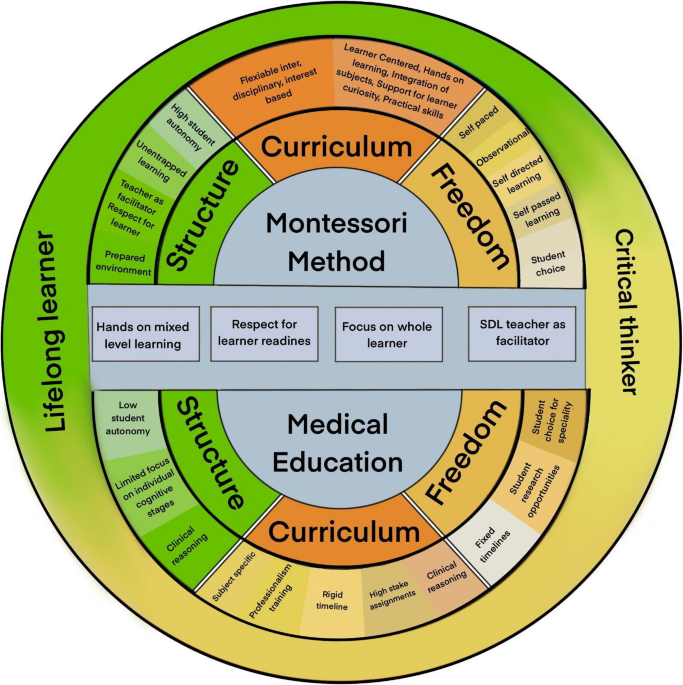
Montessori education is a child-centered approach to learning that encourages independence, curiosity, creativity, and practical life skills. Developed by Italian physician and educator Dr. Maria Montessori, this educational method helps children learn through hands-on experiences, purposeful activities, and exploration at their own pace.
Unlike traditional classrooms, where teachers often direct the same lesson to every student, Montessori classrooms give children opportunities to choose meaningful activities within a structured learning environment. Teachers act as guides, observing each child’s development and introducing new concepts when the child is ready.
Understanding Montessori education principles can help parents, teachers, and school leaders decide whether this approach is suitable for their students. From independent learning and prepared environments to hands-on materials and mixed-age classrooms, Montessori education focuses on developing the whole child rather than academic performance alone.
What Is Montessori Education?
Montessori education is an educational philosophy that emphasizes active learning, individual development, and independence. It recognizes that children learn differently and that meaningful learning often occurs when they can explore ideas, practice skills, and discover solutions themselves.
Dr. Maria Montessori developed her approach in the early twentieth century after observing how children interacted with their surroundings and learning materials. She believed that children possess a natural desire to learn and that educators should create environments that support this motivation.
A Montessori classroom typically includes accessible learning materials, clearly organized activity areas, and opportunities for individual and collaborative work. Children may practice mathematics with physical objects, develop reading skills using tactile letters, or strengthen everyday abilities through activities such as pouring water, arranging materials, and caring for classroom plants.
The teacher introduces activities, demonstrates their use, and observes how children respond. Rather than constantly directing every action, the teacher encourages students to develop concentration, confidence, and responsibility.
The Main Montessori Education Principles
The Montessori method is based on several connected principles that influence classroom organization, teaching practices, and student development.
1. Child-Centered Learning
Child-centered learning places the individual learner at the heart of the educational experience. Teachers consider each child’s interests, developmental stage, strengths, and learning needs when planning activities.
Instead of expecting every student to master a concept at precisely the same time, Montessori educators provide opportunities for children to practice skills and progress when they are ready.
For example, a child who is developing number recognition may work with counting objects, while another child who understands basic numbers may explore addition using beads or other mathematical materials.
This approach helps teachers provide suitable challenges without unnecessarily rushing students through unfamiliar concepts.
How to apply it: Observe students carefully, offer activities at different difficulty levels, and introduce new challenges when learners demonstrate readiness.
2. Learning Through Hands-On Experiences
One of the most recognizable Montessori education principles is learning through direct experience. Children use physical materials, movement, observation, and experimentation to understand abstract ideas.
Hands-on learning can make unfamiliar concepts easier to understand because students can see, touch, arrange, compare, and manipulate objects.
For example, a student learning fractions might divide a circular material into equal parts before representing the same concept with numbers. A child learning vocabulary may trace a tactile letter while connecting its shape with a sound.
These experiences help connect physical actions with mental understanding.
Teachers can support this principle by using manipulatives, practical experiments, sorting activities, sensory materials, and real-world examples. Materials should have a clear learning purpose rather than serving only as entertainment.
3. Independence and Personal Responsibility
Montessori classrooms encourage children to complete appropriate tasks independently. Students learn to select activities, gather materials, follow instructions, solve manageable problems, and return materials to their proper places.
Independence does not mean leaving children without support. Instead, teachers provide demonstrations, guidance, and opportunities to practice until students can perform tasks with increasing confidence.
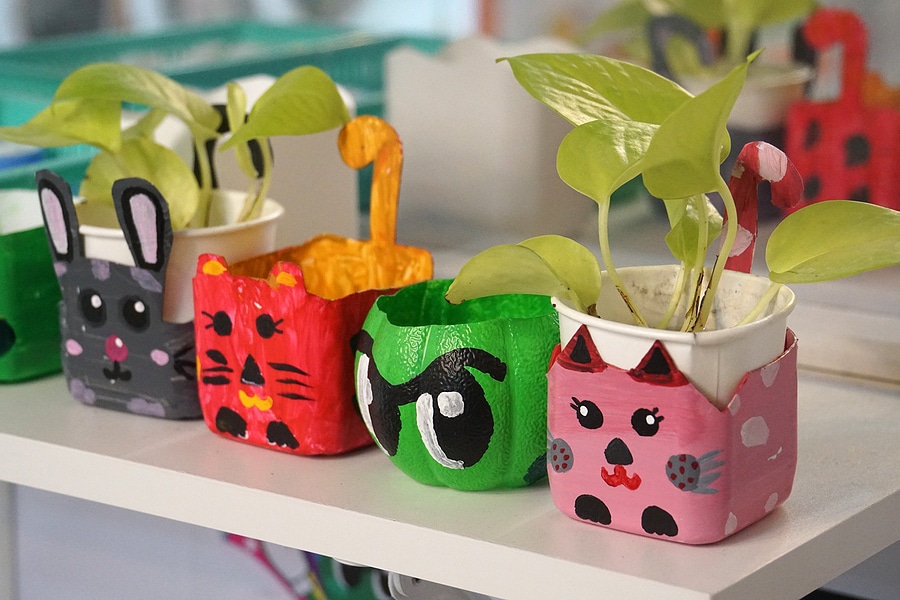
Practical activities may include preparing a workspace, watering plants, organizing books, cleaning up after an activity, or managing a simple classroom responsibility.
These experiences help children develop decision-making abilities, self-confidence, coordination, and responsibility.
Parents can reinforce the same principle at home by allowing children to dress themselves, organize their belongings, help prepare simple meals safely, and participate in age-appropriate household tasks.
4. The Prepared Environment
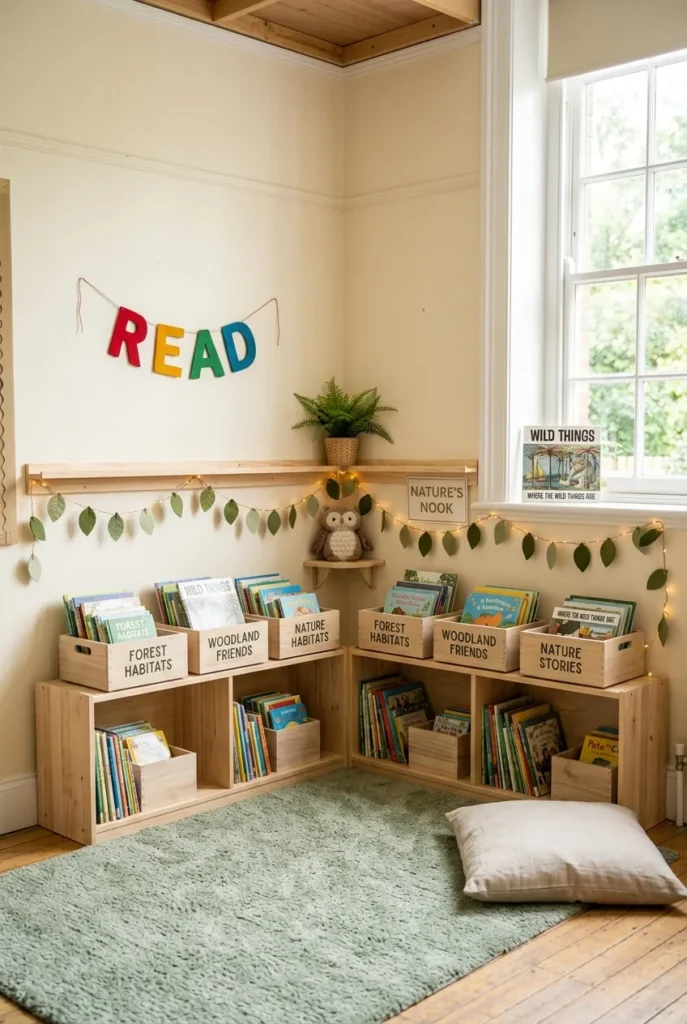
A prepared environment is a carefully organized learning space designed to support children’s independence, concentration, and exploration.
In a Montessori classroom, furniture and learning materials are generally arranged so children can access appropriate resources without relying on an adult for every step.
A well-prepared environment often includes:
- Clearly defined areas for literacy, mathematics, practical life, and sensory learning.
- Child-accessible shelves and appropriately sized furniture.
- Materials arranged in a logical order.
- Uncluttered spaces that support concentration.
- Clear expectations for using and returning materials.
- Opportunities for individual work and small-group collaboration.
For example, a classroom might have a mathematics area with counting materials, a reading corner with accessible books, and a practical life area where students practice everyday skills.
The goal is to make the environment supportive and understandable, allowing children to focus on learning rather than constantly searching for materials or waiting for instructions.
5. Freedom Within Limits
Montessori education gives children meaningful choices while maintaining clear classroom boundaries.
Students may choose an approved activity, decide where to work, or continue practicing a task while they remain engaged and follow classroom expectations. However, they must respect other learners, handle materials carefully, and avoid disrupting the learning environment.
This balance helps children understand that freedom comes with responsibility.
For example, a student might choose between a reading activity and a mathematics activity. The student can make that decision independently but is still expected to use the materials appropriately and return them when finished.
Freedom within limits supports self-regulation, decision-making, and respect for the classroom community.
6. Self-Paced Learning
Children do not all learn new skills at the same speed. Montessori education recognizes these differences by providing opportunities for repetition, practice, and gradual progression.
A student who needs additional time to understand letter sounds can continue practicing with suitable materials. Another student who has mastered those sounds may move toward word building or early reading activities.
Self-paced learning can reduce unnecessary pressure and give children time to build a strong foundation before advancing to more complex concepts.
However, learning at an individual pace does not mean that progress is left entirely to chance. Teachers observe students, document development, and introduce new lessons to ensure that each child continues to learn.
7. The Teacher as a Guide
In Montessori education, the teacher plays an active but carefully considered role. Rather than delivering every lesson through whole-class instruction, the teacher observes learners, demonstrates activities, offers individual lessons, and prepares the environment.
Teachers look for signs of readiness, concentration, difficulty, and growing independence. They intervene when necessary but avoid interrupting a child who is productively engaged without a clear reason.
For instance, if a student struggles with a puzzle, the teacher might demonstrate one useful strategy and then allow the student to continue independently.
This approach requires strong observation skills, thoughtful lesson planning, and a clear understanding of child development.
8. Mixed-Age Classrooms and Peer Learning
Many Montessori classrooms group children across a developmental age range rather than placing every child in a single-age class. The specific age groupings vary by school and program.
Mixed-age classrooms create opportunities for younger children to observe older peers and for older students to reinforce their understanding by helping younger classmates.
A younger child may learn how to organize materials by watching an older student. An older child may practice communication, patience, and leadership while explaining a familiar activity.
Peer learning does not replace teacher instruction. Instead, it adds opportunities for cooperation, observation, and shared responsibility.
9. Intrinsic Motivation and Concentration
Montessori education aims to encourage children to engage in learning because an activity is interesting, meaningful, or personally satisfying.
Rather than depending entirely on prizes, grades, or public competition to encourage participation, teachers offer purposeful tasks and opportunities for children to recognize their own progress.
For example, a student may repeat a practical activity because they want to complete it more accurately. Another child may continue working with counting materials because they are interested in discovering a mathematical pattern.
Teachers still provide feedback, establish expectations, and assess progress. The emphasis is on helping children develop lasting engagement rather than relying exclusively on external rewards.
10. Respect for the Whole Child
Montessori education considers intellectual, physical, social, and emotional development as interconnected parts of learning.
Academic skills are important, but children also need opportunities to communicate, manage frustration, develop coordination, care for their surroundings, and build respectful relationships.
Classroom routines may encourage students to listen to others, resolve small disagreements, take responsibility for shared materials, and work carefully.
By considering the whole child, Montessori educators aim to support development that extends beyond memorizing information or completing assignments.
How Does the Montessori Teaching Method Work?
The Montessori teaching method combines carefully designed learning materials, individual guidance, observation, and opportunities for independent activity.
Although classroom practices vary by age group and school, several common methods help bring Montessori principles into everyday teaching.
Individual and Small-Group Lessons
Teachers introduce many Montessori activities through short individual or small-group demonstrations. Students can then practice the activity themselves.
For example, a teacher might demonstrate how to use a set of counting beads to represent quantities. After the demonstration, the student can repeat the process and explore related tasks.
This allows instruction to respond to specific learning needs instead of assuming that every child requires the same explanation.
Specially Designed Learning Materials
Montessori classrooms often use concrete materials that help children understand concepts through direct interaction.
Examples include:
- Tactile letters for developing early literacy skills.
- Counting beads and number materials for mathematics.
- Shape and dimension materials for visual discrimination.
- Practical life tools for developing coordination and independence.
- Maps and classification materials for exploring geography and related subjects.
Many materials provide a way for students to notice or correct certain errors independently. This can help them recognize mistakes and try another approach without immediately waiting for a teacher.
Extended Work Periods
Many Montessori programs provide substantial periods for focused activity rather than dividing every part of the day into short, teacher-directed lessons.
During these periods, children may select appropriate work, complete a task, repeat an activity, or move toward another lesson when ready. Teachers observe and provide instruction as needed.
The exact length and organization of these periods depend on the children’s ages and the school’s implementation of Montessori practices.
Observation and Individualized Assessment
Teachers monitor progress through classroom observation, conversations, demonstrations, and records of completed work.
Rather than relying only on traditional tests, educators may assess whether a student can use a material correctly, explain a concept, complete a sequence of steps, or apply a skill independently.
These observations help teachers identify learning gaps, plan future lessons, and provide additional support where necessary.
What Are the Benefits of Montessori Education?
The potential benefits of Montessori education extend across academic learning and broader developmental skills. Outcomes depend on factors such as teaching quality, classroom implementation, student needs, and the wider learning environment.
1. Stronger Independence
Children regularly practice making choices, managing materials, and completing appropriate tasks. Over time, these experiences can support greater confidence and responsibility.
Independence also helps students develop habits that are useful beyond the classroom, including organizing belongings and taking an active role in everyday activities.
2. Improved Concentration and Self-Regulation
Opportunities to work on purposeful activities can help children practice maintaining attention and managing their behavior.
When students select suitable tasks, repeat challenging activities, and follow classroom routines, they get opportunities to develop persistence and self-regulation.
These skills may also support learning in settings that require planning, patience, and sustained effort.
3. Development of Problem-Solving Skills
Hands-on activities encourage children to test ideas, recognize errors, compare possibilities, and adjust their approach.
For example, a student working with a construction material may need to determine why a structure is unstable. Instead of immediately receiving the answer, the student can try different arrangements and observe the results.
This process encourages active thinking and helps children see mistakes as opportunities to learn.
4. Support for Academic Development
Montessori classrooms can support literacy, mathematics, science, and other academic areas through structured lessons and hands-on materials.
A systematic review published in 2023 found positive effects of Montessori education across a range of academic and nonacademic outcomes compared with conventional education, although the strength of evidence varied by outcome. The findings support the approach’s potential without guaranteeing identical results for every child or school.
Effective implementation remains important. Students need appropriate instruction, challenging learning opportunities, and regular monitoring to develop essential academic skills.
5. Positive Social Skills
Children learn to share classroom spaces, respect others’ concentration, communicate needs, and participate in a community.
Mixed-age activities can create additional opportunities for cooperation and peer support. Students may learn to ask for help, offer assistance, and resolve disagreements respectfully.
These experiences can strengthen social awareness while helping children understand that their choices affect other people.
6. Creativity and Curiosity
Montessori learning encourages children to explore questions, investigate materials, and make discoveries.
When students have opportunities to follow meaningful interests within appropriate boundaries, they can develop curiosity and experiment with different ways of approaching a task.
Teachers can extend this process by asking open-ended questions, introducing new materials, and encouraging students to explain their observations.
7. Practical Life Skills
Activities involving organization, care of the environment, movement, and everyday routines help children practice useful life skills.
Depending on their age and abilities, students may learn to prepare materials, care for classroom plants, manage simple tasks, or organize their workspace.
These experiences connect learning with everyday responsibilities and provide repeated opportunities to practice coordination, sequencing, and independence.
Montessori Education vs. Traditional Education
Montessori and traditional education can both support meaningful learning, but they often organize instruction differently. Traditional schools also vary widely, so the comparison below describes common tendencies rather than rules that apply to every classroom.
| Feature | Montessori Education | Traditional Education |
|---|---|---|
| Teaching approach | Often child-centered and guided by observation | Often includes teacher-directed lessons |
| Learning pace | Allows flexibility for practice and progression | May follow a shared class schedule |
| Classroom materials | Frequently uses hands-on, structured materials | May rely more on textbooks, worksheets, and digital resources |
| Student choice | Offers choices within clear limits | Choices depend on the teacher and school |
| Classroom grouping | Often includes mixed-age groups | Commonly groups students by age or grade |
| Assessment | May emphasize observation and demonstrated mastery | Often combines tests, assignments, and observation |
| Teacher’s role | Guides, demonstrates, observes, and individualizes instruction | Explains concepts, leads lessons, and supports students |
| Daily activities | Often includes extended independent work periods | Often uses scheduled lessons and subject periods |
Neither approach is automatically the best choice for every child. School quality, teacher expertise, curriculum, available resources, and the child’s individual needs all influence educational outcomes.
Parents should evaluate the actual learning environment rather than making a decision based on the school’s label alone.
How to Apply Montessori Education Principles at Home
Parents do not need a fully equipped Montessori classroom to encourage independence and purposeful learning. Simple changes at home can help children develop related skills.
Create an Organized Learning Space
Set aside a small area where children can access age-appropriate books, puzzles, art supplies, and learning materials. Keep the space organized so children can choose activities and return items when finished.
A simple, uncluttered setup is often more useful than a large collection of toys.
Encourage Practical Life Activities
Give children opportunities to participate in everyday routines. Depending on their age, they might sort laundry, water plants, arrange books, prepare simple snacks with supervision, or help tidy a workspace.
These activities develop coordination and responsibility while showing children that their contributions matter.
Offer Meaningful Choices
Provide a small number of appropriate options rather than making every decision for the child.
For example, ask whether they would prefer to read a book or complete a puzzle first. Both choices can support learning while giving the child a sense of ownership.
Allow Time for Independent Work
Avoid interrupting children constantly when they are safely and productively engaged in an activity. Give them time to explore, repeat steps, and work through manageable challenges.
Offer assistance when necessary, particularly when a child becomes frustrated or needs a new demonstration.
Demonstrate Before Giving Instructions
When introducing an unfamiliar task, show the child how to perform it slowly and clearly. Then allow them to try.
For example, demonstrate how to organize art materials before asking the child to put everything away independently.
Set Clear and Consistent Boundaries
Independence works best when children understand expectations. Explain how to handle materials, respect others, and complete basic cleanup routines.
Boundaries should be appropriate to the child’s age and ability, with adult supervision whenever an activity involves potential hazards.
How to Choose a Quality Montessori School
Not every school using the Montessori name follows the approach in the same way. Since the term is not trademarked, the quality and consistency of implementation can vary.
Parents considering Montessori education should look beyond promotional claims and evaluate the classroom directly.
Consider the following factors:
- Teacher training: Ask about teachers’ Montessori qualifications, experience, and ongoing professional development.
- Classroom environment: Look for organized, accessible materials and spaces designed around children’s developmental needs.
- Student engagement: Observe whether children are meaningfully engaged in purposeful activities rather than simply moving between unrelated tasks.
- Individual guidance: Ask how teachers introduce lessons, monitor progress, and support children who need additional help.
- Curriculum coverage: Check how the school teaches literacy, mathematics, science, cultural subjects, and other required academic content.
- Assessment practices: Find out how progress is documented and communicated to parents.
- Classroom expectations: Look for clear, respectful boundaries that support independence without neglecting student safety.
- Family communication: Ask how the school shares progress, discusses concerns, and works with parents.
It is also useful to ask how the school supports children who need specialized instruction or accommodations. A strong learning environment should recognize individual differences and provide appropriate support.
Is Montessori Education Suitable for Every Child?
Montessori education can suit many children, particularly those who benefit from hands-on learning, meaningful choices, and opportunities to work independently. However, no single educational approach is ideal for every learner or family.
Some children may initially need additional support with choice-making, transitions, or working independently. Others may benefit from more explicit teacher direction or specialized instruction in particular subjects.
A well-prepared Montessori classroom should provide structure, clear demonstrations, appropriate challenges, and responsive teacher guidance. Independence should develop gradually rather than being expected before a child is ready.
Parents should also consider practical factors such as cost, location, school schedule, curriculum requirements, and the availability of suitable programs.
The most important question is whether the specific school can meet the child’s educational, social, and developmental needs.
Common Misconceptions About Montessori Education
Myth 1: Montessori Students Can Do Whatever They Want
Reality: Children have choices, but those choices exist within classroom rules and established routines. Respect for people, materials, and the learning environment is essential.
Myth 2: Montessori Education Has No Structure
Reality: Montessori classrooms use organized materials, planned lessons, routines, and clear learning sequences. The structure may look different from a conventional classroom, but it remains important.
Myth 3: Children Learn Without Teachers
Reality: Teachers introduce lessons, observe progress, identify difficulties, and help children move toward more advanced learning. Their role is active, even when they are not speaking to the entire class.
Myth 4: Montessori Education Focuses Only on Play
Reality: Montessori activities are designed to develop specific skills and concepts. They may look engaging or playful, but many require concentration, repetition, precision, and sustained effort.
Myth 5: Every Montessori School Offers the Same Experience
Reality: Schools differ in teacher preparation, classroom practice, resources, curriculum, and consistency with Montessori principles. Families should evaluate individual programs carefully.
Frequently Asked Questions About Montessori Education
What are the main Montessori education principles?
The main principles include child-centered learning, hands-on experiences, independence, a prepared environment, freedom within limits, self-paced learning, teacher guidance, mixed-age learning, intrinsic motivation, and respect for the whole child.
Together, these principles aim to support academic learning and personal development.
At what age can children start Montessori education?
Some Montessori programs serve infants and toddlers, while others begin in preschool. Many schools also offer elementary and later programs. The appropriate starting age depends on the child and the specific program available.
How is Montessori education different from traditional schooling?
Montessori education commonly emphasizes independent activity, hands-on materials, flexible pacing, and teacher observation. Traditional schooling often uses more teacher-directed lessons and shared schedules, although many conventional classrooms also incorporate student choice and practical learning.
Does Montessori education improve academic performance?
Research suggests that Montessori education can have positive effects on academic achievement and several nonacademic outcomes. However, results vary across studies and settings. Teaching quality, implementation, student needs, and the learning environment remain important factors.
Are Montessori classrooms suitable for children who need extra support?
They can be, depending on the classroom, the child’s needs, and the availability of appropriate accommodations. Parents should discuss individual support plans with school staff before making a decision.
Can parents use Montessori methods at home?
Yes. Parents can encourage independence by organizing accessible learning materials, offering meaningful choices, involving children in everyday tasks, and allowing time for safe, independent exploration.
Is Montessori education only for preschool children?
No. Montessori programs exist for different developmental stages, including elementary and adolescent education. The materials, curriculum, and classroom practices change as students grow older.
What should parents look for in a Montessori school?
Look for trained teachers, purposeful learning materials, an organized environment, clear classroom expectations, individualized guidance, balanced academic instruction, and regular communication about student progress.
Conclusion
Understanding Montessori education principles helps parents and educators recognize how a child-centered learning environment can support independence, curiosity, concentration, practical skills, and academic development.
Through hands-on materials, a prepared classroom, purposeful choices, and thoughtful teacher guidance, Montessori education gives children opportunities to participate actively in their learning. Its emphasis on the whole child also encourages social responsibility, self-regulation, and confidence.
However, the quality of implementation matters. Families should examine a school’s teaching practices, curriculum, teacher preparation, assessment methods, and ability to meet individual needs before deciding whether Montessori education is the right fit.
When implemented thoughtfully, Montessori principles can provide a valuable framework for creating meaningful learning experiences that help children build skills for school and everyday life.

Leave a Reply