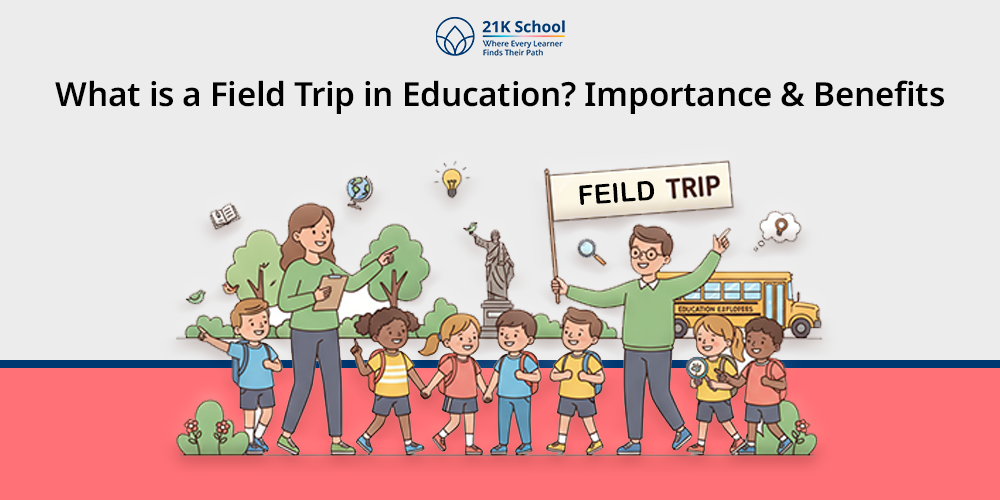
Educational field trips give students opportunities to explore the world beyond the classroom, observe real-life examples of academic concepts, and learn through direct experience. From visiting science museums and historical landmarks to exploring nature reserves, farms, factories, and local communities, these activities can transform theoretical knowledge into meaningful learning experiences.
The connection between educational field trips and experiential learning is particularly important because students are not simply listening to information or reading about a topic. They can observe, ask questions, investigate problems, interact with their surroundings, and reflect on what they discover. When teachers plan these experiences around clear learning objectives, field trips become valuable extensions of classroom instruction rather than occasional recreational activities.
Well-designed educational trips can support subject knowledge, critical thinking, communication, collaboration, curiosity, and personal development. Their effectiveness, however, depends on how students prepare for the experience, participate during the visit, and apply their learning afterward.
This guide explores the role of educational field trips in experiential learning, explains their major benefits, and provides practical strategies teachers can use to plan engaging and curriculum-aligned learning experiences.
What Is Experiential Learning?
Experiential learning is an educational approach in which learners develop understanding through experience, reflection, and practical application. Instead of relying exclusively on lectures, textbooks, or memorization, students actively participate in activities that help them connect ideas with real-world situations.
For example, students studying ecosystems may learn basic concepts from a science textbook. During a visit to a botanical garden or nature reserve, they can observe different plant species, examine habitats, identify relationships between living organisms, and discuss environmental changes. Reflecting on these observations helps them develop a deeper understanding of the topic.
Experiential learning commonly involves four connected stages:
- Concrete experience: Students participate in an activity or encounter a real-world situation.
- Reflective observation: They think about what they observed, experienced, or discovered.
- Conceptual understanding: They connect their observations with concepts, theories, and existing knowledge.
- Active experimentation: They apply what they have learned to a new problem, activity, or situation.
These stages can guide the planning of educational field trips. Students first experience a place or activity, then reflect on their observations, connect them to classroom concepts, and finally use their new understanding in a project, discussion, presentation, or investigation.
How Educational Field Trips Support Experiential Learning
Educational field trips provide environments in which students can investigate academic concepts through direct observation and participation. They allow learners to move beyond abstract explanations and encounter the people, objects, places, and processes connected to their studies.
A field trip becomes especially valuable when its activities are intentionally connected to the curriculum.
For instance, a visit to a local market can support mathematics lessons through budgeting, measurement, and price comparisons. It can also introduce students to economics, business practices, cultural traditions, and communication skills.
Similarly, a visit to a historical site allows students to examine architecture, artifacts, geographical features, and historical evidence rather than relying solely on written descriptions.
Research on educational field trips emphasizes the importance of preparation, active participation, and reflection in achieving meaningful learning outcomes. Simply taking students somewhere interesting does not guarantee learning; teachers must help students recognize the educational value of what they experience.
10 Benefits of Educational Field Trips for Students
Educational field trips can contribute to academic, social, and personal development when they are carefully planned and supported by appropriate teaching activities.
1. Connecting Classroom Knowledge With Real-Life Experiences
One of the most important benefits of educational field trips is their ability to connect classroom lessons with real-world examples.
Students sometimes struggle to understand abstract concepts when they encounter them only through written explanations. Seeing these concepts in action can make them easier to understand.
For example, students studying geography can observe landforms, drainage systems, settlement patterns, or local environmental conditions during an outdoor visit. Learners studying business can investigate how a retail store organizes its products, serves customers, and manages inventory.
These experiences help students recognize that academic knowledge has practical applications beyond examinations and assignments.
2. Increasing Student Engagement and Curiosity
A change of learning environment can encourage students to become more curious about the subjects they study.
During a well-organized visit, learners may encounter unfamiliar objects, processes, or situations that inspire questions and further investigation.
A science museum, for example, may introduce students to interactive exhibits that demonstrate scientific principles. A visit to a historical location may encourage learners to ask how people lived, worked, communicated, and solved problems in the past.
Teachers can strengthen this curiosity by encouraging students to develop questions before the trip and investigate possible answers during the visit.
Engagement is most valuable when it leads to meaningful observation and inquiry rather than passive sightseeing.
3. Developing Critical Thinking and Problem-Solving Skills
Field trips provide opportunities for students to examine evidence, compare observations, identify patterns, and consider possible explanations.
Instead of receiving every answer from a teacher, learners can investigate questions independently or collaboratively.
For example, during a visit to a local park, students might investigate why certain plants grow in shaded areas while others thrive in direct sunlight. They could compare soil conditions, moisture levels, and exposure to sunlight before discussing their findings.
This process encourages learners to develop evidence-based explanations and recognize that solving problems often requires observation, questioning, and analysis.
4. Improving Observation and Research Skills
Many educational trips provide opportunities for students to collect information directly from their surroundings.
Depending on the learning objectives, students may take notes, sketch objects, record measurements, complete observation sheets, conduct interviews, or photograph relevant features when permitted.
These activities can strengthen essential research skills, including:
- Identifying relevant information.
- Recording observations accurately.
- Asking focused questions.
- Distinguishing evidence from assumptions.
- Organizing collected information.
- Drawing reasonable conclusions.
For example, students visiting a local historical site could document architectural features, examine available historical information, and compare their observations with classroom materials.
Such activities help learners understand how evidence is collected and used to develop knowledge.
5. Strengthening Collaboration and Communication
Educational field trips often involve group activities that require students to cooperate, share responsibilities, and communicate clearly.
Teachers can assign different roles to group members, such as note-taker, observer, interviewer, timekeeper, or discussion leader.
Students then learn to coordinate tasks, listen to different viewpoints, and combine their findings into a shared outcome.
For instance, a group visiting a science center might investigate a particular scientific concept and prepare a short explanation for classmates. Each learner contributes observations and helps develop the final presentation.
These experiences encourage teamwork and provide practical opportunities to develop interpersonal skills.
6. Supporting Long-Term Understanding and Recall
Students may find information easier to remember when they connect it with a meaningful experience.
A learner who has observed how a water filtration system works may have a concrete reference point when studying filtration in science class. Similarly, a student who has explored a historical building may find it easier to connect architectural features with the period in which the building was constructed.
However, field trips do not automatically improve retention. Students need opportunities to discuss, revisit, and apply what they have learned.
Follow-up quizzes, reflective writing, concept maps, and classroom projects can help reinforce the connections formed during the visit.
7. Encouraging Independence and Responsibility
Field trips allow students to practice managing tasks in a setting that differs from their normal classroom environment.
Depending on their age and the nature of the visit, learners may be responsible for keeping observation notes, following an itinerary, managing assigned materials, meeting group deadlines, or completing specific research tasks.
These responsibilities encourage organization, decision-making, and accountability.
Teachers should provide appropriate supervision and support while allowing students to make manageable decisions independently. Younger learners generally need more structured guidance, while older students can take greater responsibility for planning investigations and documenting findings.
8. Promoting Environmental Awareness
Visits to parks, botanical gardens, farms, nature reserves, and recycling facilities can help students understand environmental issues through direct observation.
Learners may investigate local plant and animal life, examine waste-management practices, observe water conservation methods, or explore how human activities affect natural environments.
For example, a class studying pollution could visit an appropriate local site or conduct a supervised school-ground investigation. Students could record visible sources of litter, discuss their potential effects, and propose realistic solutions.
Such experiences can help learners connect environmental concepts with decisions made by individuals, communities, and organizations.
9. Exposing Students to Careers and Practical Skills
Educational field trips can introduce students to occupations, workplaces, and industries they might not otherwise encounter.
Visits to laboratories, agricultural facilities, workshops, businesses, libraries, and vocational institutions can help learners understand how classroom subjects are applied in professional settings.
Students studying science might speak with laboratory professionals, while learners interested in engineering could examine how technical teams design, maintain, or operate equipment.
Career-focused trips can also help students identify their interests, recognize relevant skills, and ask informed questions about future educational pathways.
10. Supporting Social and Personal Development
Learning outside the classroom can encourage students to interact with classmates and adults in new situations.
They may need to navigate unfamiliar environments, communicate with guides, cooperate with peers, and respond appropriately to unexpected challenges.
These experiences can contribute to confidence, adaptability, empathy, and a stronger sense of belonging.
Teachers can support these outcomes by establishing respectful group expectations, encouraging inclusive participation, and providing opportunities for students to share different perspectives during reflection activities.
Types of Educational Field Trips and Their Learning Benefits
The most suitable destination depends on the subject being taught, the age of the students, available resources, and the intended learning outcomes.
The following examples demonstrate how different destinations can support experiential learning.
| Type of field trip | Possible destinations | Experiential learning activities |
|---|---|---|
| Science field trips | Science museums, laboratories, nature centers | Observe demonstrations, investigate scientific principles, record findings |
| Historical field trips | Museums, monuments, heritage buildings | Examine artifacts, analyze historical evidence, compare past and present |
| Environmental field trips | Parks, botanical gardens, nature reserves | Identify species, observe habitats, investigate conservation practices |
| Geography field trips | Rivers, hills, farms, urban neighborhoods | Study landforms, observe human-environment relationships, create maps |
| Mathematics field trips | Markets, construction sites, suitable public spaces | Estimate quantities, measure distances, compare prices, analyze shapes |
| Cultural field trips | Cultural centers, art galleries, community institutions | Explore traditions, examine artworks, discuss cultural perspectives |
| Career-oriented field trips | Workplaces, vocational centers, educational institutions | Interview professionals, identify workplace skills, explore career pathways |
| Agricultural field trips | Farms, nurseries, food production facilities | Observe plant growth, investigate food production, study resource use |
| Civic education trips | Local government offices, community organizations | Learn about public services, discuss civic responsibilities, examine community needs |
| Arts and literature trips | Art studios, theaters, literary museums | Analyze artistic techniques, explore creative processes, discuss interpretation |
Teachers do not need expensive destinations to create meaningful experiences. A nearby market, community garden, local library, public building, or school environment may provide suitable learning opportunities when activities are aligned with clear objectives.
How Teachers Can Plan Effective Educational Field Trips
Successful field trips require more than choosing a destination and arranging transportation. Teachers need to design an educational experience that connects preparation, participation, and follow-up learning.
Step 1: Define Clear Learning Objectives
Begin by identifying what students should understand or be able to do after the trip.
Objectives should be specific enough to guide activities and assessment.
For example, instead of setting a general objective such as “learn about nature,” a teacher could establish these goals:
- Identify at least three plant species found at the destination.
- Explain two ways plants adapt to their environments.
- Record observations using a structured worksheet.
- Suggest one practical method of protecting local biodiversity.
Clear objectives help teachers choose appropriate destinations and determine whether the trip supports the curriculum.
Step 2: Select a Relevant Destination
Choose a location that offers direct opportunities to explore the topic.
Teachers should consider the educational value of the destination, its suitability for the students’ ages, travel time, accessibility, cost, safety arrangements, and availability of appropriate learning activities.
A destination does not need to be famous or far away to be effective. Local sites may provide more relevant opportunities because students can investigate places and issues connected to their own communities.
Whenever possible, teachers should communicate with site staff in advance to understand available facilities, educational programs, visitor rules, and any restrictions on student activities.
Step 3: Prepare Students Before the Visit
Pre-trip preparation helps learners understand why they are visiting a location and what they should observe.
Teachers can introduce key vocabulary, review relevant concepts, explain the itinerary, and discuss appropriate behavior.
Useful preparation activities include:
- Creating a list of questions to investigate.
- Reviewing photographs or maps of the destination.
- Reading a short introduction to the topic.
- Assigning research questions to small groups.
- Explaining how to complete observation notes.
- Discussing accessibility needs and safety expectations.
Students should arrive with a basic understanding of the topic, but teachers should leave room for discovery rather than providing every answer in advance.
Step 4: Design Active Learning Activities
During the trip, students should have meaningful tasks that require them to observe, think, communicate, or investigate.
Suitable activities include scavenger hunts based on curriculum concepts, structured observations, guided interviews, object analysis, measurement tasks, and group investigations.
For example, a visit to a local market could involve comparing the prices of similar products, calculating the cost of a shopping list, identifying different measurement units, and interviewing a vendor about how goods are sold.
These activities turn a general visit into an organized learning experience.
Teachers should balance structured tasks with opportunities for students to explore, ask spontaneous questions, and discuss unexpected discoveries.
Step 5: Encourage Questions and Discussion
Students learn more actively when they are encouraged to think about what they see.
Teachers can use open-ended questions such as:
- What do you notice about this place?
- How does this example connect with our classroom lessons?
- What evidence supports your explanation?
- Why might this process happen in this way?
- What additional information would help us understand the situation?
- How could we apply this knowledge somewhere else?
Questions should encourage reasoning rather than simply require students to recall isolated facts.
Teachers can also invite site guides or relevant professionals to explain their work, demonstrate processes, and answer student questions.
Step 6: Provide Time for Reflection
Reflection helps students turn experiences into organized understanding.
During or immediately after the trip, learners can record observations, discuss surprising discoveries, identify unanswered questions, and explain how their thinking has changed.
Reflection does not need to be lengthy. A short discussion or a structured journal entry can help students connect what they experienced with what they already know.
Teachers should also invite students to identify misconceptions or questions that emerged during the visit. These can become starting points for further classroom investigation.
Step 7: Assess Learning After the Trip
The final stage is to evaluate what students learned and how effectively they can apply it.
Assessment should match the original learning objectives rather than focus only on whether students enjoyed the experience.
Possible assessment methods include:
- Individual reflection journals.
- Group presentations.
- Research reports.
- Concept maps.
- Drawings with explanatory labels.
- Follow-up quizzes.
- Models, posters, or digital presentations.
- Practical projects based on observations.
For example, after visiting a recycling facility, students could prepare a proposal for improving waste separation at school. This task demonstrates whether they can apply their observations to a practical problem.
A Practical Example: Planning a Science Field Trip
Consider a middle-school class studying ecosystems and biodiversity.
The teacher organizes a visit to a botanical garden or local nature reserve. The purpose is to help students investigate how organisms interact with their environments.
Before the Trip
Students learn basic concepts related to habitats, biodiversity, food chains, and plant adaptations.
Each group develops two or three questions to investigate. The teacher provides an observation sheet with sections for recording plant characteristics, habitat conditions, and evidence of interactions between organisms.
Students also review safety instructions and learn how to observe living things without disturbing them.
During the Trip
Students work in small groups to:
- Identify different types of plants.
- Compare plants growing in sunny and shaded areas.
- Observe visible signs of insects or other animal activity.
- Record environmental conditions.
- Sketch a simple food chain or ecological relationship.
- Discuss how environmental changes might affect the organisms they observed.
The teacher encourages students to support their explanations with evidence rather than rely on guesses.
After the Trip
Back in the classroom, students organize their notes and compare findings.
Each group creates a diagram showing relationships between organisms in one of the observed habitats. Students then explain how environmental conditions influence the organisms living there.
For a final task, each learner proposes one realistic action that could support biodiversity in the school environment.
This example demonstrates the full experiential learning process: direct observation, reflection, conceptual understanding, and practical application.
How Educational Field Trips Can Support Different Age Groups
Field trips should be designed according to students’ developmental needs, existing knowledge, and ability to work independently.
Early Childhood and Primary School Students
Younger learners often benefit from short, highly interactive visits with simple objectives.
Suitable destinations include farms, gardens, libraries, community facilities, and child-friendly museums.
Activities may involve identifying colors and shapes, counting objects, observing animals, listening to stories, or completing simple picture-based worksheets.
Teachers should use clear instructions, frequent check-ins, and manageable tasks. Opportunities for movement, exploration, and discussion can help maintain engagement.
Upper Primary and Middle School Students
Students in these grades can complete more structured investigations and begin collecting evidence independently.
Suitable activities include measuring objects, comparing environments, recording observations, conducting supervised interviews, and working on group research questions.
Teachers can ask learners to explain patterns, compare possible explanations, and connect their observations with scientific, mathematical, historical, or geographical concepts.
Secondary School Students
Older learners can undertake more complex investigations and take greater responsibility for their learning.
They may analyze historical sources, conduct supervised workplace interviews, collect environmental data, compare business practices, or evaluate community challenges.
Teachers can ask students to develop research questions before the visit and present evidence-based findings afterward.
Field trips for secondary students can also support career exploration by introducing them to professional environments and the practical applications of academic subjects.
Overcoming Common Challenges in Organizing Educational Field Trips
Although field trips can provide valuable learning opportunities, schools may face financial, logistical, and practical barriers.
Addressing these challenges early helps make educational visits more accessible and effective.
Limited Budgets
Transportation, admission fees, meals, and staffing can make trips expensive.
Schools can reduce costs by selecting nearby destinations, coordinating group visits, arranging educational partnerships, or choosing institutions that offer free or discounted admission.
Teachers can also organize curriculum-focused visits to local libraries, parks, public spaces, or community organizations.
The educational value of a trip depends more on its learning design than on the distance traveled or the price of the destination.
Time Constraints
Busy school schedules can make it difficult to organize lengthy visits.
Short local trips may be easier to arrange and can still support clear learning objectives. Teachers can also coordinate visits with existing curriculum units to reduce the need for separate preparation time.
A carefully designed half-day visit may be more useful than a full-day trip with little connection to classroom learning.
Safety and Supervision
Student safety must remain a priority throughout the planning process.
Schools should follow their applicable policies for permissions, risk assessments, transportation, supervision, emergency contacts, medical considerations, and student attendance.
Teachers should establish clear behavioral expectations and explain how students should respond if they become separated from their group or encounter an unexpected situation.
Planning should also account for mobility, sensory, dietary, and other access requirements so that all learners can participate as fully as possible.
Differences in Student Needs
Students may have different interests, learning preferences, physical abilities, language skills, and levels of prior knowledge.
Teachers can support inclusion by providing varied ways to participate, such as verbal discussion, written observations, drawing, photography where permitted, and small-group tasks.
Learning materials should be accessible and appropriate for the students involved. Alternative activities may be necessary when a particular destination or task cannot accommodate every learner safely.
Keeping Students Focused
A new environment can be exciting, but it may also distract students from the learning objectives.
Teachers should provide concise instructions, engaging investigation questions, and manageable tasks. Activities should encourage observation and curiosity without requiring students to complete so much paperwork that they miss the experience itself.
Regular check-ins and short reflection pauses can help learners remain focused while still enjoying the visit.
Ensuring Learning Continues After the Trip
A field trip may have limited educational impact if students return to class without discussing or applying what they experienced.
Teachers should schedule follow-up activities before the visit takes place. This makes reflection and assessment part of the original plan rather than optional additions.
A brief discussion, group presentation, written explanation, or practical project can help students connect the experience with longer-term learning goals.
Measuring the Educational Impact of Field Trips
Schools can evaluate field trips by examining whether students achieved the intended learning outcomes.
A useful approach is to collect evidence before, during, and after the visit.
Before the trip: Ask students what they already know about the topic. A short quiz, discussion, concept map, or written response can reveal their existing understanding.
During the trip: Use observation sheets, student questions, group discussions, and completed investigation tasks to monitor participation and developing understanding.
After the trip: Ask students to explain key concepts, analyze evidence, present findings, or apply their knowledge to a new situation.
Teachers can compare pre-trip and post-trip responses to identify changes in understanding. They should also consider student feedback, accessibility, participation, and the quality of the activities.
Not every benefit will appear immediately in a test score. Some outcomes, such as increased curiosity, confidence, collaboration, or interest in a subject, may require different forms of assessment.
Evaluation can also help teachers improve future visits by identifying activities that worked well and areas that need adjustment.
Low-Cost Alternatives to Traditional School Field Trips
Schools do not always need long-distance travel or expensive destinations to provide experiential learning.
Local environments can serve as valuable learning spaces when students have a clear purpose for investigating them.
Here are several practical alternatives.
1. School-Ground Investigations
Students can examine plants, measure shadows, study drainage, map outdoor spaces, or investigate waste-management practices around the school.
These activities can support science, mathematics, geography, and environmental education.
2. Local Community Walks
A supervised walk through a suitable neighborhood can help students study architecture, land use, public services, road safety, local businesses, and community history.
Teachers should plan a safe route and establish appropriate supervision before the visit.
3. Library and Community Visits
Public libraries and community institutions can help students explore information services, local history, literacy programs, and civic participation.
Students can develop research questions and document what they learn.
4. Virtual Field Trips
Virtual tours can introduce learners to distant museums, historical locations, research facilities, and natural environments when physical travel is not practical.
Teachers can improve their educational value by asking students to complete observation tasks, compare evidence, and reflect on what they see.
Virtual visits do not fully replace direct physical experience, but they can expand access to places that would otherwise be difficult to reach.
5. Community Expert Sessions
Inviting an appropriate local professional, craftsperson, scientist, artist, or community worker to demonstrate a process can bring real-world expertise into the classroom.
Students can prepare interview questions, observe demonstrations, and connect the discussion with their academic studies.
These alternatives show that experiential learning can be integrated into ordinary school routines, even when traditional field trips are difficult to arrange.
Best Practices for Making Educational Field Trips More Effective
Schools can strengthen the educational value of field trips by following a few consistent principles.
- Connect every visit to curriculum goals. Identify the specific concepts or skills students should develop.
- Give students an active role. Use investigations, observation tasks, questions, and group activities rather than relying exclusively on guided explanations.
- Prepare students in advance. Introduce essential concepts, vocabulary, expectations, and safety procedures.
- Encourage evidence-based thinking. Ask learners to support conclusions with observations or information gathered during the visit.
- Make participation inclusive. Consider accessibility, different learning needs, and alternative ways to engage with the activities.
- Build in reflection. Provide time for students to organize their thoughts and connect experiences with academic concepts.
- Assess practical application. Ask learners to use their knowledge in a presentation, project, explanation, or new problem.
- Collect feedback. Use student responses and assessment results to improve future trips.
- Plan for safety. Follow school policies and make supervision, permissions, emergency procedures, and accessibility part of the preparation process.
- Keep activities purposeful. Balance educational tasks with opportunities to explore and enjoy the experience.
The central principle is that effective field trips combine real-world experiences with intentional teaching. Students should understand why they are visiting a location, what they need to investigate, and how the experience relates to their broader learning.
Frequently Asked Questions About Educational Field Trips and Experiential Learning
1. What is the role of educational field trips in experiential learning?
Educational field trips provide opportunities for students to learn through direct observation, participation, investigation, and reflection. They help learners connect classroom concepts with real-world situations and apply their understanding through practical activities.
2. Why are educational field trips important for students?
Field trips can increase engagement, develop observation and research skills, strengthen collaboration, encourage critical thinking, and help students understand how academic concepts apply outside school. Their impact depends on the relevance and quality of the learning activities.
3. How do field trips improve experiential learning?
Field trips support experiential learning by giving students concrete experiences they can reflect on, connect with existing knowledge, and apply to new situations. Pre-trip preparation and post-trip activities help turn these experiences into more organized understanding.
4. What are some examples of experiential learning field trips?
Examples include visiting science museums, botanical gardens, farms, historical sites, libraries, art galleries, workplaces, and local markets. Students can observe processes, collect information, ask questions, analyze evidence, and complete projects related to their curriculum.
5. How can teachers make field trips more educational?
Teachers can set clear learning objectives, prepare students before the visit, assign meaningful investigation tasks, encourage questions, and organize reflection and assessment afterward. The activities should be connected to classroom learning rather than relying on the destination alone.
6. Are educational field trips suitable for all age groups?
Yes. Field trips can be adapted for early childhood, primary, middle, and secondary school students. Younger learners usually benefit from short, structured, interactive activities, while older students can complete more independent investigations and evidence-based projects.
7. How can schools organize field trips with limited budgets?
Schools can visit nearby parks, libraries, community institutions, local markets, and school grounds. They may also explore free educational programs, discounted group visits, community partnerships, and virtual tours.
8. How can teachers assess learning after a field trip?
Teachers can use quizzes, reflection journals, concept maps, presentations, research reports, practical projects, and group discussions. Comparing students’ understanding before and after the trip can also help identify learning progress.
9. What is the difference between a field trip and experiential learning?
A field trip is an organized visit to a location, often for educational purposes. Experiential learning is a broader approach in which learners develop understanding through experience, reflection, and application. A field trip can support experiential learning when its activities are intentionally designed around these processes.
10. Do virtual field trips provide the same benefits as physical visits?
Virtual field trips can provide access to information, visual demonstrations, and places that students cannot easily visit. However, they generally cannot reproduce every aspect of physical visits, such as direct sensory observation and interaction with the environment. Both formats can support learning when matched to suitable objectives and activities.
Conclusion
Educational field trips play an important role in experiential learning by helping students connect academic knowledge with the world around them. Through visits to museums, historical sites, workplaces, gardens, community institutions, and other educational destinations, learners can observe real-life examples, ask questions, investigate problems, and develop practical skills.
The most effective trips are carefully planned around curriculum objectives and include meaningful activities before, during, and after the visit. Preparation gives students a clear purpose, active participation encourages investigation, and reflection helps them connect their experiences with broader concepts.
Schools can create valuable field-trip experiences without relying on expensive destinations or complicated arrangements. Local environments, community resources, and virtual visits can all support experiential learning when they are used purposefully.
Ultimately, educational field trips and experiential learning work best together when students are given opportunities not only to see new things but also to think critically, interpret evidence, share ideas, and apply what they discover. By making real-world exploration a meaningful part of education, schools can help students develop deeper understanding, greater curiosity, and skills that extend beyond the classroom.
Leave a Reply