
Arts integration is an effective educational approach that connects creative expression with academic learning. By combining visual art, music, dance, drama, and other artistic forms with subjects such as mathematics, science, language arts, and social studies, teachers can help students explore complex ideas in engaging and meaningful ways.
Instead of treating art as an activity that happens only during a dedicated art lesson, schools can use creative processes to deepen students’ understanding of the wider curriculum. Students might create a three-dimensional model to explain a scientific concept, use rhythm to understand mathematical fractions, perform a historical scene, or illustrate the central theme of a story. These experiences encourage learners to apply knowledge, communicate ideas, and demonstrate understanding through different forms of expression.
The best arts integration in education examples show how artistic learning objectives and academic goals can work together. When teachers plan these connections carefully, students have opportunities to develop subject knowledge alongside creativity, critical thinking, collaboration, and communication skills.
Arts integration does not require expensive supplies, professional artists in every classroom, or a major curriculum redesign. Teachers can begin with simple activities that connect a specific learning objective to an appropriate art form. With thoughtful planning, these activities can make lessons more interactive, provide different ways for students to demonstrate learning, and help schools create richer educational experiences.
This guide explains what arts integration means, why it matters, and how teachers can apply practical strategies across school subjects and grade levels.
What Is Arts Integration in Education?
Arts integration is a teaching approach that connects an art form with another academic subject through a shared learning experience. Students use artistic processes to investigate, interpret, and communicate subject knowledge while developing skills in the selected art form.
For example, students studying ecosystems might create a dramatic performance showing how organisms interact within a food web. They would need to understand the scientific relationships between organisms while using movement, sequencing, and performance techniques to communicate those relationships.
Similarly, a mathematics lesson about fractions might involve musical rhythms. Students could compare whole notes, half notes, and quarter notes to understand how different durations relate to a complete measure.
In both examples, the arts are not simply a reward after the academic work is finished. They are part of the process students use to explore and demonstrate what they have learned.
Effective arts integration typically includes three important elements:
- Clear academic objectives: Students must develop knowledge or skills in a subject such as mathematics, science, language arts, or history.
- Meaningful artistic objectives: Students learn or apply artistic concepts, techniques, or methods.
- A connected creative process: Students use the artistic medium to investigate, represent, interpret, or communicate the academic content.
The Kennedy Center’s definition of arts integration emphasizes the connection between an art form and another subject, with learning objectives in both areas. This distinction helps educators plan lessons that develop academic understanding and artistic skills together.
Arts Integration vs. Traditional Arts Education
Arts integration and traditional arts education both play important roles in a well-rounded curriculum, but they have different primary purposes.
Traditional arts education focuses on developing skills and knowledge within a particular art form. For example, a music class might teach students about rhythm, melody, instruments, and musical notation.
Arts integration connects those artistic skills to another subject. Students might use musical rhythm to investigate fractions while learning how to recognize and perform different note durations.
An arts-enhanced lesson uses art to support another subject but may not include a separate learning objective for the artistic skill itself. For example, a teacher might play a song to help students memorize vocabulary. This can be useful, but it is not necessarily full arts integration.
The differences can be summarized as follows:
| Teaching Approach | Main Focus | Classroom Example |
|---|---|---|
| Traditional arts education | Developing skills in an art form | Students learn how to mix colors and create a painting |
| Arts-enhanced instruction | Using art to support another subject | Students listen to a song to memorize science vocabulary |
| Arts integration | Connecting learning objectives in an art form and an academic subject | Students create a scientifically accurate illustrated model while applying principles of composition and visual design |
Schools can benefit from all three approaches. The important step is to identify the purpose of each activity and ensure that artistic experiences contribute meaningfully to student learning.
Why Arts Integration Supports Student Learning
Arts integration provides students with additional ways to explore information, express ideas, and demonstrate understanding. Its effectiveness depends on the quality of lesson planning, the relevance of the artistic activity, and the learning needs of the students.
1. Makes Abstract Concepts Easier to Explore
Some academic concepts are difficult for students to understand through verbal explanations alone. Artistic activities can provide visual, physical, or auditory representations that make these ideas easier to investigate.
For example, students learning about the water cycle can create a movement sequence that represents evaporation, condensation, precipitation, and collection. Each movement corresponds to a scientific process.
The activity requires students to connect the stages of the water cycle with a physical representation. Teachers can then ask learners to explain why each movement represents a particular process.
Art does not replace accurate instruction. Instead, it provides another way for students to work with the concept and explain their reasoning.
2. Encourages Active Participation
Arts-integrated lessons often ask students to make decisions, experiment with ideas, create something, and explain their choices.
Instead of passively receiving information, learners participate in the process of constructing and communicating meaning.
For example, a class studying a historical event might develop a short scene based on primary-source accounts. Students must research the event, select relevant details, and decide how to represent the evidence through dialogue and movement.
This approach creates opportunities for participation while keeping the academic objective at the center of the lesson.
3. Provides Multiple Ways to Demonstrate Understanding
Students differ in their strengths, interests, language abilities, and preferred methods of expression. Arts integration can provide different ways to demonstrate academic understanding without lowering expectations.
A student might explain a scientific process through a labeled diagram, while another might use a model, an illustrated sequence, or a short performance.
These different formats can help teachers identify what students understand and where additional instruction may be needed.
The key is to establish clear assessment criteria so that every format demonstrates the required academic knowledge.
4. Develops Critical Thinking and Problem-Solving
Creative work involves making choices, testing possibilities, evaluating results, and revising ideas.
Students may need to determine which materials are appropriate for a model, how to communicate a mathematical relationship visually, or how to represent a character’s motivation in a performance.
These tasks encourage learners to consider alternatives and explain their decisions.
For example, students building a model of a bridge might test different structures, examine which designs remain stable, and revise their models based on the results. The activity can connect visual design, engineering principles, measurement, and problem-solving.
5. Strengthens Communication Skills
Arts integration encourages students to communicate through images, sound, movement, performance, and written reflection.
A student creating an illustrated explanation of a literary theme must decide which details best communicate the central idea. A group preparing a historical performance must organize information into a clear sequence that an audience can understand.
These experiences can help students practice explaining ideas to different audiences and using evidence to support their interpretations.
6. Encourages Collaboration
Many arts-integrated projects involve group planning, shared responsibilities, and collective decision-making.
Students might work together to create a mural showing a historical timeline or perform a scene explaining an ecological relationship.
Successful collaboration requires learners to listen to each other, divide tasks, negotiate differences, and coordinate their contributions.
Teachers can strengthen these skills by assigning clear roles and assessing both the final product and the process students use to create it.
7. Creates Opportunities for Reflection
Artistic work often involves reviewing a draft, receiving feedback, and making improvements.
Students can apply the same process to academic learning. After creating a model or performance, they can compare it with scientific evidence, identify inaccuracies, and revise the work.
This reflection helps learners recognize that understanding develops through questioning, feedback, and revision rather than through completing a task once.
Research and educational guidance suggest that arts integration has potential benefits for engagement and learning, but results depend on the instructional design and context. Teachers should evaluate the effectiveness of their own activities rather than assume that adding art automatically improves academic achievement.
12 Practical Arts Integration in Education Examples
The following arts integration in education examples demonstrate how teachers can connect creative processes with specific academic objectives. Each activity can be adapted to available resources, curriculum standards, and student age groups.
1. Teaching Mathematics Through Music and Rhythm
Music offers practical opportunities to explore mathematical concepts such as fractions, patterns, sequencing, multiplication, and ratios.
Students can investigate how musical notes divide time into different durations. A whole note, half note, and quarter note can be used to demonstrate relationships between parts and a complete measure.
Classroom activity: Rhythm and Fractions
Begin by reviewing fractions and explaining that musical rhythms can represent different portions of a beat or measure.
Next, give students simple percussion instruments, rhythm cards, or the option to clap and tap patterns.
Ask learners to create a rhythm containing different note durations. They should then write the mathematical fraction represented by each part and explain how the parts combine to form the complete pattern.
For example, students might create a four-beat pattern containing four equal quarter-note beats. They can compare it with a pattern containing two half-note beats.
Learning objectives:
- Identify and compare fractions.
- Recognize and create rhythmic patterns.
- Understand how parts combine into a whole.
- Explain mathematical relationships through sound.
Assessment idea: Ask students to create a rhythm that represents a specified fraction pattern and explain the mathematical reasoning behind it.
2. Teaching Science Through Visual Art
Visual art can help students represent scientific structures, processes, and relationships.
Students studying plant biology, ecosystems, weather, or the human body can create diagrams, illustrations, models, or scientific posters.
The artistic process encourages learners to make decisions about organization, scale, color, labels, and visual clarity.
Classroom activity: Illustrating an Ecosystem
Ask students to select an ecosystem, such as a forest, grassland, wetland, or desert.
They should research its main organisms and environmental conditions before creating a detailed illustration.
The illustration must show relationships between organisms rather than simply listing different plants and animals. Students might include arrows showing energy transfer through a food chain or labels identifying important habitat features.
After completing the artwork, students explain how the organisms depend on one another and identify any limitations in their representation.
Learning objectives:
- Identify components of an ecosystem.
- Explain relationships between organisms and their environments.
- Organize scientific information visually.
- Apply composition and visual communication skills.
Assessment idea: Evaluate scientific accuracy, clarity of labels, appropriate use of visual elements, and the student’s explanation of ecological relationships.
3. Teaching Language Arts Through Drama
Drama gives students an opportunity to explore characters, themes, dialogue, conflict, and narrative structure.
Rather than only answering questions about a story, students can act out a scene, develop a character’s perspective, or create a short performance based on a text.
This process encourages close reading because students must understand what characters say, why they act in particular ways, and how their decisions influence the plot.
Classroom activity: Bring a Story to Life
Select a short story, chapter, or scene appropriate for the class.
Divide students into small groups and ask each group to adapt a section into a short performance. Students should identify the main events, select essential dialogue, and consider how gestures, movement, and expression communicate meaning.
After the performance, ask students to explain which details came directly from the text and which choices they made during adaptation.
Learning objectives:
- Identify character motivations.
- Analyze plot and conflict.
- Interpret dialogue and narrative details.
- Use movement, voice, and expression to communicate meaning.
Assessment idea: Ask students to submit a brief written reflection explaining how their performance represents the text and what evidence supports their interpretation.
4. Teaching History Through Visual Timelines and Murals
History often involves understanding chronology, cause and effect, important individuals, and relationships between events.
A visual timeline or mural can help students organize information into a coherent sequence while considering how images communicate historical meaning.
Classroom activity: Create a Historical Mural
Choose a historical period or event that students are studying.
Have learners research major events, people, places, and developments using reliable sources. Divide the class into teams, with each team responsible for one section of the timeline or mural.
Students can create illustrations, maps, symbols, captions, and dates that connect the sections into a larger historical narrative.
Encourage learners to consider whose experiences appear in the mural and whether the available evidence supports the story being presented.
Learning objectives:
- Understand chronological relationships.
- Identify significant historical developments.
- Distinguish documented facts from artistic interpretation.
- Communicate historical information visually.
Assessment idea: Evaluate the accuracy of the timeline, the relevance of the selected details, and each student’s explanation of how the events connect.
5. Teaching Geometry Through Art and Design
Art and design provide practical contexts for studying shapes, symmetry, angles, scale, spatial relationships, and geometric patterns.
Students can examine geometric principles in architecture, textiles, mosaics, and decorative designs from a range of cultural contexts.
Teachers should explain the mathematical concepts behind the examples rather than asking students simply to copy a pattern.
Classroom activity: Geometric Pattern Design
Begin with a lesson on shapes, angles, symmetry, or transformations.
Show students suitable examples of geometric designs and ask them to identify the mathematical relationships they can observe.
Next, have students create an original pattern using a ruler, compass, grid paper, or digital drawing tool.
They should label the geometric features they used and explain how repetition, rotation, reflection, or translation contributes to the design.
Learning objectives:
- Identify geometric shapes and properties.
- Apply symmetry and transformation concepts.
- Use mathematical tools accurately.
- Create a visually organized design.
Assessment idea: Evaluate the accuracy of the geometry, the use of required transformations, and the student’s ability to explain the design process.
6. Teaching Environmental Science Through Dance and Movement
Movement can help students represent processes that involve change, interaction, and sequences.
Environmental science offers several suitable topics, including the water cycle, food webs, seasonal changes, pollination, and the movement of energy through ecosystems.
Classroom activity: Perform the Water Cycle
Divide students into small groups and assign each group a stage of the water cycle.
Students develop a sequence of movements representing evaporation, condensation, precipitation, and collection. They can use simple props or visual cards to clarify each stage.
After rehearsing, the groups perform their sequences in the correct order.
The teacher then asks students to explain what causes each process and how water moves between different parts of the system.
Learning objectives:
- Describe stages of the water cycle.
- Explain how the stages are connected.
- Represent scientific processes through movement.
- Collaborate to communicate an ordered sequence.
Assessment idea: Ask students to label a diagram of the water cycle and explain how their performance represented each stage.
7. Teaching Reading Comprehension Through Illustration
Illustration can help students explore imagery, symbolism, mood, setting, and theme.
When learners illustrate a passage, they must decide which details are most important and how to represent information that may not be stated directly.
Classroom activity: Illustrate a Literary Passage
Choose a passage containing descriptive language, a clear setting, or a strong emotional atmosphere.
Ask students to create an illustration that represents the passage. They should select details from the text and consider how composition, line, color, and visual emphasis communicate meaning.
After completing the illustration, students write a short explanation linking their visual choices to specific passages or phrases.
Learning objectives:
- Identify important textual details.
- Interpret imagery and descriptive language.
- Explain how visual choices communicate meaning.
- Support interpretations with textual evidence.
Assessment idea: Evaluate the connection between the illustration and the text, along with the quality of the written explanation.
8. Teaching Vocabulary Through Music and Songwriting
Music can support vocabulary learning by giving students opportunities to organize words into rhythmic, memorable patterns.
A songwriting activity can also encourage learners to examine word meaning, sentence structure, rhyme, and context.
Classroom activity: Write a Vocabulary Song
Choose a group of vocabulary words related to a current lesson.
Students work individually or in groups to write short lyrics using the words accurately. They may create an original melody, use a simple rhythm, or speak the lyrics in a rhythmic pattern.
Require students to demonstrate that they understand each word rather than including it only because it fits the rhythm.
After the performance, learners identify the words they used and explain their meanings in context.
Learning objectives:
- Understand and apply new vocabulary.
- Recognize word relationships and context.
- Practice writing and revision.
- Communicate meaning through rhythm and language.
Assessment idea: Use a vocabulary checklist to evaluate whether students use the words accurately and can explain their meanings.
9. Teaching Social Studies Through Community Mapping
Maps can connect geography, social studies, visual design, scale, and spatial reasoning.
Students can create a map of an imaginary town, a historical settlement, or a familiar local area using approved information.
Classroom activity: Design a Community Map
Ask students to identify the features that make a community function, such as homes, schools, parks, roads, libraries, markets, and public services.
Students design a map showing the relationships between these locations. They can include symbols, a legend, labels, a compass direction, and an appropriate scale where required.
The teacher can then introduce questions about accessibility, land use, transportation, and the location of community resources.
Learning objectives:
- Understand basic map conventions.
- Identify important community features.
- Explain spatial relationships.
- Use visual design to communicate geographic information.
Assessment idea: Evaluate the map’s clarity, geographic reasoning, required features, and the student’s explanation of the design.
10. Teaching Engineering Through Sculpture and Model Building
Sculpture and model building provide opportunities to connect art, engineering, measurement, material properties, and design thinking.
Students can create structures that meet specific requirements, such as supporting a small weight, spanning a gap, or remaining stable under a gentle test.
Classroom activity: Build a Model Bridge
Provide students with safe, inexpensive materials such as paper, cardboard, craft sticks, or reusable construction pieces.
Explain the design requirements, including any size limits and the method for testing the bridge.
Students sketch possible designs, construct a model, test it under controlled conditions, and record the results.
After the first test, they can revise their designs and explain which changes improved or reduced performance.
Learning objectives:
- Apply design principles.
- Investigate structural stability.
- Measure and compare results.
- Use feedback to improve a model.
- Communicate design decisions visually.
Assessment idea: Evaluate the design process, explanation of structural choices, accurate recording of test results, and reflection on revisions—not only whether the bridge succeeds.
11. Teaching Foreign Languages Through Visual Storytelling
Language learning requires students to understand vocabulary, sentence structure, meaning, and context.
Visual storytelling can help learners connect written or spoken language with images and sequences of events.
Classroom activity: Create a Picture Story in the Target Language
Students choose a simple topic, such as daily routines, visiting a shop, traveling, or meeting a friend.
They create a short picture sequence with captions or speech bubbles in the target language.
Each panel should use relevant vocabulary and grammatical structures that students have studied. Learners can then present the story orally or exchange stories with classmates for reading practice.
Learning objectives:
- Apply vocabulary and grammar in context.
- Organize events in a logical sequence.
- Connect visual information with language.
- Practice writing and speaking.
Assessment idea: Evaluate language accuracy, clarity of the story, appropriate vocabulary, and the student’s ability to explain the sequence.
12. Teaching Literature and Ethics Through Creative Writing and Performance
Literature often explores choices, responsibility, fairness, conflict, and relationships.
Creative writing and performance can help students investigate these themes while learning to distinguish textual evidence from personal interpretation.
Classroom activity: Rewrite a Scene From Another Perspective
After reading a story, ask students to select a scene and rewrite it from the perspective of another character.
Students must consider what the character knows, wants, fears, and misunderstands. They can present the revised scene as a monologue, short script, illustrated narrative, or recorded performance.
Afterward, students explain how changing the perspective affects the audience’s understanding of the original scene.
Learning objectives:
- Analyze character motivation.
- Understand point of view.
- Develop creative writing skills.
- Support interpretations with textual evidence.
- Consider multiple perspectives.
Assessment idea: Evaluate the consistency of the new perspective, the use of evidence from the original text, and the student’s explanation of the changes.
Arts Integration Across Different Grade Levels
Arts-integrated instruction should reflect students’ developmental stages, academic skills, interests, and learning needs.
Preschool and Kindergarten
Young children can explore basic concepts through movement, rhythm, drawing, storytelling, and creative play.
Suitable activities include:
- Using clapping patterns to recognize sequences.
- Drawing shapes while learning their names.
- Acting out characters from a read-aloud story.
- Using movement to represent weather conditions.
- Creating pictures that show the order of a familiar routine.
At this age, teachers should use simple instructions and short activities. The emphasis should be on exploration, vocabulary development, observation, and foundational concepts.
Elementary School
Elementary students can complete more structured arts-integrated projects with clear academic goals.
Suitable examples include illustrating a scientific process, creating a musical pattern to explore fractions, building a community map, or performing a scene from a story.
Teachers can introduce planning sheets, vocabulary lists, simple rubrics, and reflection questions to help students connect their creative decisions with academic understanding.
Middle School
Middle school students can investigate more complex concepts and combine artistic techniques with research, analysis, and collaborative planning.
They might create historical murals, perform ecological processes, design geometric patterns, or produce short films explaining scientific principles.
Teachers can encourage students to justify their choices, use credible sources, revise their work based on feedback, and evaluate whether their artistic representations communicate the intended concept accurately.
High School
High school students can use arts integration to examine complex systems, abstract concepts, and competing interpretations.
Examples include producing a documentary about a historical issue, creating a visual representation of statistical data, developing a dramatic adaptation of a literary text, or designing an installation that communicates an environmental question.
At this level, students should be expected to demonstrate subject-specific knowledge, artistic decision-making, research quality, and thoughtful reflection.
How to Plan an Effective Arts-Integrated Lesson
Successful arts integration begins with learning objectives, not with choosing an art project simply because it seems enjoyable.
Teachers can use the following steps to plan lessons that connect artistic and academic learning.
Step 1: Identify the Academic Learning Goal
Start with the concept, skill, or standard students need to understand.
For example, a science lesson might focus on explaining how energy moves through a food chain. A mathematics lesson might focus on comparing fractions, while a language arts lesson might focus on interpreting a character’s motivation.
The academic objective should be specific enough to assess.
Step 2: Select an Appropriate Art Form
Choose an artistic form that genuinely supports the learning goal.
Visual art may work well for spatial relationships and scientific diagrams. Drama can support character analysis and historical interpretation. Music can help students explore rhythm, patterns, and mathematical relationships.
The choice should reflect the subject matter rather than forcing an unrelated creative activity into the lesson.
Step 3: Establish Artistic Learning Objectives
Determine what students should learn or practice within the selected art form.
If students are creating a mural, the artistic objectives might include composition, visual hierarchy, and the use of symbols. If they are preparing a performance, objectives might involve movement, timing, voice, or the communication of meaning.
This step helps distinguish genuine arts integration from an activity that uses art only as decoration.
Step 4: Design the Creative Process
Break the activity into manageable stages, such as research, brainstorming, planning, creating, reviewing, and revising.
Provide enough structure for students to understand the task while leaving room for meaningful decisions and creative problem-solving.
Teachers should also consider how much time the activity requires and which materials are realistically available.
Step 5: Connect Artistic Choices With Academic Understanding
During the activity, ask students to explain how their creative decisions communicate the subject matter.
For example, students creating an ecosystem model might explain why certain organisms are connected. Students designing a historical mural might justify the order in which events appear.
These explanations make the connection between art and academic learning explicit.
Step 6: Assess Both Learning Areas
Develop criteria for the academic content and the artistic process.
A science-and-art rubric might evaluate scientific accuracy, visual organization, use of materials, and the explanation of ecological relationships.
Students should understand the assessment criteria before beginning the project.
Step 7: Include Reflection and Revision
Give students time to review their work, receive feedback, and identify possible improvements.
Ask questions such as:
- What did your project help you understand?
- Which part was most difficult to communicate?
- What evidence supports the information you presented?
- What would you change if you completed the project again?
Reflection helps students recognize how the creative process contributes to learning.
A Sample Five-Day Arts Integration Lesson Plan
Teachers who want to begin with a manageable project can use the following five-day plan. This example combines science and visual art through the study of ecosystems.
| Day | Activity | Main Objective | Student Output |
|---|---|---|---|
| Monday | Introduce ecosystems and food chains | Identify organisms and feeding relationships | Science notes and a basic diagram |
| Tuesday | Research a selected ecosystem | Gather accurate information | Research worksheet |
| Wednesday | Plan a visual ecosystem model | Organize scientific information and artistic composition | Design sketch |
| Thursday | Create and revise the model | Represent ecosystem relationships accurately | Completed model or illustration |
| Friday | Present and reflect | Explain scientific concepts through visual communication | Short presentation and reflection |
Monday: Build Scientific Understanding
Introduce the ecosystem and explain the roles of producers, consumers, and decomposers as appropriate for the grade level.
Students can examine examples of food chains and discuss how organisms depend on their environments.
Tuesday: Conduct Guided Research
Students select or receive an ecosystem to investigate.
They identify several organisms, gather information about habitat conditions, and record relationships supported by reliable sources.
Wednesday: Plan the Artwork
Students sketch their ecosystem model and decide how to represent the organisms, habitat features, and feeding relationships.
Ask them to explain why they chose particular symbols, labels, and visual arrangements.
Thursday: Create and Revise
Students create their models using drawing materials, cardboard, digital tools, or other accessible resources.
They compare the models with their research and correct any inaccurate relationships.
Friday: Present and Reflect
Students explain their ecosystem models to classmates.
Each student identifies one scientific concept learned, one artistic decision made, and one improvement they would make in a future project.
The same structure can be adapted for other subjects by replacing the ecosystem topic with a mathematical concept, historical period, literary theme, or geographic investigation.
How to Assess Arts Integration Effectively
Assessment should measure whether students have achieved the academic and artistic objectives established at the beginning of the lesson.
A visually impressive project does not necessarily demonstrate accurate subject knowledge. Similarly, a student who understands the academic concept may still need support with the artistic skills involved.
Use a Two-Part Rubric
Create separate criteria for academic understanding and artistic development.
For example, a science-and-art project might assess:
Academic learning
- Accuracy of scientific information.
- Understanding of key concepts.
- Appropriate use of evidence.
- Ability to explain relationships.
Artistic learning
- Use of the selected artistic techniques.
- Organization and clarity of the work.
- Intentional creative decisions.
- Revision based on feedback.
This approach makes expectations clearer and helps teachers identify specific strengths and areas for improvement.
Ask Students to Explain Their Work
Presentations and written reflections allow students to explain the reasoning behind their artistic choices.
A student who creates a model of the solar system, for example, should be able to identify the planets and explain their arrangement. If the model is not drawn to scale, the student should understand and communicate that limitation.
These explanations help teachers distinguish between decorative work and meaningful understanding.
Evaluate the Creative Process
Teachers can assess planning notes, sketches, drafts, group discussions, and revisions alongside the final product.
This provides insight into how students approached the task, used feedback, and solved problems.
Provide Different Ways to Participate
Some students may have physical, sensory, language, or learning needs that affect how they engage with a particular artistic activity.
Offer alternatives where appropriate, such as digital drawing instead of fine-motor-heavy work, spoken explanations instead of extended writing, or accessible instruments and movement options.
All students should have a meaningful opportunity to meet the learning objectives.
Common Challenges in Arts Integration and How to Address Them
Arts integration can create valuable learning opportunities, but effective implementation requires planning and realistic expectations.
Limited Classroom Time
Teachers may worry that adding artistic activities will reduce the time available for core subjects.
The solution is to design projects around existing learning objectives. Instead of adding a separate art assignment after a science lesson, students can use drawing or modeling as part of their scientific investigation.
Start with a short activity before attempting a larger interdisciplinary project.
Limited Supplies or Funding
Effective arts integration does not depend on expensive equipment.
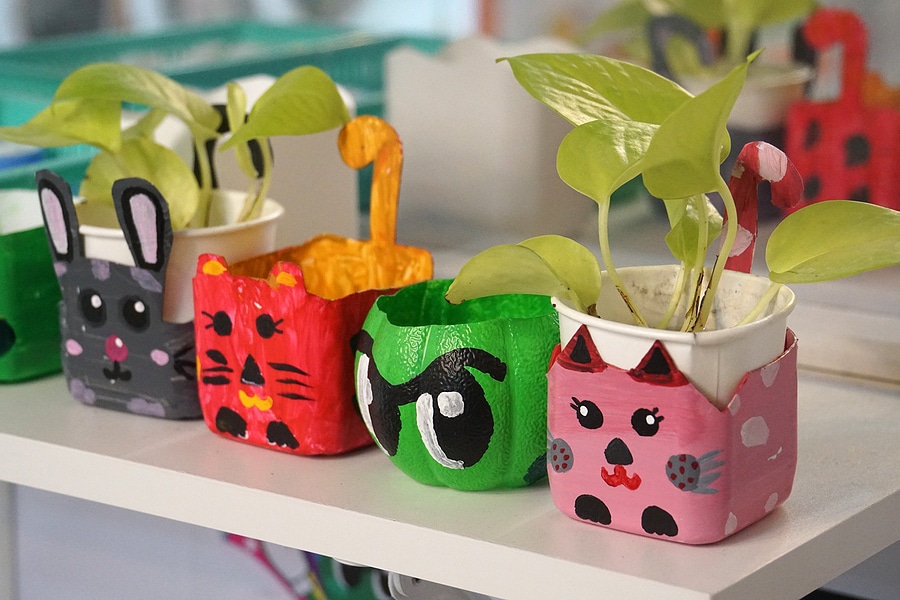
Teachers can use paper, pencils, cardboard, classroom objects, recycled materials that are safe to handle, free digital tools approved by the school, or body movement and spoken rhythm.
Choose activities that fit the available resources and avoid making access to costly materials a condition for success.
Teachers’ Confidence With Artistic Techniques
Some teachers may feel uncomfortable teaching art forms outside their area of expertise.
They can begin with simple techniques, collaborate with arts educators, or use professional learning resources to develop their skills.
The goal is not to turn every classroom teacher into a professional artist. It is to create meaningful connections between artistic processes and academic learning while respecting the skills involved in each discipline.
Difficulty Assessing Creative Work
Artistic projects can be challenging to grade when expectations are unclear.
Develop rubrics before the lesson and distinguish between academic accuracy, artistic technique, creativity, and communication.
Avoid grading students solely on how attractive a project looks or whether it matches the teacher’s personal artistic preferences.
Keeping the Academic Content Central
An enjoyable creative project can lose its educational value if students spend most of their time decorating without engaging with the subject.
To prevent this, require students to explain their choices, use accurate information, and demonstrate the intended academic skills.
The artistic process should help students explore or communicate the learning objective rather than distract from it.
How Schools Can Support Arts Integration
Sustained arts integration is more effective when teachers have access to collaboration, planning time, appropriate resources, and clear curriculum goals.
Encourage Collaboration Between Teachers
Classroom teachers can work with art, music, drama, and dance educators to design projects that address objectives in both disciplines.
For example, a science teacher and visual arts teacher might develop a project about scientific illustration. A history teacher and drama teacher might collaborate on a performance based on historical documents.
Collaborative planning helps ensure that artistic techniques are taught appropriately and that the academic content remains accurate.
Provide Professional Development
Schools can offer workshops, shared lesson-planning sessions, and opportunities to observe arts-integrated teaching.
Professional development should help teachers identify learning objectives, select suitable artistic approaches, assess student work, and adapt lessons for different learners.
Teachers can also review existing lesson plans and gradually incorporate arts integration into units they already teach.
Build an Accessible Resource Collection
Schools can organize reusable supplies, lesson templates, example rubrics, art materials, and approved digital resources.
A shared collection can reduce preparation time and help teachers develop ideas across subjects.
Resources should be accessible to students with different abilities and should reflect a range of cultural experiences and artistic traditions.
Start Small and Evaluate Results
Schools do not need to redesign the entire curriculum at once.
Begin with one lesson or unit, collect feedback from students, and review the evidence of learning. Teachers can then identify what worked, what required more time, and which changes might improve the next lesson.
A gradual approach makes it easier to refine activities and build confidence over time.
Frequently Asked Questions
1. What Is Arts Integration in Education?
Arts integration is a teaching approach that connects an artistic form, such as music, drama, dance, or visual art, with another academic subject.
Students use artistic processes to investigate and demonstrate understanding while developing skills in both the art form and the academic discipline.
2. What Are Some Examples of Arts Integration in Education?
Examples include using rhythm to teach fractions, creating scientific illustrations of ecosystems, performing historical scenes, designing geometric patterns, building engineering models, and illustrating literary themes.
Each activity should have clear learning objectives for both the artistic and academic components.
3. How Does Arts Integration Help Students Learn?
Arts integration provides different ways to explore and communicate academic concepts. It can create opportunities for active participation, creative problem-solving, collaboration, and reflection.
Its effectiveness depends on the quality of instruction, the relevance of the artistic activity, and how well the lesson aligns with the intended learning goals.
4. Can Arts Integration Be Used in Mathematics?
Yes. Teachers can use music to explore fractions and rhythm, visual design to teach geometry, movement to represent patterns, and sculpture to investigate shapes and spatial relationships.
These activities help students apply mathematical concepts in creative contexts.
5. How Can Teachers Integrate Art Into Science Lessons?
Teachers can ask students to create scientific diagrams, build models, perform natural processes, illustrate ecosystems, or communicate scientific findings through visual displays.
Scientific accuracy should remain a central requirement, and students should be able to explain the concepts represented in their work.
6. What Is the Difference Between Arts Integration and Arts Education?
Arts education focuses primarily on learning an art form and developing skills within it. Arts integration connects artistic learning with another academic subject through shared objectives.
Both approaches are valuable and can complement each other within a balanced school curriculum.
7. Is Arts Integration Suitable for All Grade Levels?
Yes. Activities can be adapted for preschool, elementary, middle, and high school students.
Younger students may use drawing, rhythm, storytelling, and movement, while older learners can develop complex performances, research-based visual projects, films, or interdisciplinary presentations.
8. How Can Teachers Assess Arts-Integrated Projects?
Teachers can use rubrics that evaluate academic understanding, artistic technique, communication, and the creative process.
Presentations, written reflections, sketches, drafts, and revision notes can provide additional evidence of student learning.
9. Does Arts Integration Require Expensive Materials?
No. Many activities use ordinary classroom supplies, paper, pencils, cardboard, simple percussion instruments, movement, or free digital tools approved for school use.
Teachers should select activities based on learning objectives and available resources rather than assuming that elaborate materials produce better learning.
10. How Can Schools Get Started With Arts Integration?
Schools can begin by selecting one academic objective and identifying an art form that genuinely supports it.
Teachers should establish learning goals in both areas, plan a creative process, develop assessment criteria, and review student work afterward. Collaboration and gradual experimentation can help schools expand the approach over time.
Conclusion
Arts integration provides a practical way to connect creativity with academic learning across the school curriculum. Through music, visual art, drama, dance, design, and model building, students can explore mathematical relationships, investigate scientific processes, interpret literature, examine history, and communicate complex ideas.
The most effective arts integration in education examples combine clear academic objectives with meaningful artistic learning. Rather than using creative activities simply to decorate a lesson, teachers can make artistic processes part of how students investigate concepts, solve problems, express understanding, and reflect on their learning.
Schools can begin with simple, low-cost activities and gradually develop more ambitious interdisciplinary projects. Clear assessment criteria, collaboration between teachers, accessible materials, and opportunities for revision help ensure that both academic knowledge and artistic skills receive appropriate attention.
When thoughtfully planned, arts integration can make the curriculum more connected, encourage multiple forms of expression, and give students additional opportunities to demonstrate what they know. Its value lies not in adding art to every lesson, but in identifying meaningful connections that help students understand and communicate important ideas.
Leave a Reply